
Government Grants
$1 Trillion in Federal Grants Under New Rules: What Applicants Need to Know
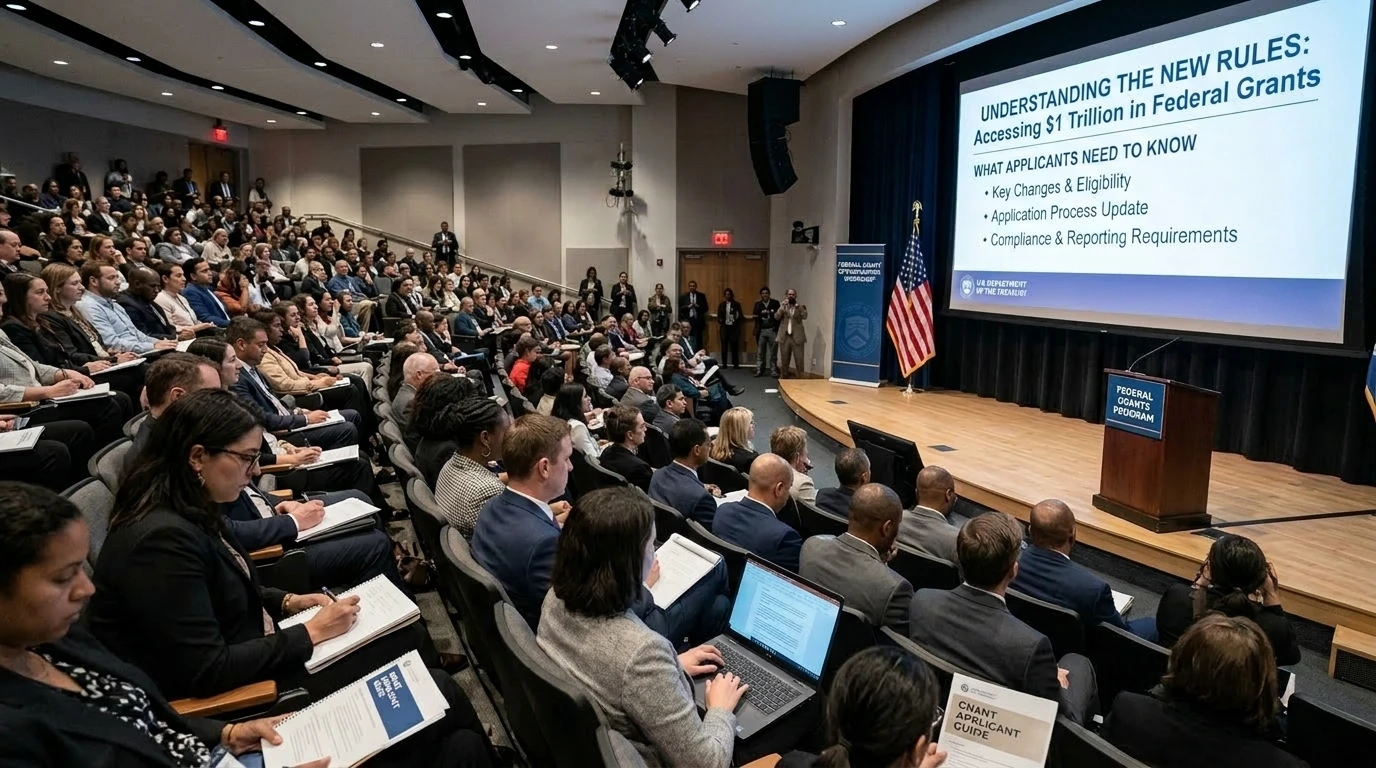
The U.S. federal government distributes over $1 trillion annually in grants to local governments, nonprofits, small businesses, researchers, and individuals. As of May–June 2026, the Office of Management and Budget (OMB) has proposed the largest overhaul of federal grant rules since 2013. Every applicant must understand the new compliance standards before submitting an application.
What Changed: The 2026 OMB Proposed Rule
On May 29, 2026, the OMB published a proposed rule in the Federal Register rewriting 2 Code of Federal Regulations (CFR) Part 200, commonly known as Uniform Guidance. This is the largest revision to Uniform Guidance since its initial publication in 2013.
The 412-page proposal could be the biggest overhaul of how the federal government distributes financial assistance in decades. Federal agencies distribute more than $1 trillion a year in research grants, support for local governments and small businesses, and farm subsidies.
Key changes introduced:
- New national policy requirements implementing executive orders related to DEI and other issues
- Political appointees now have final sign-off authority over federal funding, with performance closely monitored, including through the Treasury Department’s Do Not Pay registry
- Expanded authority for federal agencies to terminate awards, with categorical exceptions for block grants, formula grants, and disaster recovery grants
- New pre-award review requirements and new viewpoint-neutrality requirements for event services on property under public entity control, National Association of Counties.
Who Is Eligible for Federal Grants?
Eligibility varies by program, but the following categories are broadly covered under Uniform Guidance:
- State and local governments (including counties and municipalities)
- Nonprofits and NGOs
- Small businesses (under select agency programs)
- Higher education institutions
- Individuals (through specific programs like Pell Grants)
New in 2026: Stricter restrictions now apply to who grant programs can serve, greater vulnerability exists to investigations under the False Claims Act, and DEI initiatives are now classified as “illegal” under current administration policy.
Major Active Programs (FY 2026)
| Program | Agency | Funding Level |
| BEAD Broadband Program | Dept. of Commerce / NTIA | $42 billion+ |
| INFRA Transportation Grants | Dept. of Transportation | Multi-billion (NOFO pending) |
| Workforce Pell Grant | Dept. of Education | Nationwide (effective July 1, 2026) |
Beginning July 1, 2026, students can receive Pell Grants for enrollment in high-quality, short-term educational programs that prepare them for high-skill, in-demand jobs, helping more Americans enter the workforce rapidly with little to no student debt.
How to Apply: Step-by-Step
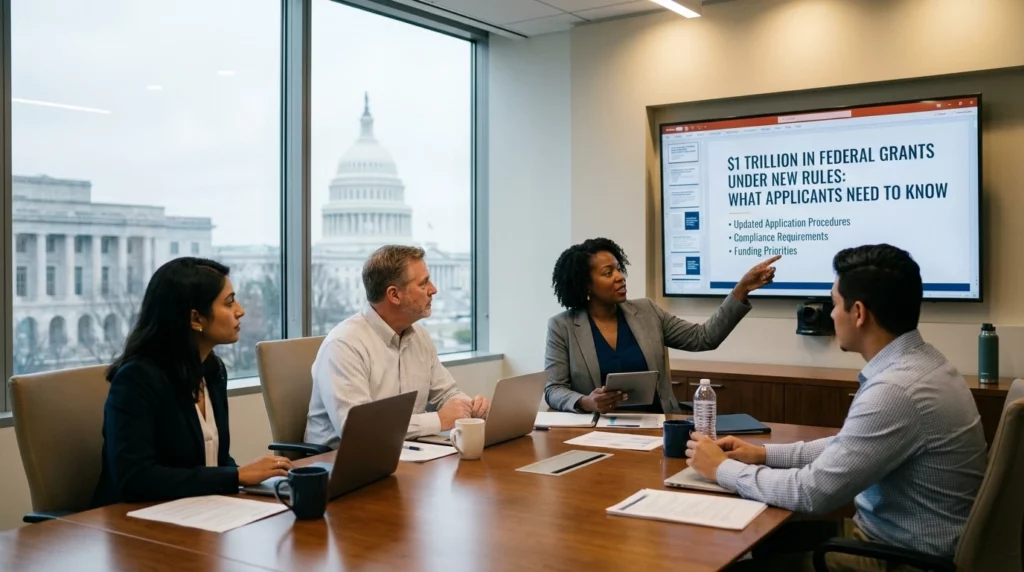
- Find your opportunity — Search Grants.gov for current Notices of Funding Opportunity (NOFOs)
- Confirm eligibility — Review the specific NOFO eligibility section carefully under the new 2026 standards
- Register your organization — Active SAM.gov registration is mandatory for all federal applicants
- Prepare compliance documents — Include indirect cost rates, subrecipient monitoring plans, and policy certifications
- Submit before the deadline — Application windows historically close within 90 days of NOFO publication
- Monitor award conditions — New awards carry materially different compliance commitments than grants issued before 2025
Common Rejection Reasons in 2026
- Incomplete SAM.gov registration
- Missing or incorrect indirect cost rate documentation
- Non-compliance with the new executive order policy certifications
- Inadequate subrecipient monitoring documentation
- Failure to address updated eligibility restrictions
Grantees that understand the new rules and demonstrate that understanding in their applications, with accurate budgets, credible indirect cost proposals, and documented subrecipient management systems, are better positioned in review processes.
Key Deadline
Public comments on the proposed OMB rule changes are due July 13, 2026. Organizations are encouraged to review the proposed rule and submit comments via docket OMB-2026-0034.
Frequently Asked Questions
What is Uniform Guidance (2 CFR Part 200)?
It is the federal regulation governing how all grant funds are applied for, awarded, administered, monitored, and audited across every federal agency. The 2026 proposed revision is the largest update in over a decade. Read the full text at ecfr.gov.
Who oversees federal grant approvals now?
Under the 2025 to 2026 rules, senior political appointees have final review authority over discretionary awards to ensure alignment with current administration priorities. See OMB guidance at whitehouse.gov.
Where do I apply for federal grants?
All federal grant opportunities are listed at Grants.gov. SAM.gov registration is required before applying.
Why might my grant get terminated?
New rules expand agency authority to terminate awards for non-compliance with national policy requirements, including DEI-related conditions and performance benchmarks. Review termination provisions at regulations.gov.
Sources:
- Grants.gov — Search and apply for all federal grant opportunities
- SAM.gov — Mandatory registration portal for all federal applicants
- OMB Uniform Guidance Proposed Rule — Full text of docket OMB-2026-0034
- U.S. Dept. of Education – Workforce Pell Grant — Final rule and program details
- Federal Register — Official source for all NOFOs and regulatory updates
- Treasury Do Not Pay Registry — Compliance verification tool





Top States Providing Financial Relief and Emergency Cash Assistance in 2026

Section 811 Housing Assistance 2026: What Disabled Adults Need to Know

Top U.S. Government AI Grants You Should Watch in 2026

VA Closing Cost Assistance for Veterans in 2026: What’s Really Changed This Year?

Fast Food Places That Accept EBT Cards (Full List)

25 Small Business Grants You Can Apply for in 2026

Most Commonly Approved Government Grant Applications

Affordable Housing and Rental Assistance Programs for Texas Single Moms
-
 Food & EBT / SNAP Benefits5 months ago
Fast Food Places That Accept EBT Cards (Full List)
-
 Small Business Grants5 months ago
25 Small Business Grants You Can Apply for in 2026
-
 Government Grants4 months ago
Most Commonly Approved Government Grant Applications
-
 Single Mothers Benefits3 months ago
Affordable Housing and Rental Assistance Programs for Texas Single Moms
-

 Veterans Assistance3 months ago
Top Veterans Financial Assistance Programs 2026
-

 Utility & Bills Help5 months ago
LIHEAP 2026 Application Guide for Energy Assistance
-

 Utility & Bills Help4 months ago
How to Get Free Help Paying Your Electric Bill
-

 Single Mothers Benefits4 months ago
Trump Tax Plan Stay-at-Home Mom Tax Credit Explained: What the Law Actually Says (2026)
-

 Food & EBT / SNAP Benefits3 months ago
5 Key SNAP Policy Changes Coming in 2026 You Should Know
-

 Government Grants5 months ago
How to Apply for Government Grants Online