
Government Grants
Avoid These 7 Mistakes in Your 2026 Grant Applications
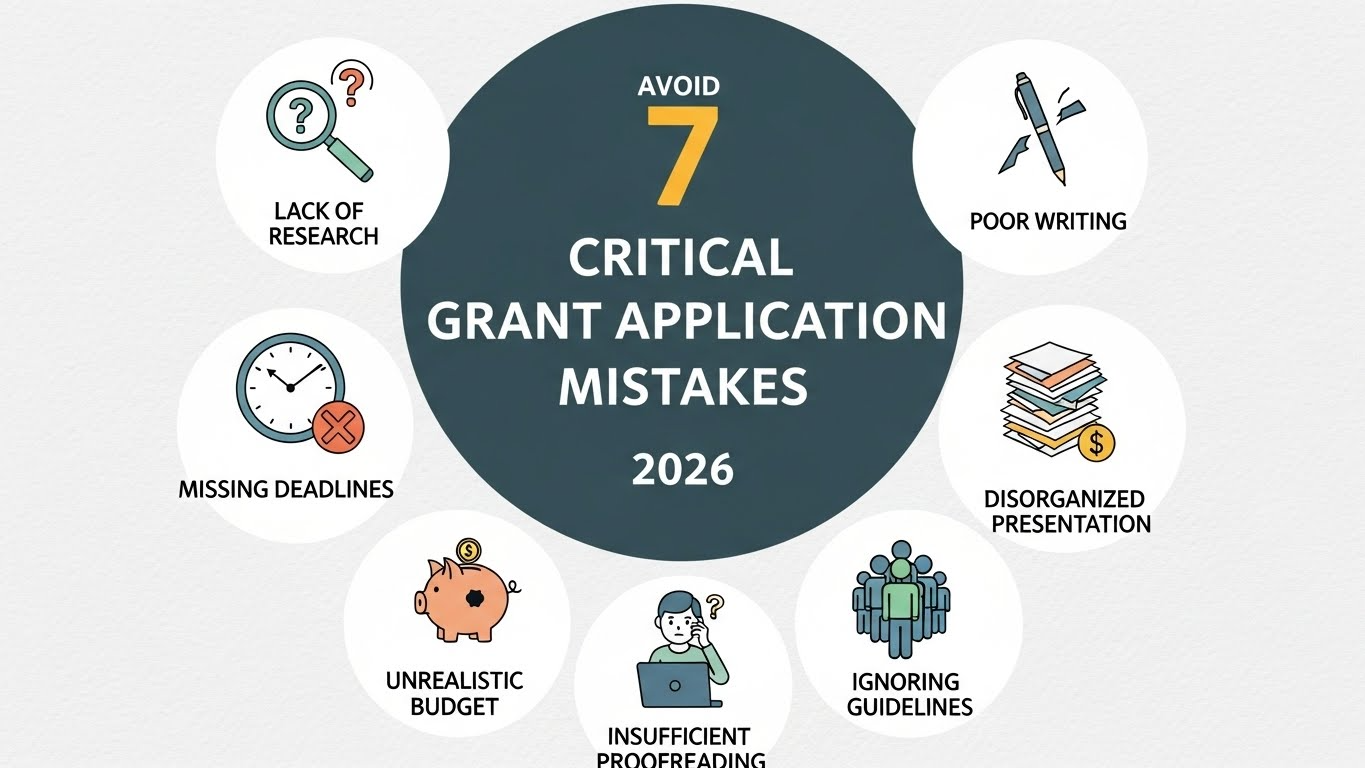
Applying for government grants in 2026 can unlock vital funding for nonprofits, startups, students, and local governments. Yet, many applicants fall victim to avoidable errors that cost time, credibility, and eligibility. From incomplete documentation to misunderstanding program requirements, these mistakes can derail even the most promising applications. In this guide, we highlight the 7 most common grant application mistakes in 2026, explain why they matter, and provide actionable strategies for success. This article draws exclusively from verified federal and state grant guidelines, official program updates, and regulatory notices.
1. Ignoring Eligibility Requirements
Why it matters: Most grants are narrowly targeted based on entity type, geography, or project scope. Misunderstanding eligibility is the top reason for application rejection.
Common errors:
- Applying for a federal grant as a for-profit business that only supports nonprofits
- Overlooking state-specific residency or organizational registration requirements
- Misidentifying allowable project types under a federal program
Pro tip: Review official program eligibility guides. For federal grants, check Grants.gov Eligibility.
2. Missing Deadlines
Time-sensitive: 2026-specific funding cycles and deadlines.
Example deadlines:
| Program | Application Deadline | Fiscal Year | Agency |
| National Science Foundation (NSF) Research Grants | March 15, 2026 | FY2026 | NSF |
| Small Business Innovation Research (SBIR) Phase I | May 10, 2026 | FY2026 | SBA |
Tip: Use official agency calendars and set reminders 2–3 weeks in advance. Late submissions are rarely accepted.
3. Incomplete or Incorrect Documentation
Mistakes to avoid:
- Missing IRS 501(c)(3) letters for nonprofit applicants
- Submitting outdated organizational budgets or financial statements
- Failing to include required letters of support or local government approvals
Checklist:
- Proof of legal entity status
- Fiscal-year budget and financial statements
- Project narrative and objectives
- Letters of support or partnership agreements
Official references: Check USA.gov Grants Documentation for federal guidance.
4. Weak or Noncompliant Project Narratives
Issue: A strong narrative demonstrates impact, feasibility, and alignment with grant objectives.
Common pitfalls:
- Failing to tie project outcomes to agency priorities
- Using jargon without clear explanation
- Overstating capacity or timeline
Pro tip: Follow program-specific guidelines for formatting, word counts, and evaluation criteria.
5. Ignoring Funding Restrictions
Examples:
- Using federal funds for lobbying or prohibited activities
- Exceeding allowable administrative costs
- Not adhering to cost-sharing or matching requirements
Reference: Review the Uniform Guidance 2 CFR Part 200 for federal grants.
6. Failing to Follow Submission Instructions
Details matter:
- File formats (PDF vs. Word)
- Online portal requirements
- Signatures and certification sections
Tip: Submit a test file early, and confirm portal receipt.
7. Neglecting Follow-Up and Reporting Requirements
Even successful applicants can risk funding loss by missing post-award requirements:
- Quarterly financial reporting
- Program evaluation metrics
- Compliance audits
Official guidance: Consult the agency’s grant terms and conditions for FY2026.
FAQs
Q1: Who is eligible for government grants in 2026?
Eligibility depends on the grant program and may include nonprofits, startups, students, local governments, and other entities. Check the program’s official eligibility page for FY2026 requirements.
Q2: How much funding is available?
Funding varies by program, ranging from $5,000 local project grants to multi-million-dollar federal initiatives. Always verify current fiscal-year limits.
Q3: How do I apply?
Applications are typically submitted online via portals like Grants.gov for federal programs or state-specific platforms. Follow program guidelines carefully.
Q4: What documents are required?
Commonly required documents include legal entity proof, budgets, project narratives, letters of support, and financial statements.
Q5: Why are grant applications rejected?
Common reasons include missing deadlines, incomplete forms, eligibility mismatches, weak narratives, or failure to comply with funding restrictions.
Sources:


Final Call for LIHEAP 2026: Many States Ending Applications This April

How Startups Can Get SBIR/STTR Funding in 2026

What Single Moms Need to Know About 2026 State Child Tax Credits

Major 2026 SNAP Changes: What CalFresh Recipients Need to Know

25 Small Business Grants You Can Apply for in 2025

Top Veterans Financial Assistance Programs 2025

How to Get Free Help Paying Your Electric Bill

LIHEAP 2025 Application Guide for Energy Assistance
-
 Small Business Grants11 months ago
25 Small Business Grants You Can Apply for in 2025
-
 Veterans Assistance11 months ago
Top Veterans Financial Assistance Programs 2025
-
 Utility & Bills Help11 months ago
How to Get Free Help Paying Your Electric Bill
-
 Utility & Bills Help11 months ago
LIHEAP 2025 Application Guide for Energy Assistance
-

 Food & EBT / SNAP Benefits11 months ago
Fast Food Places That Accept EBT Cards (Full List)
-

 Housing Assistance11 months ago
Apply for Section 8 Housing Vouchers (Updated 2025)
-

 Small Business Grants10 months ago
Women-Owned Business Grants & Funding Sources
-

 Government Grants11 months ago
How to Apply for Government Grants Online
-

 Government Grants11 months ago
25 Federal Grants That Give Free Money in 2025
-

 Disability Benefits11 months ago
How Much Disability Pay Can You Get in 2025?