
Emergency Cash Assistance
Top States Providing Financial Relief and Emergency Cash Assistance in 2026
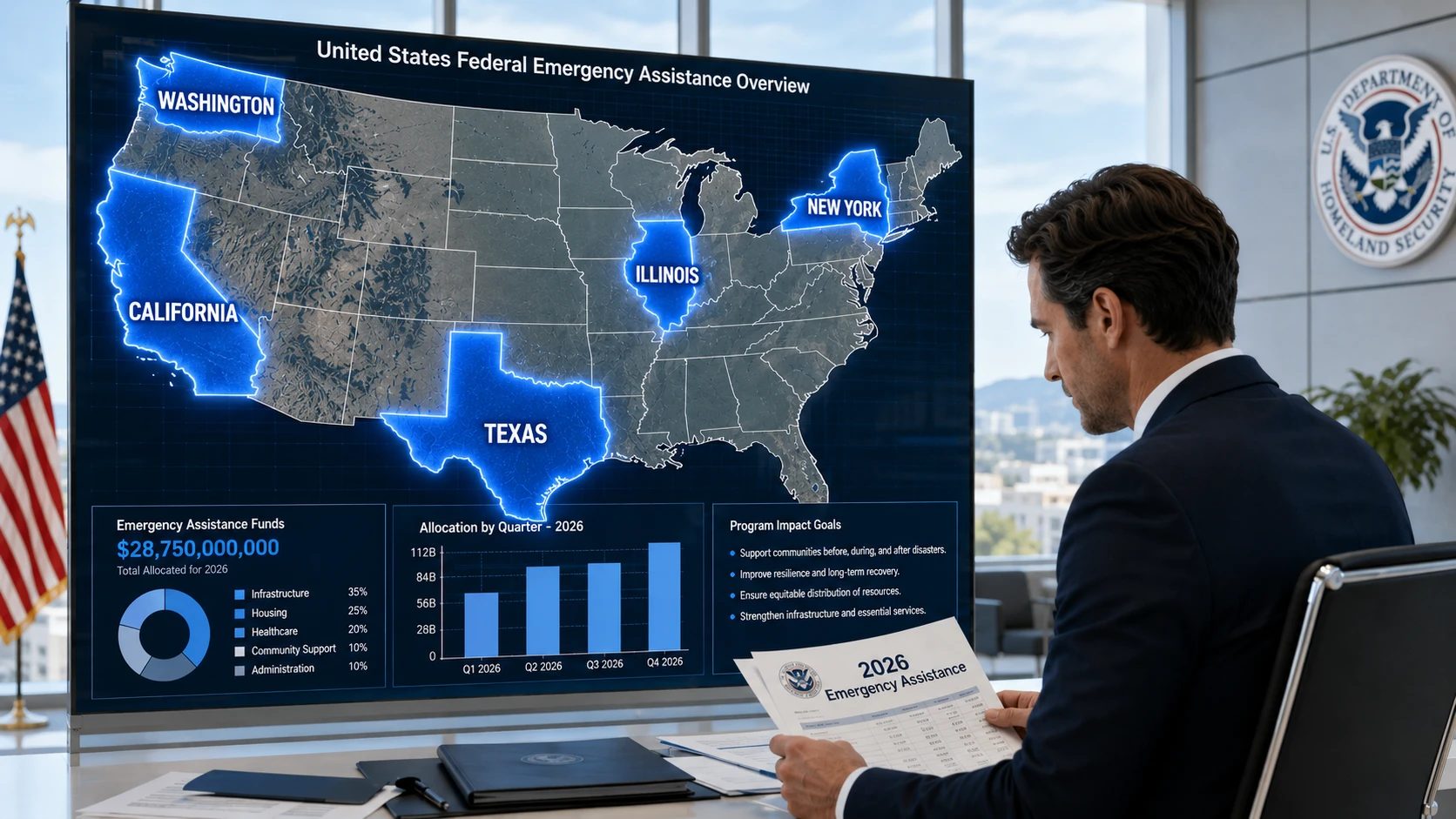
In 2026, several U.S. states are actively providing financial relief and emergency cash assistance through state-funded programs, federal partnerships, and expanded benefit frameworks. California, Texas, New York, Illinois, and Washington lead in both program variety and funding allocation. Eligibility typically depends on income level, household size, employment status, and residency.
What Is State-Level Emergency Cash Assistance?
State emergency cash assistance programs provide direct financial support to low-income individuals and families facing economic hardship. These programs operate either independently through state budgets or in partnership with federal frameworks such as the Temporary Assistance for Needy Families (TANF) block grant, administered by the U.S. Department of Health and Human Services.
Unlike one-time federal stimulus payments, state-level assistance is ongoing and often tied to specific hardship categories, including job loss, housing instability, medical emergencies, and domestic crises. States have significant discretion in how they design and distribute these funds, which creates wide variation in benefit amounts, eligibility rules, and application processes across the country.
Top States Offering Financial Relief in 2026
California
California operates one of the most expansive state-level assistance networks in the country. The California Department of Social Services administers CalWORKs, the state’s TANF-funded cash aid program, which provides monthly payments to eligible families with children. In 2026, benefit levels were adjusted upward to reflect cost-of-living increases. California also operates the Guaranteed Income pilot programs in several counties, providing unconditional monthly cash transfers to qualifying low-income residents.
New York
New York’s Office of Temporary and Disability Assistance administers Family Assistance and Safety Net Assistance, two cash aid programs serving households with and without children, respectively. New York City additionally funds Emergency Assistance programs through the Human Resources Administration, providing one-time or short-term cash support for housing emergencies, utility shutoffs, and food crises.
Texas
The Texas Department of Health and Human Services administers Temporary Assistance for Needy Families through its Your Texas Benefits portal. Texas TANF has stricter income thresholds and shorter benefit periods compared to coastal states, but the state also funds emergency assistance through county-level programs and nonprofit partnerships funded partly by the Texas Department of Housing and Community Affairs.
Illinois
Illinois operates the Temporary Assistance for Needy Families program through the Department of Human Services, alongside the Illinois Immigrant Family Support program, which provides emergency cash to immigrant households excluded from federal programs. Illinois has consistently expanded its state-funded safety net for mixed-status households.
Washington State
Washington’s Department of Social and Health Services administers WorkFirst, the state’s TANF program, as well as the Consolidated Emergency Assistance Program (CEAP), which provides emergency cash assistance for utility, housing, and basic-needs crises. Washington is among the few states maintaining a separate state-funded emergency assistance pool outside of federal TANF restrictions.
Eligibility Criteria: What Most States Require

While specific rules vary by state, common eligibility requirements across emergency cash assistance programs include:
- U.S. citizenship or qualifying immigration status
- State residency verification
- Household income at or below 100 to 200 percent of the Federal Poverty Level
- Demonstrated financial hardship or qualifying life event
- Participation in work-related activities (for ongoing TANF benefits)
- Children under 18 present in the household (for family-based programs)
Some state programs, particularly those funded entirely outside of TANF, extend eligibility to childless adults, immigrants, and individuals experiencing homelessness.
Funding Amounts and Program Comparison (2026)
| State | Primary Program | Monthly Benefit (Family of 3) | Childless Adults Eligible | Application Portal |
| California | CalWORKs | Up to $1,100 | Limited county programs | BenefitsCal |
| New York | Family Assistance | Up to $789 | Yes (Safety Net) | myBenefits NY |
| Texas | TANF | Up to $328 | No | Your Texas Benefits |
| Illinois | TANF | Up to $520 | Limited | ABE Illinois |
| Washington | WorkFirst | Up to $653 | CEAP only | Washington Connections |
Benefit amounts reflect published 2025 to 2026 maximums and may vary based on household size, income, and local adjustments.
What Applicants Should Know Before Applying
The most common reason eligible applicants are denied is not failing income requirements but submitting incomplete documentation. Most state agencies require proof of identity, residency, and income for all household members, as well as documentation of the specific hardship triggering the request. Missing a single document typically delays processing by two to four weeks.
Timing matters significantly when funding is discretionary. Emergency assistance pools at the county or city level are often first-come, first-served, and funds can be exhausted months before the fiscal year end. Applying at the start of a state’s fiscal year, typically July 1, increases the likelihood of accessing available funding.
Work participation requirements attached to ongoing TANF benefits are frequently misunderstood. Applicants must confirm whether their household qualifies for an exemption (due to disability, caregiving responsibilities, or age) before assuming they must enroll in a work program. Failing to comply with work requirements after approval can trigger benefit termination.
“Many eligible applicants are denied because documentation requirements are misunderstood rather than because they fail the eligibility criteria itself,” according to guidance from the Center on Budget and Policy Priorities, which tracks TANF implementation nationally.
Is This Program Worth Applying For?
Apply if: Your household income falls below 200 percent of the Federal Poverty Level, you are experiencing a verifiable hardship event, and you have documentation available. Families with children in states like California, New York, and Illinois are most likely to receive meaningful benefit amounts.
Think carefully if: You are in a state with very low benefit caps, such as Texas, where maximum monthly payments may not offset application time and documentation burden for households facing moderate crises with other resources available.
Best-fit applicant profile: Single-parent households with minor children, recently unemployed workers, and households facing imminent eviction or utility shutoff derive the most tangible value from these programs.
Alternatives to consider: The Low Income Home Energy Assistance Program (LIHEAP) provides utility-specific assistance without the same work requirements. The Supplemental Nutrition Assistance Program (SNAP) addresses food costs. Emergency Rental Assistance programs funded through the U.S. Treasury remain active in several states through 2026.
How to Apply: Step-by-Step
Step 1: Eligibility Review — Use your state’s online benefit screener to confirm likely eligibility before starting a full application.
Step 2: Document Preparation — Gather proof of identity, residency, income, household composition, and your specific hardship event.
Step 3: Application Submission — Submit through your state’s official benefits portal or visit a local Department of Social Services office for in-person assistance.
Step 4: Interview and Review — Most states require a phone or in-person eligibility interview within five to ten business days of application.
Step 5: Post-Approval Requirements — Comply with any work participation, reporting, or renewal requirements to maintain ongoing benefits.
Key Takeaways for Applicants
The most important eligibility point is household income relative to the Federal Poverty Level, which determines whether you qualify and at what benefit level. The most critical application step is assembling complete documentation before submitting, not after. The biggest mistake applicants make is assuming that meeting income requirements alone guarantees approval without meeting the documentation and compliance requirements. The recommended next action is to visit your state’s official benefits portal today, use the eligibility screener, and note the documentation list before beginning your application.
FAQs
What states offer the most generous emergency cash assistance in 2026?
California, New York, and Illinois lead in both benefit amounts and eligibility coverage. California’s CalWORKs provides up to $1,100 monthly for a family of three, New York reaches up to $789, and both states maintain supplemental programs beyond federal TANF restrictions that serve a broader range of applicants.
Who qualifies for state emergency cash assistance programs?
Eligibility typically requires state residency, household income at or below 100 to 200 percent of the Federal Poverty Level, and a documented hardship such as job loss or housing instability. Most family-based programs require at least one child under 18, though some state-funded programs extend eligibility to childless adults and immigrant households.
How long does it take to receive emergency cash assistance after applying?
Standard TANF applications process within 30 days. Designated emergency requests can be expedited to five to ten business days in most states. Incomplete documentation is the leading cause of delays, so submitting a complete application with all required documents at the time of filing is critical.
Can I apply if I already receive SNAP or Medicaid?
Yes. Receiving SNAP, Medicaid, or other federal benefits does not disqualify you from state cash assistance. These programs cover different needs and operate on separate budgets. Households already enrolled in SNAP or Medicaid may actually move through the income verification stage faster.
What are the most common reasons applications get denied?
The most frequent reasons include missing documentation, failed residency verification, income exceeding program limits, and non-compliance with work participation requirements. Applicants have the right to appeal any denial through their state’s Department of Social Services, and many denials are reversed when missing documents are submitted at the appeal stage.
Sources




Top States Providing Financial Relief and Emergency Cash Assistance in 2026

Section 811 Housing Assistance 2026: What Disabled Adults Need to Know

Top U.S. Government AI Grants You Should Watch in 2026

VA Closing Cost Assistance for Veterans in 2026: What’s Really Changed This Year?

Fast Food Places That Accept EBT Cards (Full List)

25 Small Business Grants You Can Apply for in 2026

Affordable Housing and Rental Assistance Programs for Texas Single Moms

Most Commonly Approved Government Grant Applications
-
 Food & EBT / SNAP Benefits5 months ago
Fast Food Places That Accept EBT Cards (Full List)
-
 Small Business Grants6 months ago
25 Small Business Grants You Can Apply for in 2026
-
 Single Mothers Benefits3 months ago
Affordable Housing and Rental Assistance Programs for Texas Single Moms
-
 Government Grants5 months ago
Most Commonly Approved Government Grant Applications
-

 Veterans Assistance3 months ago
Top Veterans Financial Assistance Programs 2026
-

 Utility & Bills Help5 months ago
LIHEAP 2026 Application Guide for Energy Assistance
-

 Utility & Bills Help4 months ago
How to Get Free Help Paying Your Electric Bill
-

 Single Mothers Benefits4 months ago
Trump Tax Plan Stay-at-Home Mom Tax Credit Explained: What the Law Actually Says (2026)
-

 Food & EBT / SNAP Benefits4 months ago
5 Key SNAP Policy Changes Coming in 2026 You Should Know
-

 Government Grants5 months ago
How to Apply for Government Grants Online