
Food & EBT / SNAP Benefits
State vs. Federal: The Great SNAP Funding Debate of 2026
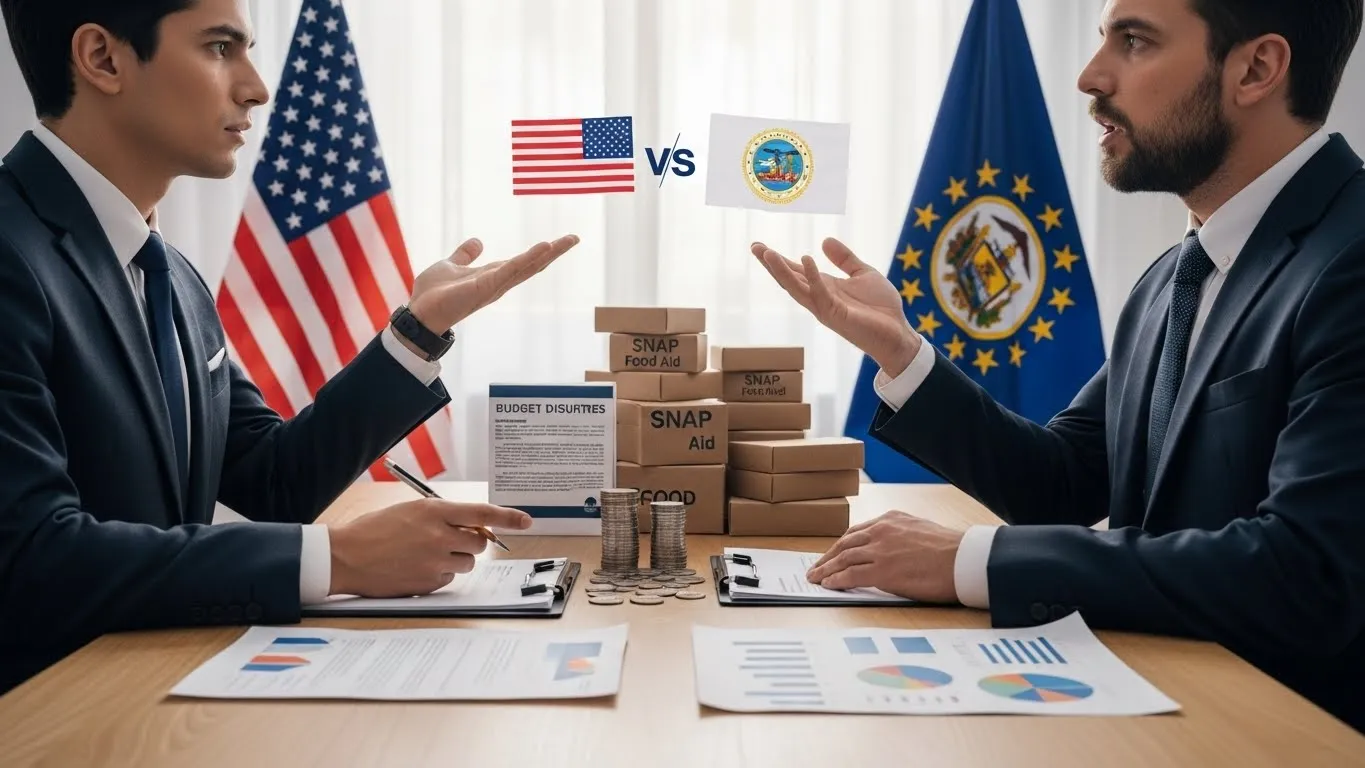
Access to food assistance through the Supplemental Nutrition Assistance Program (SNAP) remains a central policy and budget issue in 2026. As the nation’s largest anti-hunger program, SNAP sits at the intersection of federal entitlement commitments and state administrative responsibility. Recent legislative changes, legal challenges, and funding shifts have intensified debate over who pays, who administers, and how long the current model can hold. This explainer clarifies what has changed, what remains stable, and what applicants, nonprofits, and local governments need to know as of 2026.
What Is SNAP?
The Supplemental Nutrition Assistance Program (SNAP) is a federally authorized nutrition assistance program administered by the U.S. Department of Agriculture (USDA) through the Food and Nutrition Service (FNS). SNAP provides monthly benefits to eligible low-income households to purchase food at authorized retailers using an Electronic Benefit Transfer (EBT) card.
In fiscal year 2026, SNAP benefit funding is projected at approximately $103.5 billion, serving more than 42 million participants nationwide. Average monthly benefits are estimated at about $202 per person, though amounts vary by household size and income.
Traditionally, SNAP operates under a shared federal-state framework:
- The federal government covers 100 percent of SNAP benefit costs.
- Administrative costs are shared, with the federal government reimbursing states for 50 percent.
- States are responsible for eligibility determinations, benefit issuance, fraud prevention, and case management.
What Changed in 2026?
Federal Cost-Sharing and Administrative Changes
The One Big Beautiful Bill Act, signed into law in July 2026, introduced the most significant structural changes to SNAP funding in decades.
Beginning October 1, 2026 (FY2027), states are required to cover 75 percent of SNAP administrative costs, up from the long-standing 50 percent share. This includes staffing, eligibility systems, call centers, and program integrity operations.
In addition, the law authorizes future state contributions toward SNAP benefit costs starting in FY2028 if a state’s payment error rate exceeds federally established thresholds. This marks a historic shift away from SNAP’s fully federally funded benefit structure.
These changes do not affect benefit payments in FY2026 but have major budget implications for states preparing for future fiscal years.
Federal vs. State SNAP Funding Responsibilities in 2026
Benefit costs remain fully federally funded throughout FY2026. Administrative costs are still shared at 50 percent for most of FY2026, but the new 75 percent state share begins October 1, 2026. Nutrition education funding (SNAP-Ed) officially ended in October 2026, although previously obligated funds may continue to be spent through FY2026 depending on state carryover authority.
Looking ahead, states with persistently high payment error rates may be required to contribute between 5 percent and 15 percent of SNAP benefit costs starting in FY2028, depending on federal rulemaking and enforcement decisions.
Why the SNAP Funding Debate Is Intensifying in 2026
State Budget Pressure
Governors and legislatures across both parties have raised concerns that higher administrative cost shares could force states to divert funds from education, housing, or healthcare programs. Smaller or rural states with limited tax bases are expected to face the greatest strain.
Federal Funding Disruptions
Government shutdowns and continuing resolutions in 2026 exposed vulnerabilities in SNAP’s funding pipeline. Several states used emergency funds or advance financing to continue benefit issuance during temporary federal lapses, raising questions about long-term program stability.
Legal and Regulatory Challenges
Multiple states have filed lawsuits challenging federal conditions tied to SNAP funding, including data-sharing requirements and administrative penalties. Courts have, in some cases, temporarily blocked federal enforcement actions, allowing SNAP operations to continue while litigation proceeds.
Who Is Eligible for SNAP in 2026
Federal eligibility standards remain largely unchanged in 2026:
- Gross household income generally must be at or below 130 percent of the federal poverty level after allowable deductions.
- Asset limits vary by state, particularly in states that have adopted broad-based categorical eligibility.
- Able-bodied adults without dependents may be subject to work or training requirements unless waived.
- Applicants must be U.S. citizens or qualified non-citizens under federal immigration rules.
States retain discretion over certain administrative elements, meaning documentation requirements and timelines may differ by location.
How Much SNAP Funding Is Available in 2026?
For FY2026:
- Total SNAP benefits funding is estimated at approximately $103.5 billion.
- Federal reimbursements for state administrative expenses total roughly $6.2 billion.
Maximum monthly benefit allotments (estimated):
- One-person household: approximately $281
- Two-person household: approximately $516
- Four-person household: approximately $999
Actual benefit amounts depend on household income, expenses, and state policy choices.
How to Apply for SNAP
Applicants should:
- Verify eligibility through their state SNAP agency or the USDA SNAP portal.
- Gather required documentation, including proof of income, identification, Social Security numbers, housing costs, and utility expenses.
- Submit an application online, by mail, or in person, depending on state options.
- Complete an eligibility interview, usually within 30 days.
- Receive benefits monthly via EBT if approved.
Application timelines and procedures vary by state and may change during funding disruptions.
Common Reasons SNAP Applications Are Denied
Applications are most often denied due to missing documentation, income or assets exceeding limits, failure to complete an interview, or noncompliance with work requirements where applicable.
FAQs
Who is eligible for SNAP in 2026?
Generally, households with gross income at or below 130 percent of the federal poverty level may qualify, subject to deductions and asset limits. Applicants must meet citizenship or qualified non-citizen requirements, and some adults may be subject to work or training rules unless exempt or waived by the state.
How much can a household receive in SNAP benefits?
Benefit amounts vary by household size, income, and expenses. In 2026, maximum monthly allotments are estimated at approximately $281 for one person, $516 for two people, and $999 for a four-person household, though actual benefits may be lower.
How do I apply for SNAP?
Applicants can apply through their state SNAP agency online, by mail, or in person. The process includes submitting documentation, completing an eligibility interview, and receiving benefits via EBT if approved. Application timelines vary by state.
What documents are required to apply for SNAP?
Most states require proof of income, identification, Social Security numbers for household members, proof of housing costs, and utility expenses. Additional documents may be requested depending on household circumstances.
Why are SNAP applications denied?
Common reasons for denial include incomplete applications, missing documentation, income or assets exceeding limits, failure to complete an interview, or noncompliance with work requirements where applicable.
Sources:
USDA Food and Nutrition Service SNAP Program Overview
USDA FY2026 SNAP Explanatory Notes and Budget Justification

How to Apply for Disability Benefits in 2026: Step-by-Step Guide

Apply for Emergency HEAP in New York – Jan 2, 2026 Begins

VA Benefits in 2026: Essential COLA, Top Compensation & Critical Policy Shifts

How HUD’s 2026 Strategy Is Breaking Down Barriers to Affordable Housing

25 Small Business Grants You Can Apply for in 2026

Top Veterans Financial Assistance Programs 2026

How to Get Free Help Paying Your Electric Bill

LIHEAP 2026 Application Guide for Energy Assistance
-
 Small Business Grants6 months ago
25 Small Business Grants You Can Apply for in 2026
-
 Veterans Assistance6 months ago
Top Veterans Financial Assistance Programs 2026
-
 Utility & Bills Help6 months ago
How to Get Free Help Paying Your Electric Bill
-
 Utility & Bills Help6 months ago
LIHEAP 2026 Application Guide for Energy Assistance
-

 Small Business Grants6 months ago
Women-Owned Business Grants & Funding Sources
-

 Government Grants6 months ago
How to Apply for Government Grants Online
-

 Government Grants6 months ago
25 Federal Grants That Give Free Money in 2026
-

 Food & EBT / SNAP Benefits6 months ago
Fast Food Places That Accept EBT Cards (Full List)
-

 Disability Benefits6 months ago
How Much Disability Pay Can You Get in 2026?
-

 Food & EBT / SNAP Benefits7 months ago
5 Key SNAP Policy Changes Coming in 2026 You Should Know