
Food & EBT / SNAP Benefits
Free Groceries Programs for Low-Income Families
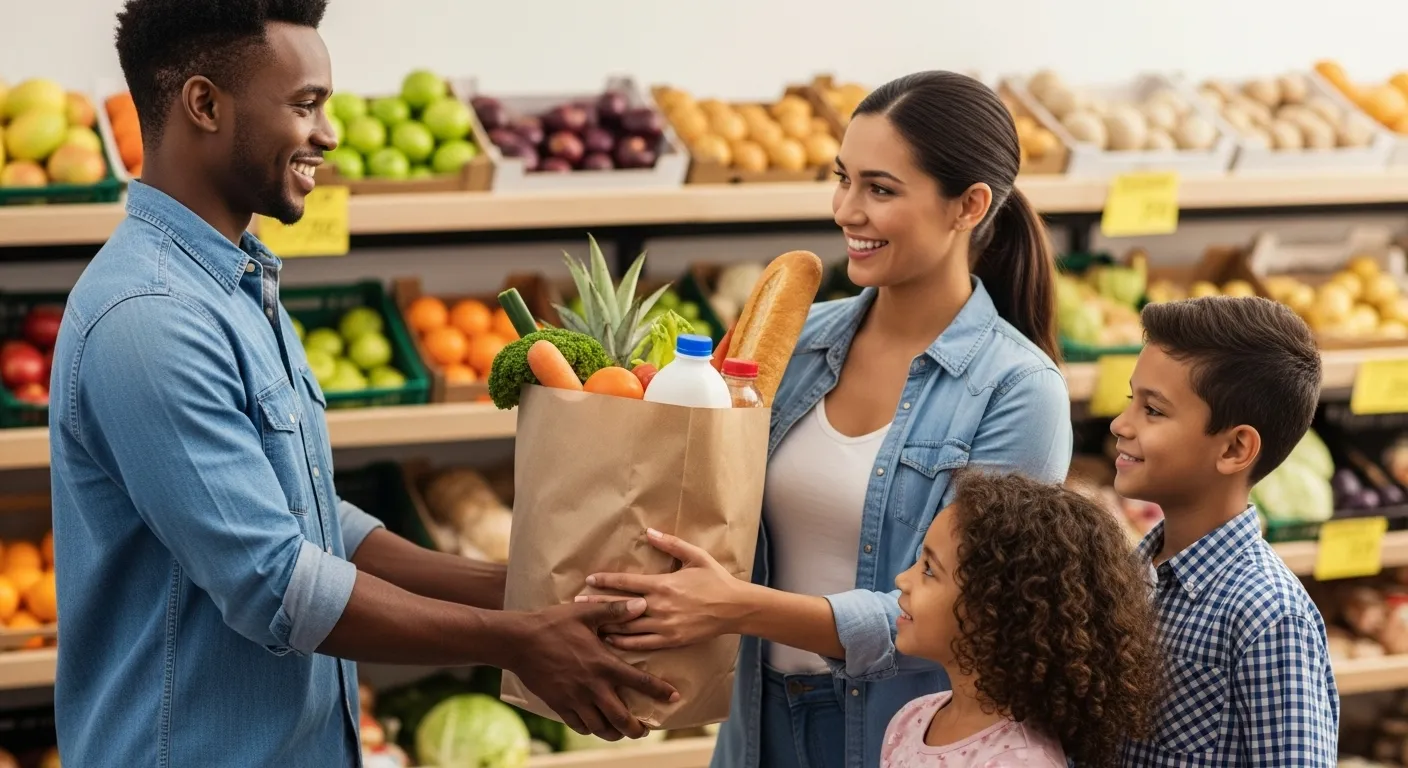
Access to adequate food is a core public welfare priority in the United States. In response to rising living costs and persistent food insecurity, free grocery programs for low-income families continue to serve as a critical safety net in 2026–2026. These programs are primarily administered by the U.S. Department of Agriculture (USDA) in partnership with state and local agencies.
This guide explains how these programs work, who qualifies, and how families can apply while highlighting the latest policy updates and eligibility standards.
What Are Free Groceries Programs for Low-Income Families?
Free grocery assistance programs are government-supported initiatives designed to ensure that individuals and families facing financial hardship can access nutritious food. These programs reduce hunger, support child development, and help stabilize households during economic uncertainty.
In 2026, these programs remain essential due to:
- Rising food inflation
- Wage-to-cost-of-living gaps
- Increased demand for emergency food support
- Ongoing recovery from economic disruptions
They operate through federal funding, state administration, and nonprofit partnerships.
Major Government Food Assistance Programs
SNAP (Supplemental Nutrition Assistance Program)
The SNAP program is the largest federal food assistance initiative in the U.S. It provides monthly benefits loaded onto an Electronic Benefit Transfer (EBT) card, which can be used at approved grocery stores.
Key features:
- Monthly food purchasing assistance
- Benefits based on income and household size
- Accepted at supermarkets, grocery stores, and farmers’ markets
- Managed by state agencies under USDA rules
SNAP remains the primary pillar of free grocery programs for low-income families.
WIC (Women, Infants, and Children Program)
The WIC program focuses on maternal and child nutrition. It supports pregnant women, new mothers, infants, and children up to age five.
Benefits include:
- Nutritious food packages (milk, eggs, fruits, cereals)
- Infant formula and breastfeeding support
- Nutrition counseling and health referrals
WIC is medically and nutritionally targeted, ensuring early childhood health and development.
TEFAP (Emergency Food Assistance Program)
TEFAP provides free food through food banks, community kitchens, and local distribution centers. It is especially important during emergencies or sudden income loss.
Common food items include:
- Canned fruits and vegetables
- Rice, pasta, and grains
- Protein sources like beans and dairy products
This program ensures immediate food access without lengthy application delays.
School Meal Programs
School-based food assistance programs ensure children receive proper nutrition during academic sessions.
They include:
- Free or reduced-price breakfast and lunch
- Summer meal programs during school breaks
These programs are critical for reducing child hunger and improving educational performance.
Eligibility Criteria
Eligibility varies depending on the program, but most are based on federal poverty guidelines.
| Requirement | 130%–185% of the federal poverty line (varies by program) |
| Income Level | Pregnant women, children, the elderly, disabled individuals |
| Residency | Must reside in the U.S. state of application |
| Citizenship Status | U.S. citizen or qualified legal resident (varies by program) |
| Household Size | Determines benefit amount |
| Special Categories | Pregnant women, children, the elderly, and disabled individuals |
Eligibility rules are updated annually based on inflation and federal policy adjustments.
How to Apply for Free Groceries Programs
Step-by-Step Application Process
- Check eligibility
- Use state or federal screening tools.
- Submit application
- Apply online, in person, or through local agencies.
- Provide documents
- Income proof, ID, and residency verification.
- Interview (for SNAP)
- Required in most cases, conducted by phone or in person.
- Approval decision
- Typically, within 30 days for SNAP.
- Receive benefits
- Delivered via EBT card or food distribution centers.
Required Documents
Applicants generally need:
- Government-issued identification
- Proof of income (pay stubs, tax returns)
- Proof of residence (utility bill or lease)
- Social Security numbers (if applicable)
- Medical or pregnancy verification (for WIC)
Incomplete documentation is a major cause of delays.
Benefits of Food Assistance Programs
These programs provide both immediate relief and long-term social benefits:
- Reduced household food insecurity
- Improved child health and nutrition
- Lower financial stress for families
- Better school performance for children
- Economic support for local grocery systems
Common Reasons for Denial
Applications may be denied due to:
- Income exceeding eligibility limits
- Missing documentation
- Incomplete interviews
- Residency or citizenship issues
- Duplicate or incorrect applications
Applicants can usually appeal or reapply after corrections.
2026–2026 Policy Updates
Recent updates to food assistance programs include:
- Inflation-adjusted SNAP benefit recalculations
- Expanded digital EBT systems in several states
- Increased funding for emergency food banks
- Improved nutrition standards in WIC food packages
These updates reflect ongoing federal efforts to adapt to rising living costs and food insecurity trends.
Frequently Asked Questions
Who is eligible for free grocery programs for low-income families?
Eligibility is based on household income, family size, and residency status. Special priority is given to children, seniors, and pregnant women.
How quickly can I get food assistance?
Emergency food banks can provide same-day assistance, while SNAP applications typically take up to 30 days for approval.
What is the easiest program to access?
Food banks and TEFAP distribution centers are often the fastest and least restrictive options.
Can immigrants apply for food assistance?
Eligibility depends on immigration status. Some programs require legal residency, while local food banks may not.
What if my application is rejected?
Applicants can appeal decisions, provide missing documents, or reapply after correcting eligibility issues.
Sources:
https://www.fns.usda.gov/snap/supplemental-nutrition-assistance-program
https://www.fns.usda.gov/tefap/emergency-food-assistance-program


Top States Providing Financial Relief and Emergency Cash Assistance in 2026

Section 811 Housing Assistance 2026: What Disabled Adults Need to Know

Top U.S. Government AI Grants You Should Watch in 2026

VA Closing Cost Assistance for Veterans in 2026: What’s Really Changed This Year?

Fast Food Places That Accept EBT Cards (Full List)

25 Small Business Grants You Can Apply for in 2026

Affordable Housing and Rental Assistance Programs for Texas Single Moms

Most Commonly Approved Government Grant Applications
-
 Food & EBT / SNAP Benefits6 months ago
Fast Food Places That Accept EBT Cards (Full List)
-
 Small Business Grants6 months ago
25 Small Business Grants You Can Apply for in 2026
-
 Single Mothers Benefits4 months ago
Affordable Housing and Rental Assistance Programs for Texas Single Moms
-
 Government Grants6 months ago
Most Commonly Approved Government Grant Applications
-

 Veterans Assistance4 months ago
Top Veterans Financial Assistance Programs 2026
-

 Single Mothers Benefits5 months ago
Trump Tax Plan Stay-at-Home Mom Tax Credit Explained: What the Law Actually Says (2026)
-

 Utility & Bills Help6 months ago
LIHEAP 2026 Application Guide for Energy Assistance
-

 Utility & Bills Help5 months ago
How to Get Free Help Paying Your Electric Bill
-

 Food & EBT / SNAP Benefits5 months ago
5 Key SNAP Policy Changes Coming in 2026 You Should Know
-

 Government Grants6 months ago
How to Apply for Government Grants Online