
Food & EBT / SNAP Benefits
Free Groceries Programs for Low-Income Families
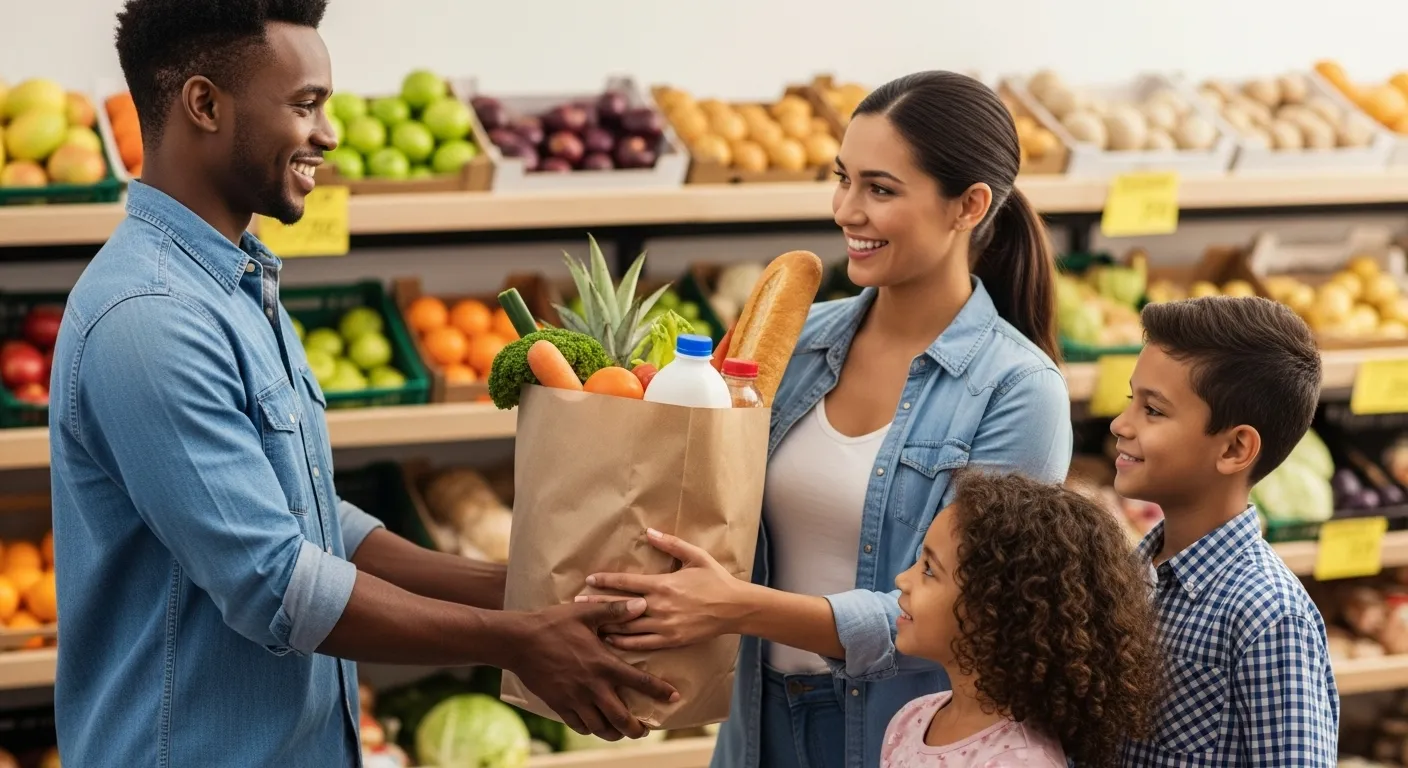
More than 1 in 10 U.S. households struggle to put nutritious food on the table—and in 2026, multiple federal programs stand ready to help. If your family is facing economic stress or worrying how to make this month’s grocery budget stretch, you are not alone and you are not without options. Government-backed initiatives are providing free groceries and food assistance to families in need—and we’ll walk you through the top current programs, how to check eligibility, and where to get help now.
What’s Happening Now: The Safety Net in 2026
In recent years, the national food-assistance landscape has seen both continuity and change. The Supplemental Nutrition Assistance Program (SNAP) remains the largest federal food-aid program. fns.usda.gov+2fns.usda.gov+2 At the same time, the Emergency Food Assistance Program (TEFAP) continues to supply no-cost groceries via food banks and pantries. fns.usda.gov If your household needs help accessing groceries, these programs are the most active, credible resources available.
How These Programs Work: Key Head-Turning Facts

SNAP – Grocery Access via EBT
- SNAP provides monthly food-benefit allowances via electronic benefits (EBT) cards that can be used at many supermarkets and retailers. fns.usda.gov+1
- Eligibility is income- and resource-based; the rules were updated for the period Oct 1 2026–Sept 30 2026. fns.usda.gov
- Application is through your state’s SNAP office; once approved you may receive benefits retroactively to the date of application. fns.usda.gov
TEFAP – Free Groceries via Food Banks
- TEFAP provides 100% USDA-grown foods, distributed at no cost to low-income households via state-operated pantry networks. fns.usda.gov+1
- No purchase required; access depends on your local food bank’s eligibility criteria, but many accept anyone who can demonstrate need. Feeding America
Why These Programs Matter: The Underlying Need

Shorter paragraphs help the key message stand out.
Low-income families often face the “food vs other bills” dilemma: eating well becomes a luxury. Programs like SNAP and TEFAP aim to fill that gap so that food security does not depend solely on fluctuating income or emergency support. Food banks indicate that free groceries for immediate relief remain a cornerstone of the safety net in 2026. 211.org+1
Step-by-Step: How to Get Access
- Check SNAP eligibility in your state.
Visit the official site for SNAP eligibility guidelines. fns.usda.gov - Locate a TEFAP food pantry near you.
Use tools like the Feeding America food-bank finder to locate local distribution sites. Feeding America - Gather documentation.
For SNAP: proof of income and household size; for TEFAP: often just a statement of need. - Apply promptly.
For SNAP, apply online or through state office; for TEFAP, visit or call your local pantry. - Explore additional programs.
Including nutrition programs for children, women or seniors — all valid in 2026. nutrition.gov+1
Who Qualifies? The Key Questions
- Does your household income fall below your state’s threshold for low-income assistance?
- Do you pay for rent, utilities or other non-food expenses that consume a good portion of your income?
- Are you pregnant, caring for young children, or over 60 years old (which may open additional programs)?
If you answered “yes” to any of these, you may well qualify for one or more assistance programs—so it’s worth checking.
Common Myths — Debunked
- Myth: “Only unemployed people can get help.”
Fact: Even working families with limited income may qualify. Programs base eligibility on income, household size and expenses—not solely employment status. - Myth: “You’ll be turned away if you’ve received help before.”
Fact: Many programs allow repeat use if you still meet eligibility and need criteria. - Myth: “It’s too complicated to apply.”
Fact: Applications are streamlined in many states; for TEFAP, many partner food banks simplify the process significantly.
Why You Should Act Now
With ongoing economic pressure—from rising grocery costs to housing and utility expenses—delaying assistance could mean missing out on benefits that make the difference between enough food and not enough. For example, if you’re eligible for SNAP now but wait, you may lose the retroactive benefit back to your application date. The same goes for local pantry programs: supplies and funding may vary, so securing access sooner helps guarantee support.
Broader Landscape & Related Programs
While SNAP and TEFAP are central, you should also be aware of:
- Women, Infants, and Children (WIC) – Nutrition support for pregnant women, infants and children under 5. nutrition.gov+1
- State-specific summer meal or EBT programs targeting children during school breaks. (Example: Michigan’s “SUN Bucks” program for Summer 2026.) Huron Daily Tribune
- Food-distribution programs targeted at older adults, such as the Commodity Supplemental Food Program (CSFP) and Senior Farmers Market Nutrition Program. USAGov
What to Do This Week
- Visit the official site for SNAP and check your state’s eligibility page.
- Plug your ZIP code into a national food-bank directory (for example via Feeding America) and identify nearby TEFAP providers.
- Set aside 20 minutes to gather required documents and start an application—action now means groceries sooner.
- If you care for children or seniors, ask the food bank or SNAP office about additional targeted benefits.
- Share this information with friends or neighbors who might also need help—spreading awareness builds community resilience.
Closing Sentiment
Access to free groceries and food assistance is a right, not a privilege for families in need. With the right information—and prompt action—you can turn a moment of vulnerability into one of empowerment. If the week ahead is tough, make today the day you reach out—because an appropriate program is waiting, and help is available. You do not have to face food insecurity alone.
Government Resources & Useful Links
- SNAP Eligibility: Official USDA SNAP page
- TEFAP: USDA Emergency Food Assistance Program
- Food Assistance Overview: USA.gov Food Help
- Find a Food Bank: Feeding America – Local Food Bank Finder


Final Call for LIHEAP 2026: Many States Ending Applications This April

How Startups Can Get SBIR/STTR Funding in 2026

What Single Moms Need to Know About 2026 State Child Tax Credits

Major 2026 SNAP Changes: What CalFresh Recipients Need to Know

25 Small Business Grants You Can Apply for in 2025

Top Veterans Financial Assistance Programs 2025

How to Get Free Help Paying Your Electric Bill

LIHEAP 2025 Application Guide for Energy Assistance
-
 Small Business Grants11 months ago
25 Small Business Grants You Can Apply for in 2025
-
 Veterans Assistance11 months ago
Top Veterans Financial Assistance Programs 2025
-
 Utility & Bills Help11 months ago
How to Get Free Help Paying Your Electric Bill
-
 Utility & Bills Help11 months ago
LIHEAP 2025 Application Guide for Energy Assistance
-

 Food & EBT / SNAP Benefits11 months ago
Fast Food Places That Accept EBT Cards (Full List)
-

 Housing Assistance11 months ago
Apply for Section 8 Housing Vouchers (Updated 2025)
-

 Small Business Grants10 months ago
Women-Owned Business Grants & Funding Sources
-

 Government Grants11 months ago
How to Apply for Government Grants Online
-

 Government Grants11 months ago
25 Federal Grants That Give Free Money in 2025
-

 Disability Benefits11 months ago
How Much Disability Pay Can You Get in 2025?