
Housing Assistance
How a $20,000 Rental Support Grant Is Helping Illinois Families Stay in Their Homes
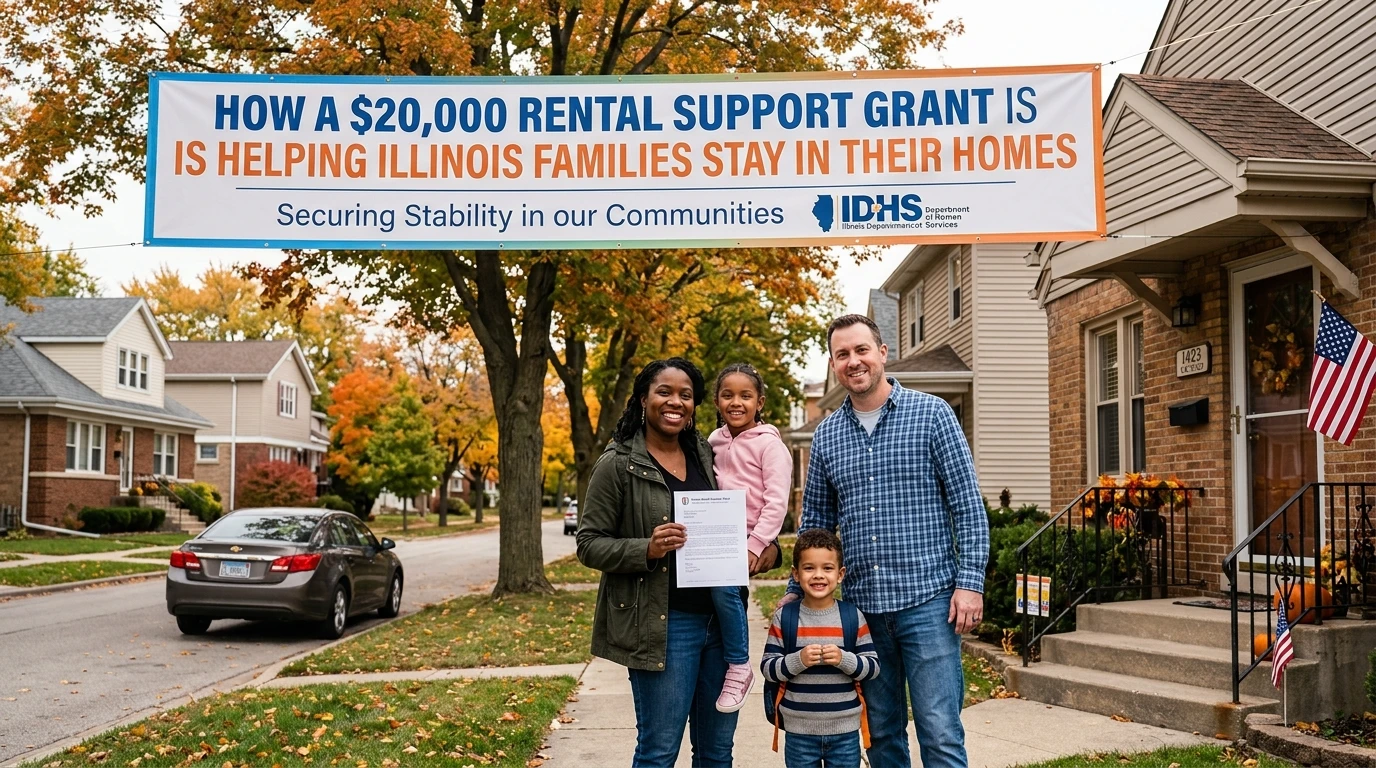
As housing costs continue to strain working families across Illinois, a renewed wave of state-funded rental support programs is helping prevent evictions and stabilize communities. In 2026–2026, Illinois households facing rental arrears or utility shutoffs may qualify for assistance of up to $20,000 per household under state-supported housing stability initiatives administered through local agencies and nonprofit partners.
This guide explains how the $20,000 Rental Support Grant in Illinois works, who qualifies, how to apply, and what new state updates mean for applicants, nonprofits, and local governments.
Policy Background: Why Illinois Expanded Rental Assistance in 2026–2026
The rental assistance framework builds on pandemic-era housing protections and ongoing affordability challenges. Programs are supported through appropriations approved by the Illinois General Assembly and administered in coordination with:
- Illinois Department of Human Services (IDHS)
- Illinois Housing Development Authority (IHDA)
- Illinois Department of Commerce and Economic Opportunity (DCEO)
These agencies distribute funds to approved local administrators, including municipalities, counties, and nonprofit service providers such as Riverbend Family Ministries.
Policy Objective:
Prevent homelessness, reduce eviction filings, and stabilize low- to moderate-income households affected by inflation, job loss, medical emergencies, or temporary financial hardship.
What Is the $20,000 Rental Support Grant?
The $20,000 rental support grant refers to the maximum combined household benefit cap available under certain Illinois rental and utility assistance programs in FY2026–2026.
Funding May Cover:
- Past-due rent (arrears)
- Future rent (limited months, if eligible)
- Past-due utilities (gas, electric, water)
- Utility reconnection fees
- Court-related eviction costs (where applicable)
Time-Sensitive Note (FY2026): Funding availability depends on state appropriations and local allocation limits. Some counties operate on rolling application windows and may pause intake once funding caps are reached.
New State Updates (2026–2026)
According to recent administrative guidance from state housing authorities:
- Household caps have been aligned with regional fair market rent (FMR) thresholds.
- Priority is given to:
- Families with children
- Seniors (62+)
- Individuals with disabilities
- Households below 50% of Area Median Income (AMI)
- Documentation standards have been tightened to reduce fraud and ensure compliance.
- Nonprofit subgrantees must provide eviction diversion counseling.
Local providers, including Riverbend Family Ministries, have confirmed that beyond receiving state grant funds, they actively deliver rental and utility stabilization services through their Client Service Departments and community partnerships, helping families avoid homelessness or displacement.
Who Is Eligible for the $20,000 Rental Support Grant in Illinois?
Eligibility is determined by state guidelines and local administering agencies.
Core Eligibility Criteria (Evergreen)
Applicants must:
- Be Illinois residents
- Be renting a primary residence
- Demonstrate financial hardship (job loss, income reduction, medical emergency)
- Meet income thresholds (generally ≤ 80% AMI; priority under 50% AMI)
- Show risk of eviction or utility shutoff
Income Guidelines (Example Framework)
| Household Size | 50% AMI (Priority Tier) | 80% AMI (General Limit) |
| 1 Person | Varies by county | Varies by county |
| 4 Persons | Based on HUD regional data | Based on HUD regional data |
Applicants must check county-specific AMI tables via IHDA or IDHS portals.
How the $20,000 Rental Support Grant Is Distributed
Funds are not typically paid directly to tenants. Instead:
- Payments are issued directly to landlords.
- Utility payments are sent to providers.
- Some agencies coordinate payment agreements with housing courts.
This structure ensures compliance with state fiscal controls and reduces misuse of funds.
How to Apply for Rental Assistance in Illinois (Step-by-Step)
Step 1: Identify Your Local Administrator
Visit:
- IHDA housing assistance portal
- IDHS community action agency locator
Applicants may also contact local nonprofits such as Riverbend Family Ministries.
Step 2: Gather Required Documentation
Most programs require:
- Government-issued ID
- Lease agreement
- Eviction notice (if applicable)
- Proof of income (last 30–60 days)
- Utility bills (if requesting utility support)
- Hardship statement
Step 3: Submit Application
Applications may be submitted:
- Online
- In-person at approved agencies
- Through coordinated intake events
Step 4: Case Review & Verification
Agencies verify:
- Income
- Rental obligation
- Landlord participation
- Funding availability
Step 5: Payment Authorization
If approved, payments are issued directly to landlords or service providers.
Role of Riverbend Family Ministries in Housing Stability
Riverbend Family Ministries serves as a frontline community partner in Illinois rental support efforts.
Beyond receiving the $20,000 state grant allocation for eligible clients, the organization:
- Operates a Client Service Department
- Conducts housing stability assessments
- Provides budgeting and financial counseling
- Coordinates landlord mediation
- Connects families to food and utility support programs
This integrated model strengthens long-term housing retention rather than offering one-time relief alone.
Common Reasons Applications Are Denied
Understanding rejection factors can improve approval chances.
- Incomplete documentation
- Income exceeding eligibility limits
- Landlord refusal to participate
- Duplicate benefits from another program
- Funding exhausted in the applicant’s county
Applicants may request reconsideration depending on local policy.
How Much Funding Is Available in 2026–2026?
Funding levels vary by fiscal year appropriations.
For FY2026:
- Per-household cap: Up to $20,000
- Local agency caps may be lower depending on demand
- Funds are limited and distributed first-come, first-served unless priority categories apply
Time-Sensitive Section: Applicants should verify current funding status through IHDA or IDHS websites before applying.
Frequently Asked Questions (FAQ)
Who is eligible for the $20,000 rental support grant in Illinois?
Eligible applicants must be Illinois renters facing financial hardship, meet income limits (generally ≤80% AMI), and show risk of eviction or utility disconnection.
How much funding can a household receive?
Up to $20,000 per household in combined rental and utility assistance, subject to local caps and funding availability.
How do I apply for Illinois rental assistance?
Apply through the Illinois Housing Development Authority portal, the Illinois Department of Human Services, or approved local agencies such as Riverbend Family Ministries.
What documents are required?
Applicants typically need:
- Lease agreement
- ID
- Proof of income
- Eviction notice (if applicable)
- Utility bills
Can landlords refuse to participate?
Yes. Some programs require landlord participation. If a landlord declines, applicants should contact local housing counselors for alternative options.
Is this program available statewide?
Yes, but funding allocation and intake periods vary by county and municipality.
Sources:
- Illinois Housing Help Portal (Statewide Assistance Information)
https://www.illinoishousinghelp.org/home - Illinois Housing Development Authority (IHDA) — Main Official Site
https://www.ihda.org/ - Rental Housing Resources — IHDA (Rental listings & assistance contacts)
https://www.ihda.org/rental-housing-main/rental-housing-2/ - Court-Based Rental Assistance Program info on Illinois Housing Help Portal
https://www.illinoishousinghelp.org/home/cbrap - Illinois Department of Commerce & Economic Opportunity (Housing Assistance)
https://dceo.illinois.gov/communityservices/housingassistance.html - HUD – Illinois State Housing Information (Federal resource)
https://www.hud.gov/states/illinois







Final Call for LIHEAP 2026: Many States Ending Applications This April

How Startups Can Get SBIR/STTR Funding in 2026

What Single Moms Need to Know About 2026 State Child Tax Credits

Major 2026 SNAP Changes: What CalFresh Recipients Need to Know

25 Small Business Grants You Can Apply for in 2025

Top Veterans Financial Assistance Programs 2025

How to Get Free Help Paying Your Electric Bill

LIHEAP 2025 Application Guide for Energy Assistance
-
 Small Business Grants11 months ago
25 Small Business Grants You Can Apply for in 2025
-
 Veterans Assistance11 months ago
Top Veterans Financial Assistance Programs 2025
-
 Utility & Bills Help11 months ago
How to Get Free Help Paying Your Electric Bill
-
 Utility & Bills Help11 months ago
LIHEAP 2025 Application Guide for Energy Assistance
-

 Food & EBT / SNAP Benefits11 months ago
Fast Food Places That Accept EBT Cards (Full List)
-

 Housing Assistance11 months ago
Apply for Section 8 Housing Vouchers (Updated 2025)
-

 Small Business Grants10 months ago
Women-Owned Business Grants & Funding Sources
-

 Government Grants11 months ago
How to Apply for Government Grants Online
-

 Government Grants11 months ago
25 Federal Grants That Give Free Money in 2025
-

 Disability Benefits11 months ago
How Much Disability Pay Can You Get in 2025?