
Disability Benefits
Disability Benefits in 12 States: Who Gets Extra SSI Payments
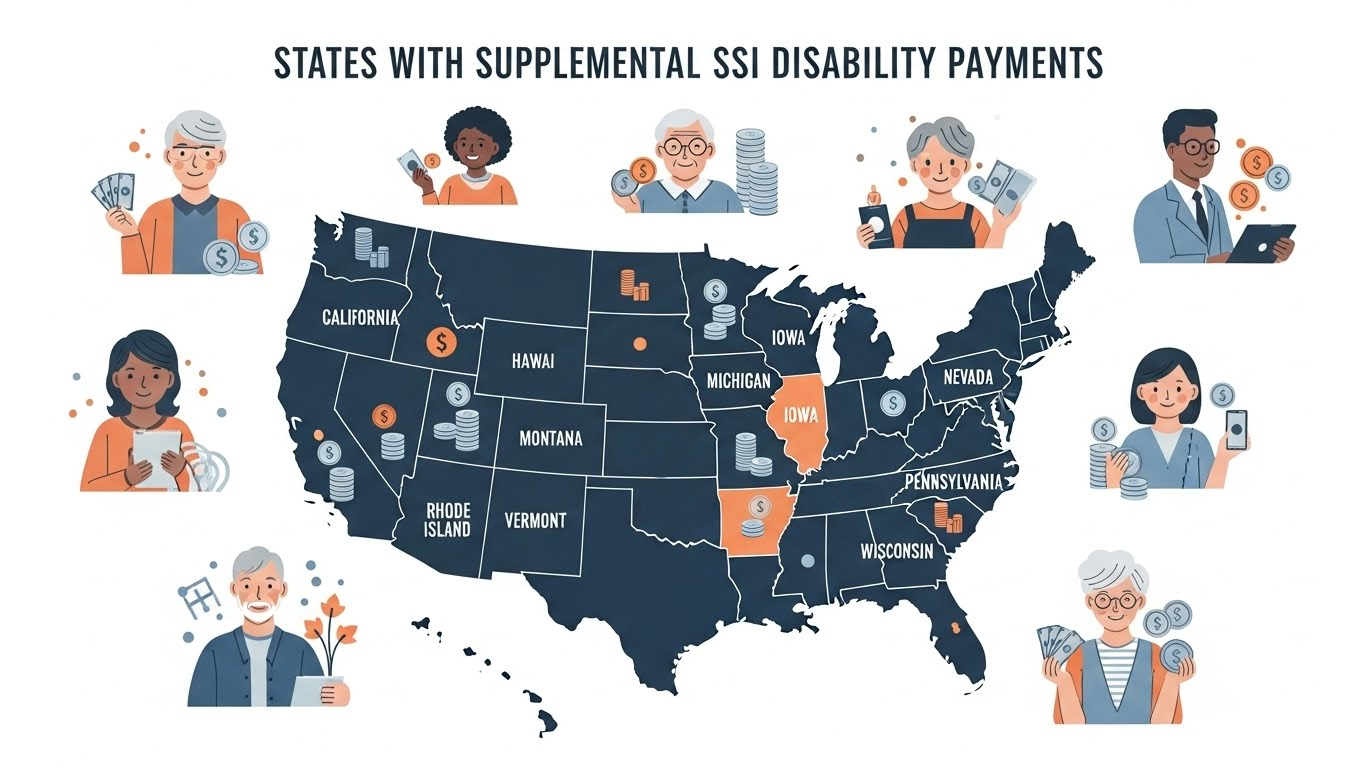
For individuals with disabilities receiving Supplemental Security Income (SSI), federal payments are the baseline support. However, 12 states offer additional state-funded SSI payments, designed to address local cost-of-living differences and provide extra financial support. Understanding who qualifies, how much is paid, and how to apply can help applicants maximize benefits and avoid delays. This guide draws from verified Social Security Administration (SSA) sources, state policy documents, and official grant notifications to provide a clear, factual overview.
Understanding the Policy Behind State SSI Supplements
SSI is a federally funded program administered by the Social Security Administration (SSA) to support low-income individuals who are aged, blind, or disabled. While federal SSI payments are uniform nationwide, state supplements exist to recognize differences in living costs and state policy priorities.
These supplements are legally authorized by 42 U.S.C. § 1382f, allowing states to administer additional payments either automatically or through separate application processes. The goal is to reduce financial hardship, improve quality of life, and provide more equitable support for residents with disabilities.
Which 12 States Offer Extra SSI Payments?
The following states provide state supplements to federal SSI recipients:
| State | Payment Type | Eligibility Criteria | Administering Agency |
| California | Standard & Optional | All SSI recipients meeting state residency | CA Department of Social Services |
| New York | Standard & Living Supplement | SSI recipients under 65 with disability | NY Office of Temporary & Disability Assistance |
| New Jersey | Optional State Supplement | SSI recipients in approved programs | NJ Division of Disability Services |
| Pennsylvania | Standard Payment | SSI recipients who meet residency & income | PA Department of Human Services |
| Michigan | Optional State Supplement | Low-income SSI recipients | MI Department of Health & Human Services |
| Florida | Standard Payment | SSI recipients with verified disability | FL Department of Children & Families |
| Massachusetts | Optional State Supplement | SSI recipients with financial need | MA Executive Office of Health & Human Services |
| Ohio | Standard Payment | SSI recipients in the state | OH Department of Job & Family Services |
| Connecticut | Optional State Supplement | SSI recipients meeting residency | CT Department of Social Services |
| Washington | Standard Payment | SSI recipients with disability certification | WA Department of Social & Health Services |
| Oregon | Optional State Supplement | SSI recipients with verified low income | OR Department of Human Services |
| Hawaii | Optional State Supplement | SSI recipients residing in-state | HI Department of Human Services |
Who Benefits and Why These Supplements Exist
State SSI supplements exist primarily to:
- Offset higher housing and healthcare costs in certain regions.
- Address gaps in federal SSI payments, ensuring a minimum livable income.
- Provide targeted support to vulnerable populations, including seniors and persons with disabilities.
Eligible beneficiaries are typically SSI recipients who meet state residency requirements. In some states, additional documentation proving income, disability, and housing costs is required.
Eligibility and Application Process
Eligibility Overview:
- Must be a recipient of federal SSI.
- Must reside in the state offering the supplement.
- May need to provide:
- Proof of disability or age
- Proof of income and resources
- Proof of residency
How to Apply:
- Automatic Supplement States: Payment is added automatically to federal SSI checks.
- Optional Application States: Applicants must complete a state-specific form through the state agency.
Required Documents:
- SSA benefit verification
- State residency documentation
- Income statements (if applicable)
- Medical certification (for disability verification)
Common Reasons for Rejection:
- Failure to meet residency requirements
- Missing or incomplete documentation
- Income above state-specific thresholds
FAQs
Who qualifies for extra SSI payments in these 12 states?
Individuals who receive federal Supplemental Security Income (SSI) and meet state residency requirements are typically eligible. Some states may require additional documentation, such as proof of disability, income, or living arrangements.
How much extra SSI money can I receive?
The amount varies by state, household size, and living situation. For example, some states provide $20–$200 per month, while others adjust payments based on local cost-of-living factors. Applicants should check their state agency’s supplement schedule.
Do I need to apply separately for state supplements?
It depends on the state. Automatic states add the supplement directly to federal SSI payments, while optional states require a separate application through the state social services department.
What documents are required to get extra SSI payments?
Common documents include:
- Federal SSI award letter from the SSA
- Proof of state residency
- Income verification (if required by state)
- Disability certification or medical documentation
Why do states offer extra SSI payments?
State supplements exist to offset higher local costs, provide financial stability for vulnerable populations, and enhance federal SSI support to ensure a minimum standard of living for residents with disabilities.
Sources:
- Social Security Administration (SSA) – Supplemental Security Income (SSI)
https://www.ssa.gov/ssi/
Official federal source for SSI program details, eligibility, and benefits. - U.S. Department of Health & Human Services (HHS) – State Assistance Programs
https://www.hhs.gov/programs/
Information on state-administered supplements and social service programs. - National Council on Disability (NCD) – Reports and Policy Guidance
https://ncd.gov/
Provides research and policy analysis on disability benefits across states. - State Social Services Departments
Examples:
- California Department of Social Services: https://www.cdss.ca.gov/
- New York Office of Temporary & Disability Assistance: https://otda.ny.gov/
Direct state-level guidance on supplemental SSI payments, application processes, and eligibility.
- California Department of Social Services: https://www.cdss.ca.gov/








Final Call for LIHEAP 2026: Many States Ending Applications This April

How Startups Can Get SBIR/STTR Funding in 2026

What Single Moms Need to Know About 2026 State Child Tax Credits

Major 2026 SNAP Changes: What CalFresh Recipients Need to Know

25 Small Business Grants You Can Apply for in 2025

Top Veterans Financial Assistance Programs 2025

How to Get Free Help Paying Your Electric Bill

LIHEAP 2025 Application Guide for Energy Assistance
-
 Small Business Grants11 months ago
25 Small Business Grants You Can Apply for in 2025
-
 Veterans Assistance11 months ago
Top Veterans Financial Assistance Programs 2025
-
 Utility & Bills Help11 months ago
How to Get Free Help Paying Your Electric Bill
-
 Utility & Bills Help11 months ago
LIHEAP 2025 Application Guide for Energy Assistance
-

 Food & EBT / SNAP Benefits11 months ago
Fast Food Places That Accept EBT Cards (Full List)
-

 Housing Assistance11 months ago
Apply for Section 8 Housing Vouchers (Updated 2025)
-

 Small Business Grants11 months ago
Women-Owned Business Grants & Funding Sources
-

 Government Grants11 months ago
How to Apply for Government Grants Online
-

 Government Grants11 months ago
25 Federal Grants That Give Free Money in 2025
-

 Disability Benefits11 months ago
How Much Disability Pay Can You Get in 2025?