
Government Grants
Top Federal & State Grants You Can Apply for Before the End of 2026
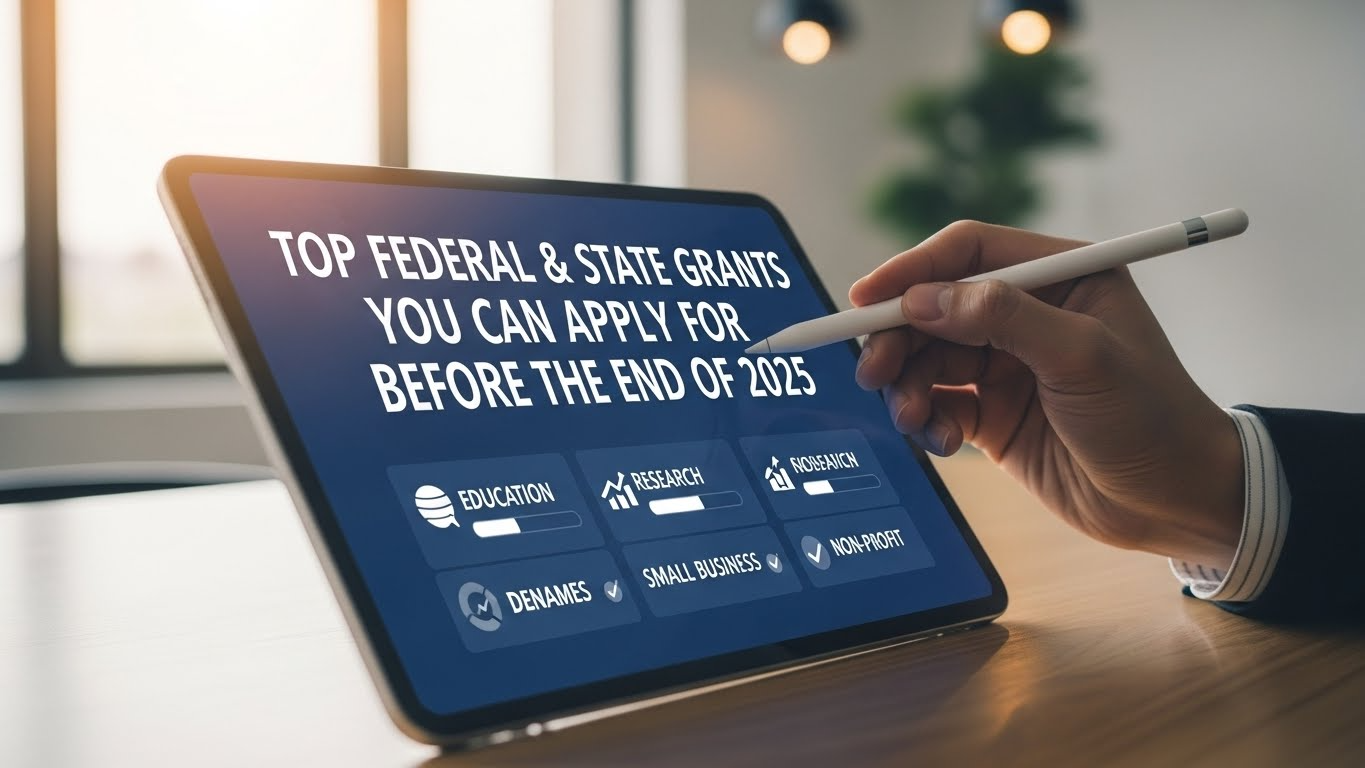
As federal and state budgets for 2026 open new funding opportunities, applicants including nonprofits, small businesses, students, and local governments can access grants designed to support innovation, community development, and public services. This guide highlights top grants you can apply for before the end of 2026, offering detailed eligibility criteria, funding limits, and deadlines sourced from official government announcements.
Understanding these grants ensures your application aligns with federal and state objectives, increasing your chances of securing funding.
Why These Grants Exist
Grants issued by government agencies aim to:
- Promote economic growth and workforce development.
- Advance research, technology, and innovation.
- Support underserved communities and public services.
- Encourage sustainability, healthcare, and education initiatives.
Each grant is tied to statutory or regulatory frameworks, meaning eligibility and funding priorities are legally defined.
Federal Grants Available in 2026
| Program Name | Agency | Funding Range | Eligibility | Deadline | Purpose |
| Small Business Innovation Research (SBIR) | U.S. Small Business Administration (SBA) | $150,000–$1M | U.S. small businesses with innovative tech projects | Rolling, check agency site | Stimulate tech innovation and commercialization |
| Federal Pell Grant | U.S. Department of Education | Up to $7,395 | Undergraduate students demonstrating financial need | FAFSA 2026–26 cycle: June 2026 | Support access to postsecondary education |
| Community Development Block Grant (CDBG) | U.S. Department of Housing & Urban Development (HUD) | Varies by jurisdiction | Local governments, nonprofits | Applications typically by mid-2026 | Fund community development and housing initiatives |
| National Science Foundation (NSF) Research Grants | NSF | $50,000–$500,000 | Universities, research institutions, eligible startups | Varies by program | Advance scientific research and innovation |
| Agriculture Innovation Grant | U.S. Department of Agriculture (USDA) | $50,000–$250,000 | Farmers, rural entrepreneurs, nonprofits | Fall 2026 | Enhance agricultural practices and rural development |
Tips for Federal Applications:
- Register on Grants.gov well in advance.
- Carefully follow agency-specific instructions; missing a required document is the most common reason for rejection.
- Track funding cycles as some programs have multiple deadlines per fiscal year.
State Grants You Can Apply For
State-level grants often complement federal programs and target local priorities. Eligibility and deadlines vary by state. Below are examples for 2026:
| State | Program Name | Funding | Eligible Applicants | Deadline | Purpose |
| California | California Small Business COVID-19 Relief Grant | $5,000–$25,000 | Small businesses affected by COVID-19 | December 31, 2026 | Economic recovery and workforce retention |
| New York | Excelsior Jobs Program | Up to $5M tax credit | Startups, expanding businesses | Ongoing | Job creation and business expansion |
| Texas | Texas Education Grant Program | $1,000–$10,000 | Students and educators | June 2026 | Support education and professional development |
| Florida | Florida Cultural Endowment | $5,000–$50,000 | Arts organizations, nonprofits | August 2026 | Promote arts and cultural initiatives |
State Grant Notes:
- Each state maintains its own application portal and compliance rules.
- Deadlines are strictly enforced; late submissions are rarely accepted.
- Some programs require matching funds or detailed project budgets.
How to Determine Eligibility
- Check Agency Guidelines: Each program specifies eligible entities, project types, and financial requirements.
- Review Federal or State Registrations: Businesses often need a DUNS number, SAM registration, or state-specific ID.
- Understand Funding Priorities: Agencies fund projects aligned with policy goals, such as research, education, and infrastructure etc.
Common Reasons for Rejection:
- Missing or incomplete documentation
- Failure to meet eligibility requirements
- Non-alignment with program objectives
- Late submissions
Application Process Overview
Step 1: Identify applicable grants (use federal and state portals).
Step 2: Review official guidelines, FAQs, and policy notices.
Step 3: Gather required documents (budgets, letters of support, tax information).
Step 4: Submit through the official platform (Grants.gov, state portals).
Step 5: Track your application and respond promptly to follow-up requests.
Sources:
- Grants.gov
https://www.grants.gov
The official and most comprehensive portal for all U.S. federal grant opportunities and applications. - USA.gov – Grants & Financial Assistance
https://www.usa.gov/grants
Authoritative federal guidance on grant eligibility, application basics, and avoiding scams. - SAM.gov (System for Award Management)
https://sam.gov
Required registration system for most federal grant applicants; essential for compliance. - U.S. Small Business Administration (SBA) – Funding Programs
https://www.sba.gov/funding-programs
Primary source for small business grants, including SBIR/STTR and innovation funding. - U.S. Department of Education – Federal Student Aid
https://studentaid.gov
Official source for Pell Grants, FAFSA deadlines, and student grant eligibility. - California Grants Portal
https://www.grants.ca.gov
Centralized access point for California state grant opportunities.










How to Apply for Disability Benefits in 2026: Step-by-Step Guide

Apply for Emergency HEAP in New York – Jan 2, 2026 Begins

VA Benefits in 2026: Essential COLA, Top Compensation & Critical Policy Shifts

How HUD’s 2026 Strategy Is Breaking Down Barriers to Affordable Housing

25 Small Business Grants You Can Apply for in 2026

Top Veterans Financial Assistance Programs 2026

How to Get Free Help Paying Your Electric Bill

LIHEAP 2026 Application Guide for Energy Assistance
-
 Small Business Grants6 months ago
25 Small Business Grants You Can Apply for in 2026
-
 Veterans Assistance6 months ago
Top Veterans Financial Assistance Programs 2026
-
 Utility & Bills Help6 months ago
How to Get Free Help Paying Your Electric Bill
-
 Utility & Bills Help6 months ago
LIHEAP 2026 Application Guide for Energy Assistance
-

 Small Business Grants6 months ago
Women-Owned Business Grants & Funding Sources
-

 Government Grants6 months ago
How to Apply for Government Grants Online
-

 Government Grants6 months ago
25 Federal Grants That Give Free Money in 2026
-

 Food & EBT / SNAP Benefits6 months ago
Fast Food Places That Accept EBT Cards (Full List)
-

 Disability Benefits6 months ago
How Much Disability Pay Can You Get in 2026?
-

 Food & EBT / SNAP Benefits7 months ago
5 Key SNAP Policy Changes Coming in 2026 You Should Know