
Housing Assistance
Affordable Rental Assistance Options: Section 8, Vouchers & More Explained
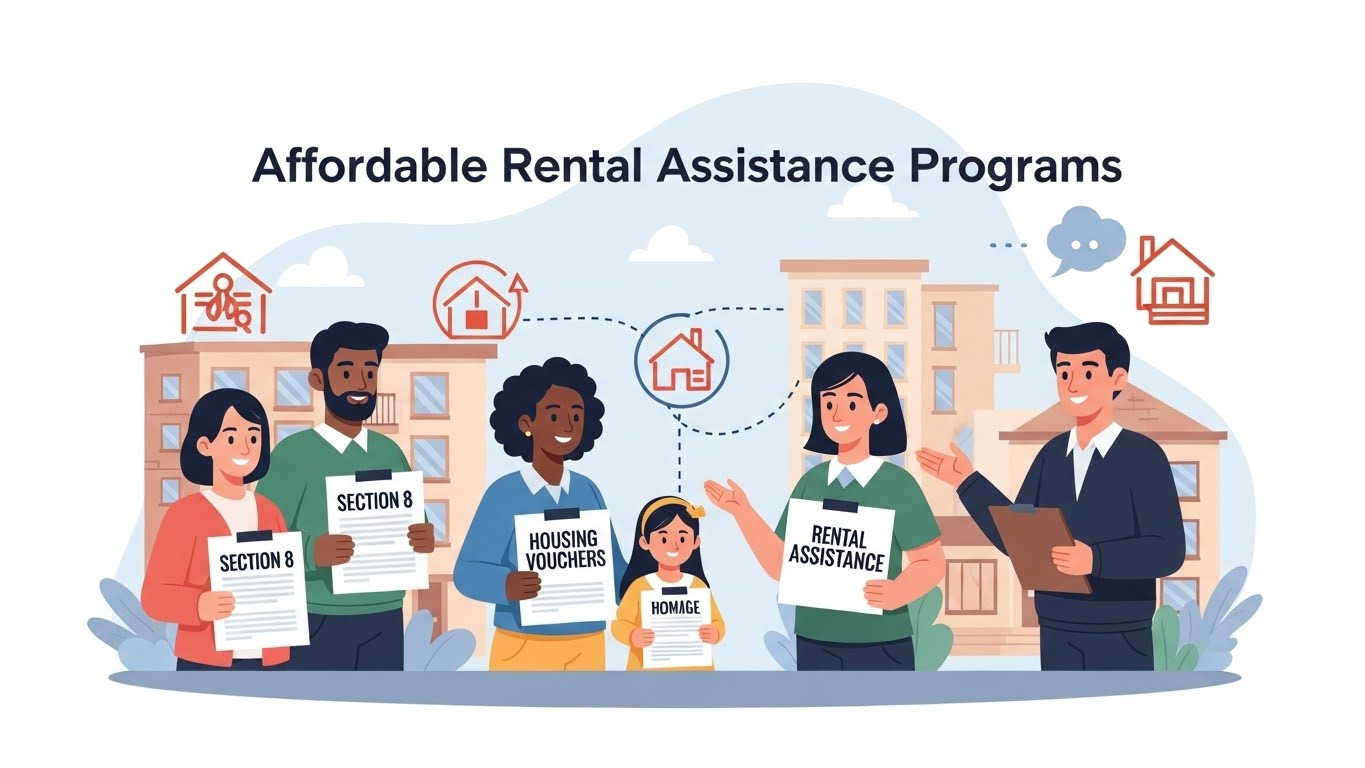
Accessing safe, affordable housing is a cornerstone of federal and state social policy. Programs such as Section 8 Housing Choice Vouchers, public housing assistance, and other rental support options aim to reduce financial barriers for low-income households, students, seniors, and people with disabilities. These programs are administered by the U.S. Department of Housing and Urban Development (HUD), in coordination with state and local housing authorities. Understanding eligibility, application procedures, and funding cycles is essential for applicants and community organizations. This guide explains the key options, requirements, and official resources to navigate rental assistance efficiently.
Overview of Federal Rental Assistance Programs
Rental assistance programs are designed to ensure that housing costs remain manageable relative to household income. Federal initiatives include:
- Section 8 Housing Choice Vouchers: Allows eligible tenants to choose rental units in the private market, paying 30% of their income toward rent.
- Public Housing Programs: Government-owned properties offer subsidized rent directly through local housing authorities.
- Project-Based Rental Assistance (PBRA): Housing subsidies tied to specific units rather than the tenant.
Key Agencies:
- U.S. Department of Housing and Urban Development (HUD)
- Local Public Housing Authorities (PHAs)
- State Housing Finance Agencies (HFAs)
Section 8 Housing Choice Vouchers Explained
Purpose and Policy Context
Section 8, established under the Housing Act of 1937, provides rental assistance to low-income families, seniors, and individuals with disabilities. The goal is to reduce homelessness, increase housing mobility, and allow families to live in safer neighborhoods with access to education and employment.
Who Is Eligible?
Eligibility is determined by:
- Income Limits: Typically 50% of the area median income (AMI) or lower.
- Family Size: Larger families may have higher voucher allocations.
- Citizenship Status: U.S. citizens and certain lawful immigrants qualify.
Example Income Limits (2026, HUD)
| Household Size | 50% AMI Limit | 30% AMI Limit |
| 1 Person | $40,500 | $24,300 |
| 2 Persons | $46,300 | $27,800 |
| 3 Persons | $52,100 | $31,250 |
| 4 Persons | $57,850 | $34,700 |
Note: Limits vary by metropolitan area and fiscal year; check your local PHA website.
Application Process
- Locate Your PHA – Use the HUD PHA directory.
- Submit an Application – Include proof of income, household composition, and citizenship status.
- Waitlist & Notification – Many programs have waiting lists; some use lottery systems.
- Voucher Issuance & Unit Selection – After approval, tenants select a unit that passes HUD inspection.
Funding & Payment Standards
- Voucher Payment Standard: Determined by local fair market rent (FMR).
- Tenant Contribution: 30% of adjusted income toward rent.
- PHA Subsidy: Covers the difference between rent and tenant contribution.
Other Affordable Rental Assistance Options

Public Housing
- Managed by local PHAs.
- Rent is based on 30% of household income.
- Priority often given to families, elderly, or disabled applicants.
Project-Based Rental Assistance (PBRA)
- Subsidy is tied to a unit rather than the tenant.
- Offers long-term affordability in private or nonprofit housing developments.
Emergency and State-Specific Rental Assistance
- Programs like Emergency Rental Assistance (ERA) provide temporary support during crises.
- States and municipalities may have additional grants, vouchers, or low-interest loans.
Common Questions & Troubleshooting
Q: How long does it take to get a Section 8 voucher?
A: Waiting lists vary; some PHAs may take months to years. Check the PHA website for updates.
Q: What documents are required?
- Proof of income (pay stubs, tax returns)
- Social Security numbers for household members
- Identification and residency verification
Q: Why might applications be rejected?
- Income above program limits
- Incomplete documentation
- Criminal history or previous program violations
Sources:
- U.S. Department of Housing and Urban Development (HUD) – Housing Choice Vouchers (Section 8)
https://www.hud.gov/topics/housing_choice_voucher_program_section_8 - HUD – Public Housing Program Overview
https://www.hud.gov/topics/rental_assistance/phprog - State Housing Finance Agencies Directory (National Council of State Housing Agencies)
https://www.ncsha.org/housing-finance-agencies/
Emergency Rental Assistance Program (ERA) – Treasury Department
https://home.treasury.gov/policy-issues/coronavirus/assistance-for-state-local-and-tribal-governments/emergency-rental-assistance-program







Final Call for LIHEAP 2026: Many States Ending Applications This April

How Startups Can Get SBIR/STTR Funding in 2026

What Single Moms Need to Know About 2026 State Child Tax Credits

Major 2026 SNAP Changes: What CalFresh Recipients Need to Know

25 Small Business Grants You Can Apply for in 2025

Top Veterans Financial Assistance Programs 2025

How to Get Free Help Paying Your Electric Bill

LIHEAP 2025 Application Guide for Energy Assistance
-
 Small Business Grants11 months ago
25 Small Business Grants You Can Apply for in 2025
-
 Veterans Assistance11 months ago
Top Veterans Financial Assistance Programs 2025
-
 Utility & Bills Help11 months ago
How to Get Free Help Paying Your Electric Bill
-
 Utility & Bills Help11 months ago
LIHEAP 2025 Application Guide for Energy Assistance
-

 Food & EBT / SNAP Benefits11 months ago
Fast Food Places That Accept EBT Cards (Full List)
-

 Housing Assistance11 months ago
Apply for Section 8 Housing Vouchers (Updated 2025)
-

 Small Business Grants10 months ago
Women-Owned Business Grants & Funding Sources
-

 Government Grants11 months ago
How to Apply for Government Grants Online
-

 Government Grants11 months ago
25 Federal Grants That Give Free Money in 2025
-

 Disability Benefits11 months ago
How Much Disability Pay Can You Get in 2025?