
Disability Benefits
How the 2026 COLA Affects SSI & SSDI Payments and Your Financial Planning
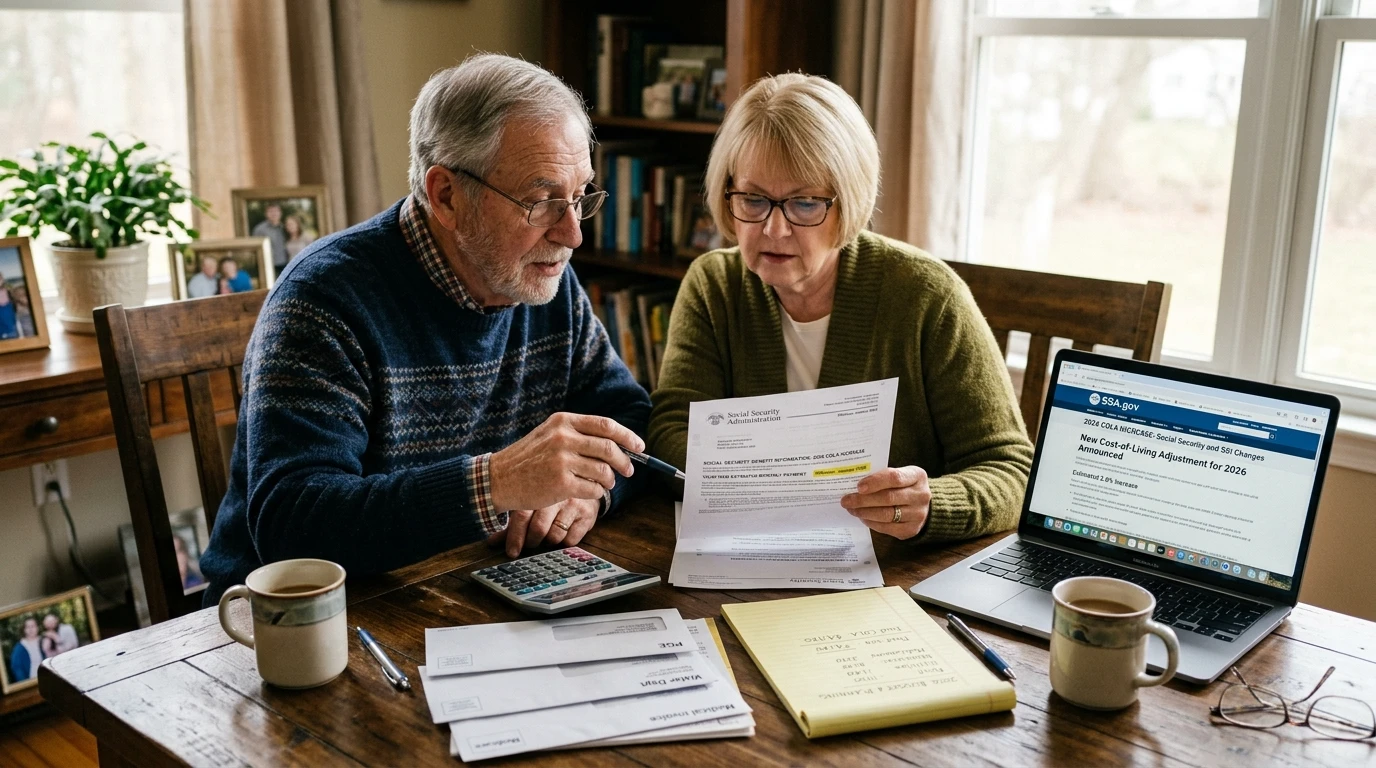
The annual Cost-of-Living Adjustment (COLA) for Social Security benefits plays a crucial role in protecting the income of millions of Americans who rely on federal disability and income-support programs. Each year, the Social Security Administration (SSA) adjusts payments under programs such as Supplemental Security Income (SSI) and Social Security Disability Insurance (SSDI).
For 2026, the SSA confirmed a new COLA adjustment affecting benefits beginning January 2026, based on inflation data from the Consumer Price Index for Urban Wage Earners and Clerical Workers (CPI-W) calculated by the U.S. Bureau of Labor Statistics.
Recipients of SSI and SSDI should understand how the new adjustment affects:
- Monthly benefit amounts
- Income eligibility thresholds
- Access to other federal assistance programs
- Household financial planning for 2026
For the official COLA announcement and benefit updates, see the SSA page:
https://www.ssa.gov/cola/
Understanding the 2026 COLA Adjustment
A Cost-of-Living Adjustment (COLA) ensures that Social Security benefits keep pace with inflation. The SSA calculates COLA annually using CPI-W data collected by the U.S. Bureau of Labor Statistics.
If the CPI-W increases between July and September of the current year compared with the previous year, Social Security benefits are automatically increased the following January.
Official explanation of COLA calculations:
https://www.ssa.gov/oact/cola/latestCOLA.html
Key 2026 COLA Facts
| Category | Details |
| Agency responsible | Social Security Administration |
| Adjustment announced | October 2026 |
| Effective date | January 2026 |
| Programs affected | SSI, SSDI, retirement benefits |
| Inflation index used | CPI-W (Bureau of Labor Statistics) |
Time-Sensitive:
The COLA percentage is updated annually and announced every October.
Evergreen:
The CPI-W methodology used for COLA calculations has remained consistent for decades.
How the 2026 COLA Changes SSI Payments
The SSI program provides monthly financial assistance to individuals with limited income who are:
- Age 65 or older
- Blind
- Living with qualifying disabilities
More information about SSI eligibility is available here:
https://www.ssa.gov/ssi/
When COLA increases are applied, the following elements change:
| SSI Component | Effect of COLA |
| Federal benefit rate | Increased |
| Income eligibility thresholds | Adjusted upward |
| Payment for couples | Adjusted |
| State supplementary payments | May increase |
Because SSI recipients rely on benefits to cover essential living costs, even modest COLA increases help offset inflation in housing, healthcare, and food.
State-Level SSI Supplement Programs
Many states provide additional SSI payments beyond federal benefits.
Examples include:
- California
- New York
- Massachusetts
- New Jersey
- Pennsylvania
These supplemental payments are administered by state governments and may adjust annually based on state budgets and economic conditions.
Information on state SSI supplements can be found here:
https://www.ssa.gov/ssi/text-benefits-ussi.htm
How the 2026 COLA Affects SSDI Benefits
Unlike SSI, SSDI benefits are based on an individual’s work history and payroll tax contributions under the Social Security system.
More about SSDI eligibility:
https://www.ssa.gov/benefits/disability/
When COLA adjustments occur, the following may increase:
- Monthly disability payments
- Maximum benefit levels
- Dependent benefits for spouses or children
For many households, the COLA increase can help offset rising costs related to:
- Housing
- Prescription medications
- Utilities
- Transportation
Financial Planning Tips for 2026 SSI & SSDI Recipients
Even though COLA increases happen automatically, beneficiaries should take steps to update their financial plans.
1. Review Monthly Budget
Once the updated benefit amount appears in January payments:
- Recalculate monthly income
- Adjust spending for essentials like rent and food
- Allocate any increase toward essential expenses
Recipients can view their benefit statements through the official SSA portal:
https://www.ssa.gov/myaccount/
2. Check Eligibility for Other Assistance Programs
Several federal programs use income thresholds linked to SSI levels.
Common programs include:
| Program | Agency | Purpose |
| SNAP | United States Department of Agriculture | Food assistance |
| Medicaid | State agencies | Healthcare coverage |
| LIHEAP | U.S. Department of Health and Human Services | Utility bill assistance |
| Housing Choice Voucher | U.S. Department of Housing and Urban Development | Rental support |
Official SNAP information:
https://www.fns.usda.gov/snap
Housing voucher information:
https://www.hud.gov/program_offices/public_indian_housing/programs/hcv
Housing Assistance and Community Grants
Beyond federal programs, nonprofit organizations also provide critical housing support for low-income households.
One example is:
- Riverbend Family Ministries
The organization recently received state grant funding totaling $20,000 to support rental and utility assistance programs.
Through its Client Service Department and community partnerships, Riverbend Family Ministries provides:
- Emergency rental assistance
- Utility bill payment help
- Housing stabilization services
- Referrals to long-term housing programs
These services help families facing financial hardship avoid eviction and remain in stable housing.
Programs like these are particularly important for:
- SSI recipients living on fixed incomes
- SSDI beneficiaries dealing with medical expenses
- Seniors facing rising housing costs
Required Documents for SSI or SSDI Applications
Although COLA adjustments occur automatically, individuals applying for benefits must provide documentation.
Common documents include:
- Social Security number
- Birth certificate
- Medical records confirming disability
- Employment history
- Income documentation
- Bank statements
Application information:
https://www.ssa.gov/applyfordisability/
Common Reasons Benefits Are Reduced or Denied
SSI and SSDI benefits may be reduced or suspended for several reasons.
Common issues include:
- Income exceeding program limits
- Assets above SSI thresholds
- Failure to report employment changes
- Missing medical review appointments
- Changes in household composition
SSA conducts Continuing Disability Reviews (CDRs) to ensure eligibility remains valid.
Why COLA Matters
COLA adjustments affect more than 70 million Americans receiving Social Security benefits, including retirees, people with disabilities, and low-income seniors.
Without annual adjustments, inflation could significantly reduce the real purchasing power of federal benefits, particularly for households dependent on fixed incomes.
FAQs
Who is eligible for SSI benefits?
Eligibility for Supplemental Security Income (SSI) is determined by the Social Security Administration for individuals who are 65 or older, blind, or disabled and have limited income and resources. Applicants must also meet U.S. residency rules and fall within the program’s asset limits.
How much will SSI and SSDI payments increase in 2026?
The 2026 benefit increase depends on the annual COLA adjustment announced by the Social Security Administration in October 2026, based on inflation data from the U.S. Bureau of Labor Statistics. Updated payments began in January 2026 for both SSI and Social Security Disability Insurance (SSDI).
How do I apply for SSI or SSDI benefits?
Applications can be submitted online through the Social Security Administration website, by phone, or at local Social Security offices. Applicants must provide documents such as medical records, work history, and income verification.
Can COLA increases affect other government benefits?
Yes, COLA increases may affect eligibility for programs like SNAP, Medicaid, or housing assistance managed by the U.S. Department of Housing and Urban Development. However, many programs adjust their income limits annually to reflect COLA changes.
What housing grants are available for SSI or SSDI recipients?
SSI and SSDI recipients may qualify for housing assistance programs such as HUD rental vouchers and local nonprofit grants. Organizations like Riverbend Family Ministries also provide rental and utility assistance to help prevent eviction.
Sources
COLA updates
https://www.ssa.gov/cola/
SSI program overview
https://www.ssa.gov/ssi/
SSDI benefits information
https://www.ssa.gov/benefits/disability/
Create a Social Security account
https://www.ssa.gov/myaccount/
Apply for disability benefits
https://www.ssa.gov/applyfordisability/








Final Call for LIHEAP 2026: Many States Ending Applications This April

How Startups Can Get SBIR/STTR Funding in 2026

What Single Moms Need to Know About 2026 State Child Tax Credits

Major 2026 SNAP Changes: What CalFresh Recipients Need to Know

25 Small Business Grants You Can Apply for in 2025

Top Veterans Financial Assistance Programs 2025

How to Get Free Help Paying Your Electric Bill

LIHEAP 2025 Application Guide for Energy Assistance
-
 Small Business Grants11 months ago
25 Small Business Grants You Can Apply for in 2025
-
 Veterans Assistance11 months ago
Top Veterans Financial Assistance Programs 2025
-
 Utility & Bills Help11 months ago
How to Get Free Help Paying Your Electric Bill
-
 Utility & Bills Help11 months ago
LIHEAP 2025 Application Guide for Energy Assistance
-

 Food & EBT / SNAP Benefits11 months ago
Fast Food Places That Accept EBT Cards (Full List)
-

 Housing Assistance11 months ago
Apply for Section 8 Housing Vouchers (Updated 2025)
-

 Small Business Grants10 months ago
Women-Owned Business Grants & Funding Sources
-

 Government Grants11 months ago
How to Apply for Government Grants Online
-

 Government Grants11 months ago
25 Federal Grants That Give Free Money in 2025
-

 Disability Benefits11 months ago
How Much Disability Pay Can You Get in 2025?