
Education & Student Grants
Birth to Five Illinois Expands Early Childhood Education with $12,500 Grants
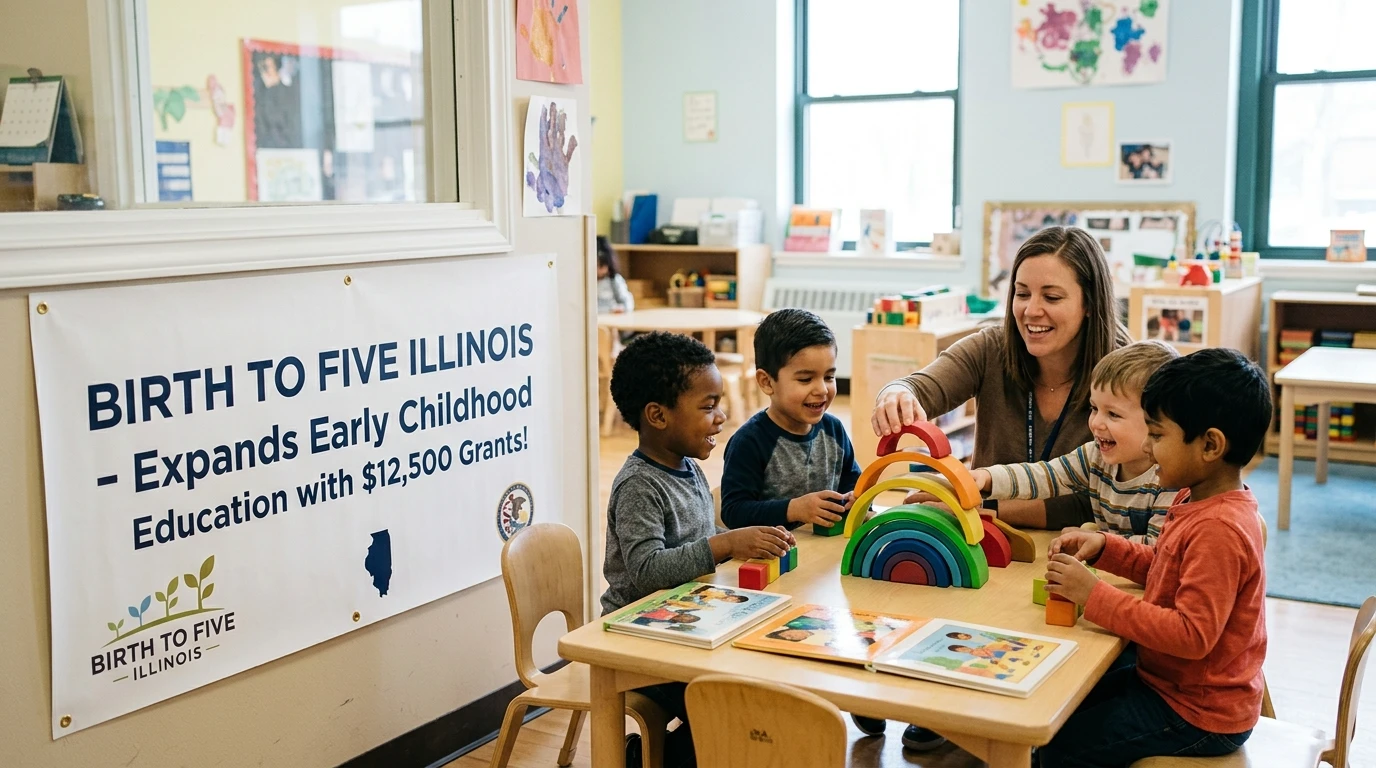
Illinois is expanding its investment in early childhood systems through the Birth to Five Illinois initiative, offering targeted grants and planning funding of up to $12,500 to strengthen local early childhood collaborations across the state.
Backed by the Illinois State Board of Education (ISBE), the program continues to direct millions of dollars toward improving early childhood services, developmental screenings, and parent outreach networks. The initiative is part of a broader statewide strategy designed to ensure young children from birth to age five have access to quality early learning opportunities and family support systems.
Recent fiscal year updates show that more than $11.87 million has been invested in regional early childhood collaborations since FY2023, covering 35 of Illinois’ 39 regions. (Birth to Five Illinois)
For community organizations, nonprofits, and early childhood coalitions, the newly expanded planning grants represent an opportunity to build local partnerships, coordinate services, and improve developmental outcomes for children and families.
Latest Funding Updates (FY2026–FY2026)
Time-Sensitive Update (2026–2026 Program Cycle)
Recent announcements confirm additional funding allocations through Fiscal Year 2026 to strengthen regional collaborations and expand early childhood outreach.
| Program Detail | Latest Update |
| Program | Birth to Five Illinois Planning & Collaboration Grants |
| Administered By | Illinois State Board of Education |
| Maximum Planning Grant | Up to $12,500 |
| FY2026 Statewide Funding | About $2.5 million for regional collaborations |
| Regions Covered | 35 out of 39 Illinois regions |
| Grant Cycle | March 2, 2026 – December 31, 2026 |
| Payment Method | Reimbursement based on monthly expense reports |
These grants are designed to support early-stage planning, collaboration building, and community engagement activities that strengthen early childhood education infrastructure.
The FY2026 funding round includes 43 subcontract awards to local collaborations responsible for coordinating services such as developmental screenings, newborn resource kits, and caregiver outreach programs. (Birth to Five Illinois)
What Is the Birth to Five Illinois Program?
Birth to Five Illinois is a statewide initiative designed to coordinate early childhood education and family support services.
The program focuses on building local collaboration systems that connect families with resources such as:
- Early childhood education programs
- Developmental screenings
- Parenting support services
- Health and nutrition programs
- Childcare access and referrals
Rather than funding individual childcare providers directly, the program typically funds regional collaborations and planning initiatives that improve access to services.
Key objectives include:
- Strengthening community-based early childhood networks
- Improving access to developmental screenings
- Increasing awareness of early learning resources
- Supporting caregiver engagement and outreach
How the $12,500 Planning Grants Work
The $12,500 planning grants are intended for communities that want to launch or expand early childhood collaborations but need initial funding for coordination and strategy development.
Allowable Grant Activities
Organizations receiving funding may use the grant for:
- Community planning meetings
- Parent or caregiver engagement events
- Early childhood system mapping
- Outreach and education campaigns
- Data collection and research
- Local partnership development
In some cases, stipends for participants and consultants are also considered allowable expenses, provided documentation and compliance requirements are met.
Grant recipients must submit monthly expense reports for reimbursement during the program cycle. (Birth to Five Illinois)
Who Is Eligible for the Birth to Five Illinois Grants?
Eligibility generally focuses on organizations capable of coordinating community-level early childhood initiatives.
Eligible Applicants
Typical eligible applicants include:
- Nonprofit organizations
- Local early childhood collaborations
- Community coalitions
- Local government agencies
- Education organizations
- Regional child development networks
Organizations already receiving Birth to Five Illinois subcontract funding for the same collaboration may not apply for planning grants for that same project, though they may participate in different regions.
Required Documents for Grant Applications
Applicants should prepare the following documentation before submitting a proposal:
| Required Document | Purpose |
| Organizational registration documents | Verify nonprofit or institutional status |
| Project proposal | Outline collaboration goals and community impact |
| Budget plan | Detail how the grant funds will be used |
| Community partnership agreements | Demonstrate local collaboration |
| Data or needs assessment | Show demand for early childhood services |
Grant reviewers evaluate proposals based on community impact, collaboration strength, and feasibility.
Additional Illinois Community Grants Supporting Families
Beyond early childhood education initiatives, Illinois also continues to fund programs that support housing stability and community services.
For example, in 2026 the Illinois State Treasurer’s Office awarded nearly $200,000 in Charitable Trust grants to small nonprofits assisting vulnerable families.
One recipient, Riverbend Family Ministries in Wood River, received a $20,000 grant to help families avoid housing instability.
Through its Client Service Department and local partnerships, the nonprofit provides:
- Rental assistance
- Utility payment support
- Crisis stabilization services
The funding allows organizations to intervene during financial emergencies and help families remain housed. (riverbender.com)
Programs like these complement early childhood initiatives by addressing housing and economic stability, two factors strongly linked to child development outcomes.
How to Apply for Birth to Five Illinois Grants
Applicants must typically follow these steps:
Step-by-Step Application Process
- Review program guidance
- Check grant eligibility and collaboration requirements.
- Develop a community collaboration plan
- Identify partners such as schools, health agencies, and nonprofits.
- Prepare a project proposal
- Define goals, outreach activities, and expected outcomes.
- Submit application materials
- Applications are usually submitted through the official Birth to Five Illinois grant portal.
- Budget and compliance review
- Proposals are evaluated by program administrators and advisory panels.
- Grant award notification
- Successful applicants begin the reimbursement-based funding cycle.
Common Reasons Grant Applications Are Rejected
Understanding common pitfalls can improve success rates.
Typical rejection factors include:
- Lack of community partnerships
- Weak project planning or unclear outcomes
- Missing documentation
- Budget inconsistencies
- Applying for duplicate funding for the same collaboration
Grant reviewers prioritize proposals that demonstrate measurable impact on children and families.
FAQs
Who is eligible for the Birth to Five Illinois grants?
Eligible applicants include nonprofits, community collaborations, local governments, and organizations working to strengthen early childhood education systems within Illinois communities.
How much funding is available?
Planning grants may provide up to $12,500, while broader collaboration funding across the state totaled about $2.5 million for FY2026, distributed among regional initiatives.
How do organizations apply for the grant?
Applicants must submit a proposal outlining community collaboration plans, funding needs, and project goals through the official Birth to Five Illinois grant system.
What documents are required for the application?
Typical requirements include organizational documentation, a project proposal, partnership agreements, and a detailed budget explaining how the funds will be used.
What are common reasons grant applications are rejected?
Applications are often denied due to incomplete documentation, unclear community impact, weak partnerships, or budgets that do not align with program guidelines.
Sources
- Birth to Five Illinois – Planning Grants Program (Official Grant Page)
https://www.birthtofiveil.com/planning - Birth to Five Illinois – Official Program Website
https://www.birthtofiveil.com - Illinois State Board of Education (ISBE)
https://www.isbe.net - Illinois Early Childhood Governance and Finance Project
https://www.birthtofiveil.com/funding - Illinois Action for Children – Community Systems Statewide Supports (CS3)
https://www.partnerplanact.org - Illinois Secretary of State – Business Entity Search
https://apps.ilsos.gov/businessentitysearch


Final Call for LIHEAP 2026: Many States Ending Applications This April

How Startups Can Get SBIR/STTR Funding in 2026

What Single Moms Need to Know About 2026 State Child Tax Credits

Major 2026 SNAP Changes: What CalFresh Recipients Need to Know

25 Small Business Grants You Can Apply for in 2025

Top Veterans Financial Assistance Programs 2025

How to Get Free Help Paying Your Electric Bill

LIHEAP 2025 Application Guide for Energy Assistance
-
 Small Business Grants11 months ago
25 Small Business Grants You Can Apply for in 2025
-
 Veterans Assistance11 months ago
Top Veterans Financial Assistance Programs 2025
-
 Utility & Bills Help11 months ago
How to Get Free Help Paying Your Electric Bill
-
 Utility & Bills Help11 months ago
LIHEAP 2025 Application Guide for Energy Assistance
-

 Food & EBT / SNAP Benefits11 months ago
Fast Food Places That Accept EBT Cards (Full List)
-

 Housing Assistance11 months ago
Apply for Section 8 Housing Vouchers (Updated 2025)
-

 Small Business Grants10 months ago
Women-Owned Business Grants & Funding Sources
-

 Government Grants11 months ago
How to Apply for Government Grants Online
-

 Government Grants11 months ago
25 Federal Grants That Give Free Money in 2025
-

 Disability Benefits11 months ago
How Much Disability Pay Can You Get in 2025?