
Emergency Cash Assistance
Local Cash Assistance Programs in the U.S.: Cities Offering $500 Monthly Payments
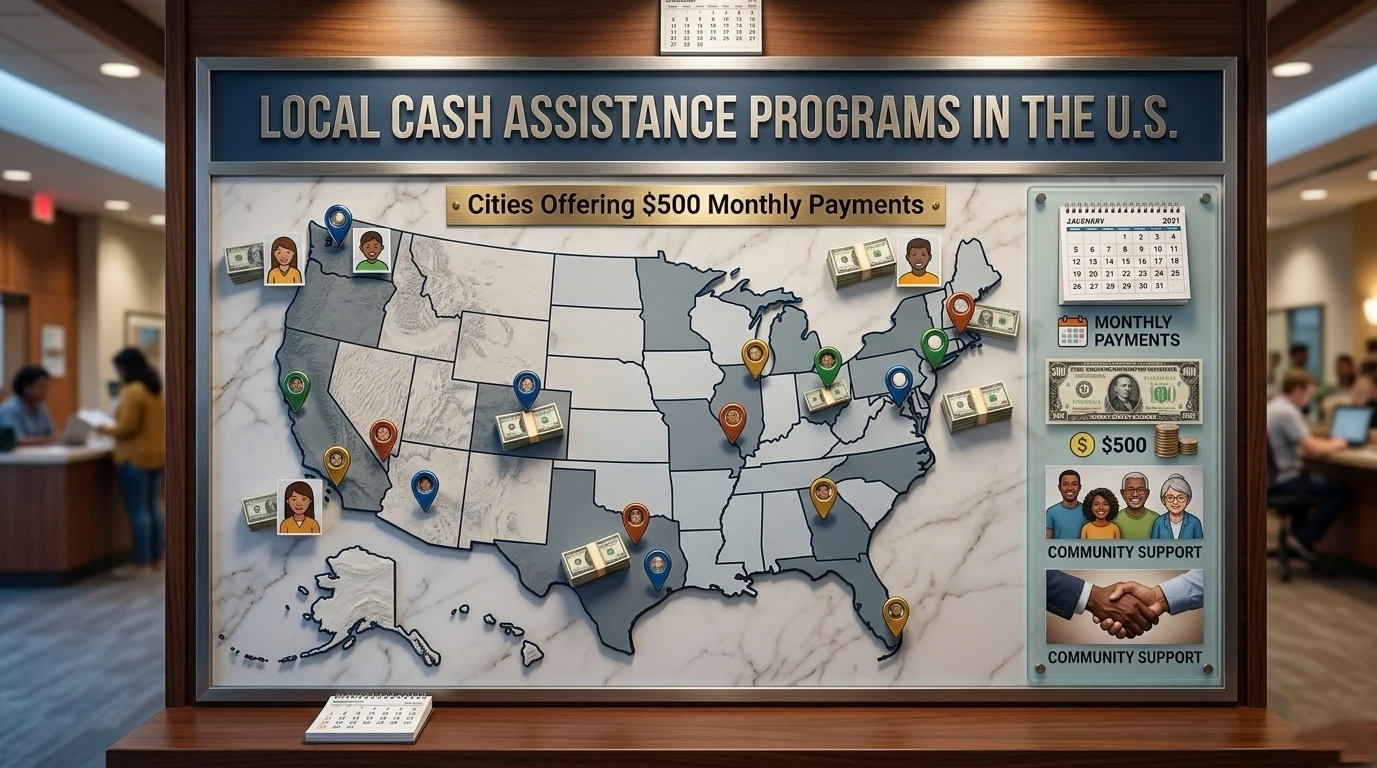
Local cash assistance programs in the United States are expanding rapidly as cities test guaranteed income (GI) or basic income pilot programs that provide residents with direct monthly payments, often around $500 per month with no spending restrictions. These initiatives are typically funded through a combination of municipal budgets, philanthropic grants, federal pandemic relief funds, and nonprofit partnerships.
As of 2026–2026, dozens of American cities are running or expanding pilots aimed at stabilizing families facing housing insecurity, rising rent costs, and income volatility. These programs are not federal entitlements; instead, they are localized policy experiments administered by city governments, county agencies, or community nonprofits.
For applicants, NGOs, and local governments, understanding which cities offer $500 monthly payments, eligibility requirements, and application processes is essential to accessing these resources.
Major U.S. Cities Offering $500 Monthly Cash Assistance
Below are verified programs active or expanded during 2026–2026.
| City | Program Name | Monthly Payment | Duration | Key Target Groups |
| Chicago, Illinois | Resilient Communities Pilot | $500 | 12–24 months | Low-income residents |
| Indianapolis, Indiana | Indy East Guaranteed Income Initiative | $500 | Up to 18 months | Rent-burdened households |
| Rochester, New York | Rochester Guaranteed Income Pilot | $500 | 12 months | Low-income residents |
| Minneapolis, Minnesota | Minneapolis GI Pilot | $500 | 24 months | Residents in poverty |
| Cambridge, Massachusetts | Rise Up Cambridge | $500 | Ongoing pilot | Families with children |
| Boulder, Colorado | Elevate Boulder | $500 | 24 months | Low-income households |
Many of these initiatives operate through randomized lotteries, meaning eligible applicants must apply but selection may still be randomized due to limited funding.
Key City Programs Explained
Chicago Resilient Communities Pilot
The Chicago Resilient Communities Pilot remains one of the largest municipal guaranteed income programs in the U.S.
Program details
- Monthly payment: $500
- Participants: 5,000 residents
- Payment method: Direct deposit
- Duration: Up to 24 months
- Income requirement: Generally below 300% of the federal poverty level
The initiative was initially funded through American Rescue Plan Act (ARPA) recovery funds and city resources. Payments are distributed monthly and may be used for rent, utilities, childcare, food, or debt payments. (dollarrelief.org)
Policy Update (2026)
Local leaders in Cook County have approved continued funding of guaranteed income programs in the county budget after positive outcomes from earlier pilots. (Business Insider)
Indianapolis Guaranteed Income Initiative
The Indy East Guaranteed Income Initiative is expanding through 2026–2028 with new philanthropic and nonprofit funding.
Program structure
- Monthly payment: $500
- Households supported: Up to 125 families
- Duration: 18 months
- Additional support: financial coaching and job training
The program specifically targets residents struggling with housing costs and eviction risk, reflecting rising rent burdens across Central Indiana. (The Economic Times)
Local nonprofit partners administer the initiative, demonstrating a growing model where community organizations implement cash assistance funded by grants.
Rochester Guaranteed Income Program
The City of Rochester launched a second phase of its guaranteed income program in 2026 after evaluating early results.
Key features
- Monthly stipend: $500
- Participants: 351 residents
- Focus: Poverty reduction and financial stability
- Research partners: universities and local policy groups
The pilot evaluates how unrestricted cash affects employment outcomes, household stability, and mental health. (Fingerlakes1.com)
Minneapolis Guaranteed Income Pilot
Minneapolis implemented a two-year guaranteed income program targeting residents living in high-poverty neighborhoods.
Key program elements
- Monthly support: $500
- Participants: approximately 200 households
- Duration: 24 months
- Focus: economic recovery and workforce stability
Local policymakers view the program as a poverty-reduction strategy and policy research experiment.
State-Level Policy Trends Driving Local Cash Assistance
Although most guaranteed income programs are city-run, several states are encouraging these pilots through grants or legislation.
California
California has funded municipal guaranteed income pilots through state budget allocations for local governments. Cities such as Los Angeles and Oakland have used these funds to support large-scale experiments.
Illinois
Illinois policymakers are considering expanded programs, including maternal support initiatives providing $500 monthly payments for new parents enrolled in Medicaid, pending legislative approval. (The Sun)
Michigan
Programs such as Ann Arbor’s guaranteed income initiative target entrepreneurs, gig workers, and low-income residents to evaluate economic mobility outcomes.
These initiatives reflect a broader trend: over 100 local guaranteed income pilots are operating across the U.S.. (upexciseportal.in)
Eligibility Requirements for $500 Monthly Cash Assistance
Eligibility criteria vary by city, but several core requirements are consistent.
Basic Eligibility Standards
Most programs require applicants to:
- Be 18 years or older
- Live within the city limits of the program
- Meet income limits, usually below 200–300% of the federal poverty level
- Provide proof of residency and identity
Priority Groups
Cities often prioritize:
- Single parents
- Rent-burdened households
- Residents in high-poverty ZIP codes
- Gig workers or part-time employees
- Families with children
Some programs use randomized lotteries to ensure fairness when demand exceeds funding.
How to Apply for Local Cash Assistance Programs
Application processes are typically managed through municipal government websites or nonprofit partners.
Step-by-Step Application Process
- Check city announcements
- Visit the official city website or housing department.
- Verify eligibility
- Confirm income and residency requirements.
- Complete an online application
- Many cities require digital submissions.
- Upload required documentation
- Proof of address
- Identification
- Income verification
- Lottery selection or screening
- Applicants may be randomly selected.
- Enrollment and payment setup
- Payments usually begin via direct deposit or prepaid debit card.
Required Documents
Applicants typically must submit:
| Document | Purpose |
| Government ID | Identity verification |
| Utility bill or lease | Proof of residency |
| Pay stubs or tax return | Income verification |
| Household information | Determine eligibility |
Incomplete documentation is one of the most common reasons applications are rejected.
Why Cities Are Testing Guaranteed Income Programs
Municipal leaders view guaranteed income as a policy experiment aimed at reducing poverty and improving financial stability.
Research from earlier programs found that recipients often use payments for:
- Rent and housing costs
- Utilities and transportation
- Food and household essentials
- Debt repayment and savings
Studies also report improvements in mental health and employment stability among recipients. (Guaranteed Income Works)
Evergreen Guidance for Applicants
These principles remain consistent across most guaranteed income programs:
- Programs are localized—eligibility depends on where you live.
- Funding is limited, so lotteries are common.
- Payments are typically unrestricted cash transfers.
- Programs often run 12–24 months as pilot studies.
Applicants should monitor city government websites and nonprofit partners for new application cycles.
FAQs
Who is eligible for $500 monthly guaranteed income programs?
Eligibility usually requires city residency, income below 200–300% of the federal poverty level, and age 18 or older. Many programs prioritize families with children or residents facing housing insecurity.
How much funding is available?
Payments typically range between $500 and $1,000 per month, depending on the city. Most pilots run 12–24 months and serve 100–5,000 participants.
How do I apply for these programs?
Applications are submitted through official city government websites or nonprofit partners. Applicants must complete a form and provide proof of income and residency.
What documents are required?
Common required documents include:
- Government-issued ID
- Utility bill or lease agreement
- Pay stubs or tax returns
- Household information
What are common reasons applications are rejected?
Applications may be rejected due to:
- Income exceeding eligibility limits
- Living outside the participating city
- Missing documents
- Failure to complete the application before the deadline
Sources:
- Chicago Resilient Communities Pilot – City of Chicago
https://www.chicago.gov/city/en/sites/resilient-communities-pilot/home.html - Guaranteed Basic Income Pilot – City of Minneapolis, MN
https://www.minneapolismn.gov/government/programs-initiatives/basic-income/ - Guaranteed Basic Income – City of Rochester, NY
https://www.cityofrochester.gov/departments/mayors-office/guaranteed-basic-income - Elevate Boulder Guaranteed Income Pilot – City of Boulder, CO
https://bouldercolorado.gov/projects/guaranteed-income-pilot-project - Guaranteed Income Dashboard – National Tracking
https://guaranteedincome.us/ - Mayors for a Guaranteed Income – National Coalition
https://www.mayorsforagi.org/


Final Call for LIHEAP 2026: Many States Ending Applications This April

How Startups Can Get SBIR/STTR Funding in 2026

What Single Moms Need to Know About 2026 State Child Tax Credits

Major 2026 SNAP Changes: What CalFresh Recipients Need to Know

25 Small Business Grants You Can Apply for in 2025

Top Veterans Financial Assistance Programs 2025

How to Get Free Help Paying Your Electric Bill

LIHEAP 2025 Application Guide for Energy Assistance
-
 Small Business Grants11 months ago
25 Small Business Grants You Can Apply for in 2025
-
 Veterans Assistance11 months ago
Top Veterans Financial Assistance Programs 2025
-
 Utility & Bills Help11 months ago
How to Get Free Help Paying Your Electric Bill
-
 Utility & Bills Help11 months ago
LIHEAP 2025 Application Guide for Energy Assistance
-

 Food & EBT / SNAP Benefits11 months ago
Fast Food Places That Accept EBT Cards (Full List)
-

 Housing Assistance11 months ago
Apply for Section 8 Housing Vouchers (Updated 2025)
-

 Small Business Grants10 months ago
Women-Owned Business Grants & Funding Sources
-

 Government Grants11 months ago
How to Apply for Government Grants Online
-

 Government Grants11 months ago
25 Federal Grants That Give Free Money in 2025
-

 Disability Benefits11 months ago
How Much Disability Pay Can You Get in 2025?