
Government Grants
5 Government Grants Americans Are Applying for Right Now in 2025–2026
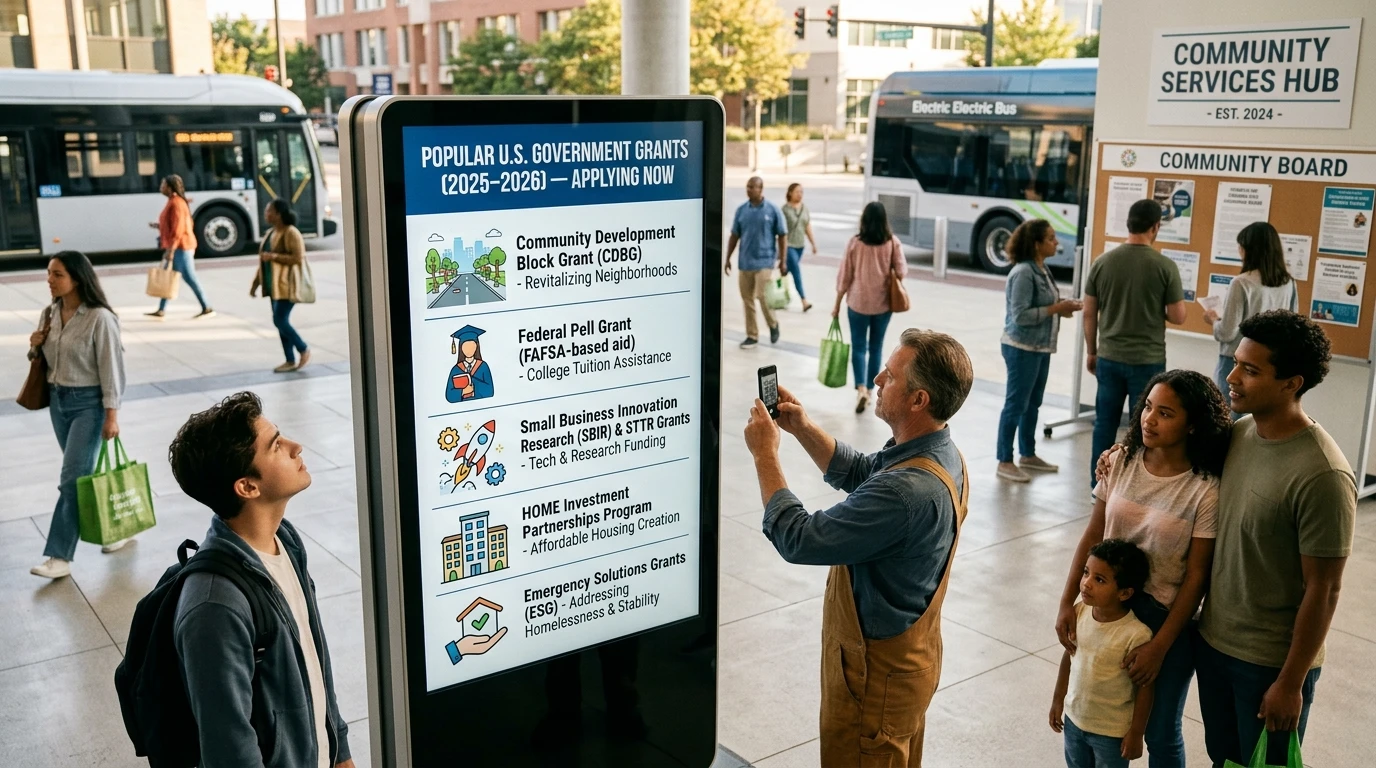
Millions of Americans are applying for federal government grants in 2025–2026 to pay for college, affordable housing, homelessness assistance, startup research, and local development projects. The most active programs include the Community Development Block Grant (CDBG), Federal Pell Grant, SBIR/STTR innovation grants, HOME Investment Partnerships Program, and Emergency Solutions Grants (ESG). These programs are administered by federal agencies, including the U.S. Department of Housing and Urban Development (HUD), the U.S. Department of Education, and the U.S. Small Business Administration (SBA).
Overview of the Most Popular Government Grants in 2025–2026
Federal grants are financial assistance programs that support individuals, nonprofits, startups, local governments, and public institutions. Unlike loans, grants typically do not require repayment if recipients comply with federal requirements and use the funds for approved purposes.
The five government grants receiving the highest application volume right now are:
| Government Grant Program | Administered By | Primary Purpose |
| Community Development Block Grant (CDBG) | HUD | Community and infrastructure development |
| Federal Pell Grant | U.S. Department of Education | College financial aid |
| SBIR/STTR Grants | SBA and federal agencies | Startup innovation funding |
| HOME Investment Partnerships Program | HUD | Affordable housing |
| Emergency Solutions Grants (ESG) | HUD | Homelessness prevention and shelter support |
These programs remain highly active in Fiscal Year 2025–2026 due to inflation pressures, housing shortages, education costs, and economic development initiatives.
What Are Government Grants?
Government grants are federal, state, or local funding programs that provide financial assistance to eligible individuals, businesses, nonprofits, schools, and public agencies for approved public-interest activities. Most grants do not require repayment if recipients comply with program requirements.
Community Development Block Grant (CDBG)
The Community Development Block Grant (CDBG) Program is one of the largest federal community investment programs administered by HUD under the Housing and Community Development Act of 1974.
The program funds:
- Affordable housing projects
- Public infrastructure improvements
- Economic development initiatives
- Community revitalization
- Disaster recovery activities
Eligibility Criteria
Eligible applicants include:
- State and local governments
- Tribal governments
- Nonprofit organizations partnering with municipalities
- Community development agencies
Projects must generally benefit low- and moderate-income populations.
Benefits and Funding Details
CDBG funding supports:
- Housing rehabilitation
- Water and sewer upgrades
- Small business development
- Public facilities
- Community services
Funding allocations vary by state and municipality during Fiscal Year 2025–2026.
How to Apply
- Contact your state or local HUD-administering agency
- Review local funding notices and deadlines
- Submit a project proposal and budget plan
- Complete environmental compliance reviews
- Attend required public hearings if applicable
Required Documents
- Project narrative
- Organizational registration
- Budget estimates
- Community impact analysis
- Civil rights compliance forms
Common Rejection Reasons
Applications are commonly rejected because of:
- Ineligible project activities
- Missing compliance documentation
- Weak public benefit evidence
- Incomplete environmental reviews
Federal Pell Grant Through FAFSA
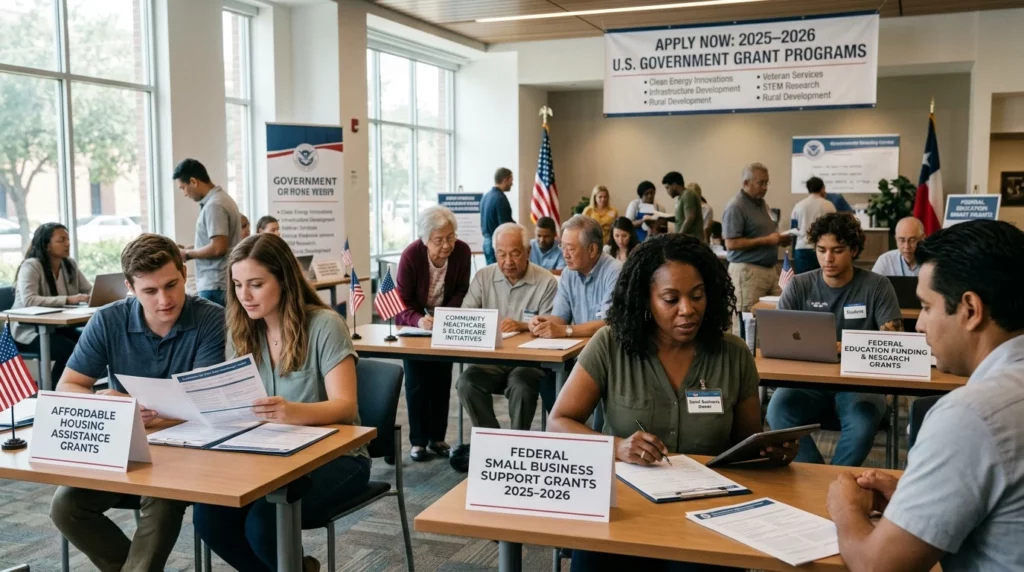
The Federal Pell Grant is the largest U.S. education grant program available to undergraduate students with financial need. The program is administered through the U.S. Department of Education and accessed using the Free Application for Federal Student Aid (FAFSA).
Eligibility Criteria
Applicants generally must:
- Be U.S. citizens or eligible noncitizens
- Demonstrate financial need
- Enroll in an eligible college or university
- Maintain satisfactory academic progress
- Submit FAFSA for the 2025–2026 academic year
Benefits and Funding Details
The Pell Grant helps cover:
- Tuition
- Housing expenses
- Books and supplies
- Educational fees
Award amounts vary annually based on:
- Family income
- Enrollment status
- Cost of attendance
Step-by-Step FAFSA Application Process
| Step | Action |
| 1 | Create a Federal Student Aid (FSA) ID |
| 2 | Complete the FAFSA application |
| 3 | Submit tax and financial information |
| 4 | Review the Student Aid Report (SAR) |
| 5 | Accept aid through your college portal |
Required Documents
Students typically need:
- Social Security number
- Federal tax returns
- Bank account information
- Dependency records
- School enrollment information
Common Rejection Reasons
The most common FAFSA issues include:
- Incorrect tax information
- Missing signatures
- Identity verification problems
- Incomplete contributor details
Small Business Innovation Research (SBIR) and STTR Grants
The Small Business Innovation Research (SBIR) and Small Business Technology Transfer (STTR) programs provide federal funding to startups and technology-focused small businesses.
The programs are coordinated by the SBA and supported by agencies including:
- National Institutes of Health (NIH)
- National Science Foundation (NSF)
- Department of Defence (DoD)
- NASA
- Department of Energy (DOE)
Definition Block: SBIR/STTR Grants
SBIR and STTR are federal research and development grant programs that fund small businesses developing scientific or technological innovations with commercial potential. These grants are non-dilutive, meaning companies do not give up ownership equity.
Eligibility Criteria
Businesses generally must:
- Be U.S.-owned
- Employ fewer than 500 workers
- Conduct qualifying research activities
- Meet agency-specific technical requirements
Benefits and Funding Details
| Funding Phase | Typical Amount |
| Phase I | $50,000–$275,000 |
| Phase II | Up to $2 million or more |
| Phase III | Commercialization stage |
How to Apply
- Register on SBIR.gov
- Identify an active federal solicitation
- Submit a technical proposal
- Complete commercialization and budget plans
- Undergo agency review and evaluation
Required Documents
- Technical proposal
- Commercialization strategy
- Budget documentation
- SAM.gov registration
- Company ownership records
Common Rejection Reasons
Frequent rejection causes include:
- Weak commercialization plans
- Incomplete registrations
- Poor technical feasibility
- Proposal misalignment with agency goals
HOME Investment Partnerships Program
The HOME Investment Partnerships Program is a HUD-administered affordable housing grant program supporting state and local housing initiatives.
The program funds:
- Affordable rental housing
- Homebuyer assistance
- Housing rehabilitation
- New housing construction
Eligibility Criteria
Eligible entities include:
- Local governments
- Housing authorities
- Community Housing Development Organizations (CHDOs)
- Nonprofit housing developers
Benefits and Funding Details
HOME funding may be used for:
- Down payment assistance
- Low-income housing projects
- Property rehabilitation
- Tenant-based rental assistance
Funding allocations are distributed annually by HUD.
Required Documents
Applicants usually submit:
- Housing development plans
- Financial statements
- Property eligibility records
- Environmental compliance documentation
Common Rejection Reasons
Applications are often denied because of:
- Ineligible housing activities
- Missing affordability documentation
- Environmental compliance failures
Emergency Solutions Grants (ESG)
The Emergency Solutions Grants (ESG) Program supports homelessness prevention and emergency shelter services across the United States.
The program is administered by HUD and distributed through local Continuum of Care systems and state agencies.
Eligibility Criteria
Eligible applicants include:
- Nonprofit organizations
- Local governments
- Housing assistance agencies
- Shelter providers
Benefits and Funding Details
ESG funding supports:
- Emergency shelters
- Rapid rehousing
- Homelessness prevention
- Street outreach services
How to Apply
- Contact your local Continuum of Care agency
- Review local ESG funding announcements
- Submit a housing assistance proposal
- Complete compliance and reporting requirements
Required Documents
- Organizational financial records
- Homelessness service plans
- HUD compliance certifications
- Performance reporting systems
Common Rejection Reasons
Common ESG application issues include:
- Incomplete reporting systems
- Missing homelessness data
- Failure to meet HUD standards
Government Authority Notes for 2025–2026
Several federal grant programs have experienced updated compliance procedures during Fiscal Year 2025–2026 due to:
- Inflation-related funding adjustments
- Expanded housing initiatives
- Federal budget negotiations
- Updated digital identity verification systems
Applicants should always verify:
- Current Notices of Funding Opportunity (NOFOs)
- Annual funding limits
- State-level application deadlines
- Federal reporting requirements
Frequently Asked Questions
What is the most popular government grant in 2025?
The Federal Pell Grant remains one of the most widely used government grants because millions of students apply through FAFSA every year for college financial aid.
Who is eligible for government grants?
Eligibility depends on the specific program. Applicants may include students, startups, nonprofits, local governments, tribal organizations, and low-income households.
How do I apply for government grants?
Most grants require applications through official federal or state portals. Applicants usually submit identification documents, financial records, and project-related materials.
What documents are required for government grant applications?
Common requirements include tax records, identification documents, organizational registrations, financial statements, project proposals, and compliance certifications.
Why do government grant applications get rejected?
Applications are frequently rejected because of incomplete forms, missed deadlines, ineligible activities, missing compliance documents, or inaccurate financial information.
Sources:
- U.S. Department of Housing and Urban Development (HUD): HUD Community Development Block Grant Program
- U.S. Department of Education: Federal Student Aid FAFSA Portal
- U.S. Small Business Administration: SBIR and STTR Official Portal
- U.S. Department of Housing and Urban Development: HOME Investment Partnerships Program
- U.S. Department of Housing and Urban Development: Emergency Solutions Grants Program









How to Apply for Disability Benefits in 2026: Step-by-Step Guide

Apply for Emergency HEAP in New York – Jan 2, 2026 Begins

VA Benefits in 2026: Essential COLA, Top Compensation & Critical Policy Shifts

How HUD’s 2026 Strategy Is Breaking Down Barriers to Affordable Housing

25 Small Business Grants You Can Apply for in 2026

Top Veterans Financial Assistance Programs 2026

How to Get Free Help Paying Your Electric Bill

LIHEAP 2026 Application Guide for Energy Assistance
-
 Small Business Grants6 months ago
25 Small Business Grants You Can Apply for in 2026
-
 Veterans Assistance6 months ago
Top Veterans Financial Assistance Programs 2026
-
 Utility & Bills Help6 months ago
How to Get Free Help Paying Your Electric Bill
-
 Utility & Bills Help6 months ago
LIHEAP 2026 Application Guide for Energy Assistance
-

 Small Business Grants6 months ago
Women-Owned Business Grants & Funding Sources
-

 Government Grants6 months ago
How to Apply for Government Grants Online
-

 Government Grants6 months ago
25 Federal Grants That Give Free Money in 2026
-

 Disability Benefits6 months ago
How Much Disability Pay Can You Get in 2026?
-

 Food & EBT / SNAP Benefits6 months ago
Fast Food Places That Accept EBT Cards (Full List)
-

 Food & EBT / SNAP Benefits7 months ago
5 Key SNAP Policy Changes Coming in 2026 You Should Know