
Government Grants
How to Qualify for Biden’s Financial Relief Programs
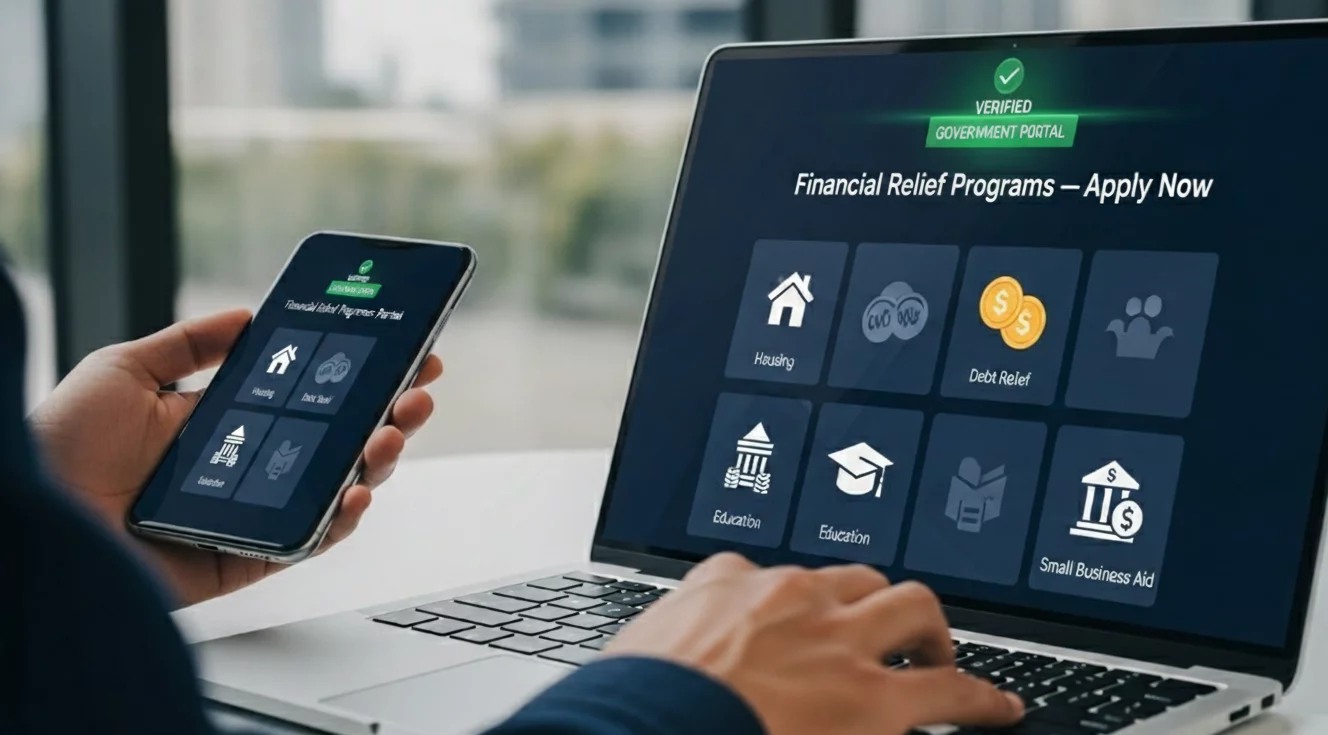
Thousands of Americans remain eligible for financial relief under Biden-era programs — but many don’t know where to start. This guide breaks down what is available in 2026, how to determine eligibility, and where to apply. It does not provide grant services; it simply points you to government-verified resources so you can act.
By following these eligibility steps, you may unlock help with housing costs, disaster relief, or other financial assistance — with no cost to you.
This is not legal or financial advice, but a news-style step-by-step reporting of publicly available relief options as of October 2026.
Key Relief Programs Still Accessible
Below are Biden-era (or related) federal relief programs that currently offer or recently offered assistance. Always verify live status via official links.
| Program | What It Offers | Notes on Status & Eligibility |
| Homeowner Assistance Fund (HAF) | Help with mortgage payments, homeowner’s insurance, utility payments for homeowners facing hardship. (U.S. Department of the Treasury) | Program is funded under the American Rescue Plan and continues to operate. Applicants must check their state’s HAF plan. (U.S. Department of the Treasury) |
| Emergency Rental Assistance (ERA) | Financial aid for renters & landlords facing housing cost burdens due to COVID-era disruptions. (U.S. Department of the Treasury) | Note: ERA2’s period of performance ended September 30, 2026. (U.S. Department of the Treasury) Applicants should confirm via their state or local housing authority whether any ERA-derived funds remain accessible. |
| Economic Development Administration (EDA) Grants under the American Rescue Plan | Grants to support economic development, workforce training, planning, infrastructure projects. (U.S. Economic Development Administration) | These are not direct individual-payments relief, but community / business-oriented grants. Use as a lead if you operate or represent a nonprofit, small business, or local government entity. |
In addition to these, general benefit-finder tools such as USA.gov Benefits provide up-to-date listings of food assistance, healthcare support, housing help, and utility-bill relief. (USAGov)
Who May Qualify? (Eligibility Criteria)

To determine whether you personally qualify, review several dimensions:
- Residency & Location
- Most relief is administered at the state or local level. Your ZIP code or county may determine whether funding is available.
- Example: Homeowner Assistance Fund programs differ by state. You may need to apply through your state’s HAF plan.
- Most relief is administered at the state or local level. Your ZIP code or county may determine whether funding is available.
- Income & Hardship
- Many relief programs require proof of financial hardship (loss of income, unemployment, medical bills, etc.).
- Income thresholds may vary by county, household size, or by program rules.
- Many relief programs require proof of financial hardship (loss of income, unemployment, medical bills, etc.).
- Type of Expense
- Housing (rent or mortgage arrears, utilities)
- Health or disaster-related losses
- Business or community project costs (for grants via EDA)
- Housing (rent or mortgage arrears, utilities)
- Date / Program Status
- Some programs have “deadlines” or “ended periods of performance.” For example, ERA2 expired September 30 2026. (U.S. Department of the Treasury)
- Others may still be accepting applications (Homeowner Assistance Fund as of October 2026). (U.S. Department of the Treasury)
- Some programs have “deadlines” or “ended periods of performance.” For example, ERA2 expired September 30 2026. (U.S. Department of the Treasury)
- Entity vs Individual
- Some relief is for individuals / families (renters, homeowners).
- Some is for local governments, nonprofits or small businesses (e.g. EDA-funded grants).
- Some relief is for individuals / families (renters, homeowners).
How to Apply — Step by Step

Here’s how you can work through the process to find out whether you qualify and apply:
- Start with an official government portal
- Go to your state’s housing or treasury website for homeowner/rental assistance.
- Use USA.gov “Find Government Benefits” tool to locate programs near you. (USAGov)
- Go to your state’s housing or treasury website for homeowner/rental assistance.
- Check your eligibility criteria
- Enter your income, address, household size.
- Review “proof of hardship” documents required (bank statements, eviction notice, unemployment record).
- Enter your income, address, household size.
- Review deadlines and program changes
- Some programs have closed or “ended period of performance.” For instance, ERA2 funds are no longer available for new payments as of after September 30, 2026. (U.S. Department of the Treasury)
- Others remain open (e.g. HAF); deadlines vary by state.
- Some programs have closed or “ended period of performance.” For instance, ERA2 funds are no longer available for new payments as of after September 30, 2026. (U.S. Department of the Treasury)
- Prepare required documentation
- Identification, proof of income loss, lease or mortgage statement, utility bills, etc.
- For grant-oriented programs (e.g. EDA funding), you may need business or nonprofit registration documents, project plans, matching-fund evidence.
- Identification, proof of income loss, lease or mortgage statement, utility bills, etc.
- Submit application & follow up
- Complete the online form via your state’s portal or local administering agency.
- Ask for confirmation. Many agencies provide status trackers.
- Keep records of your submission (receipt, email confirmation).
- Complete the online form via your state’s portal or local administering agency.
- Monitor for updates & appeals
- Some relief programs update periodically (new funds, program extensions).
- If denied, inquire about appeal or re-application windows.
- Some relief programs update periodically (new funds, program extensions).
Why Many Eligible People Don’t Apply
- Lack of awareness: People don’t realize funds are still live in 2026.
- Confusing eligibility criteria by state or county.
- Fear of bureaucracy: many assume paperwork is overwhelming.
- Uncertainty if application deadlines have passed.
By using this structured approach, you can increase your odds of successfully accessing relief — especially if you act promptly, prepare your documents, and verify at your local level.
Final Word
If you or your family are struggling with housing payments, utilities, or other pandemic-era-related financial pressures — now is the time to check whether you qualify. While some relief programs have closed, many remain active under adjusted rules.
You don’t need to pay for help: use trusted government links, prepare your documents, and submit your application today. Being proactive may unlock thousands of dollars in aid to help you stay in your home, secure your utilities, or stabilize your finances.
Sources:
- U.S. Department of the Treasury: Homeowner Assistance Fund (HAF)
(anchor link to official treasury HAF page) (U.S. Department of the Treasury) - U.S. Department of the Treasury: Emergency Rental Assistance Program (ERA)
(U.S. Department of the Treasury) - Economic Development Administration (EDA) / American Rescue Plan Programs
(U.S. Economic Development Administration) - USA.gov Benefits Finder
(USAGov) - Grants.gov (for entity-based grant notices)
(grants.gov)


Final Call for LIHEAP 2026: Many States Ending Applications This April

How Startups Can Get SBIR/STTR Funding in 2026

What Single Moms Need to Know About 2026 State Child Tax Credits

Major 2026 SNAP Changes: What CalFresh Recipients Need to Know

25 Small Business Grants You Can Apply for in 2025

Top Veterans Financial Assistance Programs 2025

How to Get Free Help Paying Your Electric Bill

LIHEAP 2025 Application Guide for Energy Assistance
-
 Small Business Grants11 months ago
25 Small Business Grants You Can Apply for in 2025
-
 Veterans Assistance11 months ago
Top Veterans Financial Assistance Programs 2025
-
 Utility & Bills Help11 months ago
How to Get Free Help Paying Your Electric Bill
-
 Utility & Bills Help11 months ago
LIHEAP 2025 Application Guide for Energy Assistance
-

 Food & EBT / SNAP Benefits11 months ago
Fast Food Places That Accept EBT Cards (Full List)
-

 Housing Assistance11 months ago
Apply for Section 8 Housing Vouchers (Updated 2025)
-

 Small Business Grants10 months ago
Women-Owned Business Grants & Funding Sources
-

 Government Grants11 months ago
How to Apply for Government Grants Online
-

 Government Grants11 months ago
25 Federal Grants That Give Free Money in 2025
-

 Disability Benefits11 months ago
How Much Disability Pay Can You Get in 2025?