Government Grants
Senate Republicans Push $140B Immigration Plan Amid DHS Shutdown
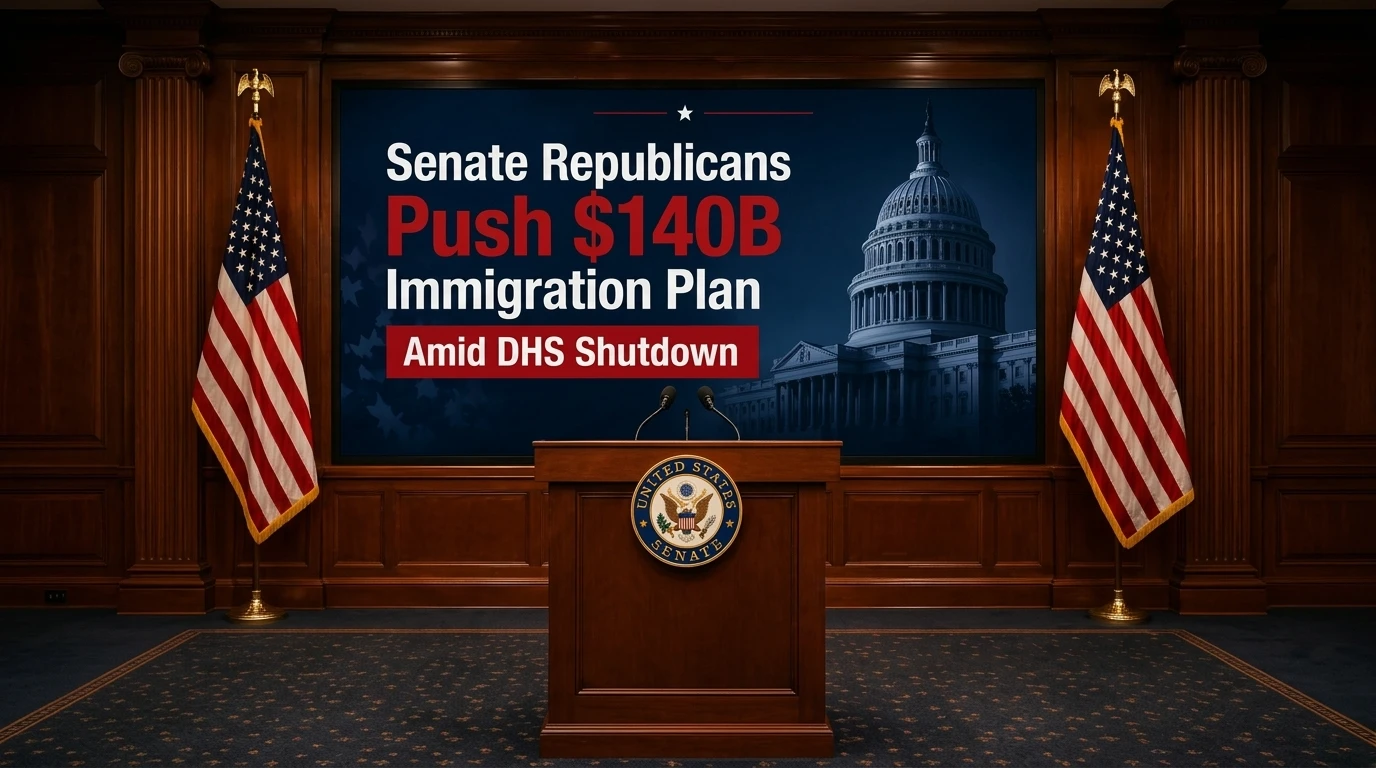
In early 2026, lawmakers from the United States Senate, led by Republican leadership, advanced a sweeping $140 billion immigration and border security proposal during a critical funding impasse affecting the Department of Homeland Security (DHS). The move comes amid an ongoing DHS shutdown risk, raising immediate concerns for federal grants, local government funding, NGO operations, and immigration-related services.
For applicants, nonprofits, startups, and municipal agencies, this proposal carries both funding opportunities and compliance implications. This guide breaks down verified policy details, eligibility pathways, and application considerations based on 2026–2026 legislative updates.
Policy Overview: What Is the $140B Immigration Plan?
The proposed legislation, drafted under Senate Republican leadership, aims to allocate $140 billion over multiple fiscal years toward:
- Border infrastructure and surveillance systems
- Expansion of detention and processing facilities
- State and local enforcement support grants
- Immigration court backlog reduction
- Workforce and technology modernization
The plan is positioned as a supplemental appropriations package, potentially tied to broader federal budget negotiations.
Key Government Entities Involved
- Department of Homeland Security (DHS)
- U.S. Customs and Border Protection (CBP)
- Immigration and Customs Enforcement (ICE)
- Executive Office for Immigration Review (EOIR)
Funding Breakdown
| Category | Estimated Funding (USD) | Target Beneficiaries |
| Border Security Infrastructure | $60B | Federal contractors, state agencies |
| State & Local Grants | $25B | Municipalities, law enforcement |
| Immigration Processing Systems | $20B | Courts, legal aid NGOs |
| Detention & Facility Expansion | $15B | Federal/state correctional systems |
| Technology & Workforce | $10B | Tech vendors, staffing programs |
| Emergency Response Funds | $10B | Border states, humanitarian orgs |
Note: Final allocations remain subject to Congressional approval and reconciliation.
DHS Shutdown Context: Why This Matters
The proposal coincides with a funding lapse affecting DHS operations. A shutdown impacts:
- Grant disbursement delays
- Suspension of new funding applications
- Reduced administrative processing capacity
- Delays in immigration case handling
Programs under DHS, such as FEMA-administered grants and border security funding streams, may experience temporary disruption.
Who Is Eligible for Funding?
Primary Eligible Entities
- State and local governments
- Federally recognized tribal governments
- Nonprofit organizations (501(c)(3))
- Academic institutions
- Private contractors (through federal procurement channels)
Sector-Specific Eligibility
| Sector | Eligibility Criteria |
| NGOs | Must demonstrate immigration service delivery |
| Local Governments | Must align with federal enforcement frameworks |
| Startups/Tech Firms | Eligible via DHS innovation and procurement programs |
| Legal Aid Providers | Must support immigration case processing |
Evergreen Note: Eligibility principles (nonprofit status, compliance, documentation) remain consistent across federal grant cycles.
How to Apply for Immigration-Related Grants
Step-by-Step Process
- Register on Grants.gov
- Mandatory for all federal grant applicants
- Obtain Unique Entity ID (UEI)
- Required for tracking and compliance
- Identify Relevant Funding Opportunity Announcements (FOAs)
- Monitor DHS and related agency releases
- Prepare Documentation
- Organizational registration certificates
- Financial statements
- Program proposal and budget
- Submit Application Before Deadline
- Deadlines vary by program (see below)
Required Documents Checklist
- Proof of legal entity status
- Tax exemption certificate (for nonprofits)
- Audited financial statements (last 2–3 years)
- Project proposal with measurable outcomes
- Compliance certifications (federal regulations)
Policy Impact: What This Means for Stakeholders
For NGOs and Service Providers
- Increased funding for legal aid and humanitarian services
- Stricter compliance requirements tied to federal enforcement priorities
For Local Governments
- Expanded access to border security and emergency response grants
- Requirement to align with federal immigration enforcement policies
For Startups and Tech Firms
- Opportunities in:
- Surveillance technology
- Data management systems
- AI-driven immigration processing tools
Common Reasons for Grant Rejection
- Non-compliance with federal guidelines
- Incomplete documentation
- Weak financial records
- Misalignment with program objectives
- Late submission
Tip: Always cross-check FOA requirements before submission.
Frequently Asked Questions
Who is eligible for funding under the $140B immigration plan?
Eligible applicants include state and local governments, nonprofits, tribal entities, and private contractors. Eligibility depends on alignment with DHS program objectives and compliance requirements.
How much funding is available?
The proposal allocates $140 billion, distributed across border security, grants, technology, and immigration processing systems. Final figures depend on Congressional approval.
How can organizations apply for these grants?
Applications must be submitted via Grants.gov after obtaining a UEI number and responding to official Funding Opportunity Announcements (FOAs).
What documents are required?
Key documents include:
- Legal registration proof
- Financial statements
- Project proposal
- Compliance certifications
What are common reasons applications get rejected?
Applications are often rejected due to:
- Incomplete submissions
- Non-compliance with rules
- Weak financial documentation
- Missing deadlines
Sources
- DHS Official Website: https://www.dhs.gov
- Grants Portal: https://www.grants.gov
- Senate Appropriations Committee: https://www.appropriations.senate.gov







Top States Providing Financial Relief and Emergency Cash Assistance in 2026

Section 811 Housing Assistance 2026: What Disabled Adults Need to Know

Top U.S. Government AI Grants You Should Watch in 2026

VA Closing Cost Assistance for Veterans in 2026: What’s Really Changed This Year?

Fast Food Places That Accept EBT Cards (Full List)

25 Small Business Grants You Can Apply for in 2026

Affordable Housing and Rental Assistance Programs for Texas Single Moms

Most Commonly Approved Government Grant Applications
-
 Food & EBT / SNAP Benefits5 months ago
Fast Food Places That Accept EBT Cards (Full List)
-
 Small Business Grants5 months ago
25 Small Business Grants You Can Apply for in 2026
-
 Single Mothers Benefits3 months ago
Affordable Housing and Rental Assistance Programs for Texas Single Moms
-
 Government Grants5 months ago
Most Commonly Approved Government Grant Applications
-

 Veterans Assistance3 months ago
Top Veterans Financial Assistance Programs 2026
-

 Utility & Bills Help5 months ago
LIHEAP 2026 Application Guide for Energy Assistance
-

 Utility & Bills Help4 months ago
How to Get Free Help Paying Your Electric Bill
-

 Single Mothers Benefits4 months ago
Trump Tax Plan Stay-at-Home Mom Tax Credit Explained: What the Law Actually Says (2026)
-

 Food & EBT / SNAP Benefits4 months ago
5 Key SNAP Policy Changes Coming in 2026 You Should Know
-

 Government Grants5 months ago
How to Apply for Government Grants Online