
Single Mothers Benefits
Childcare Tax Breaks and Support Programs You Can Tap in 2026
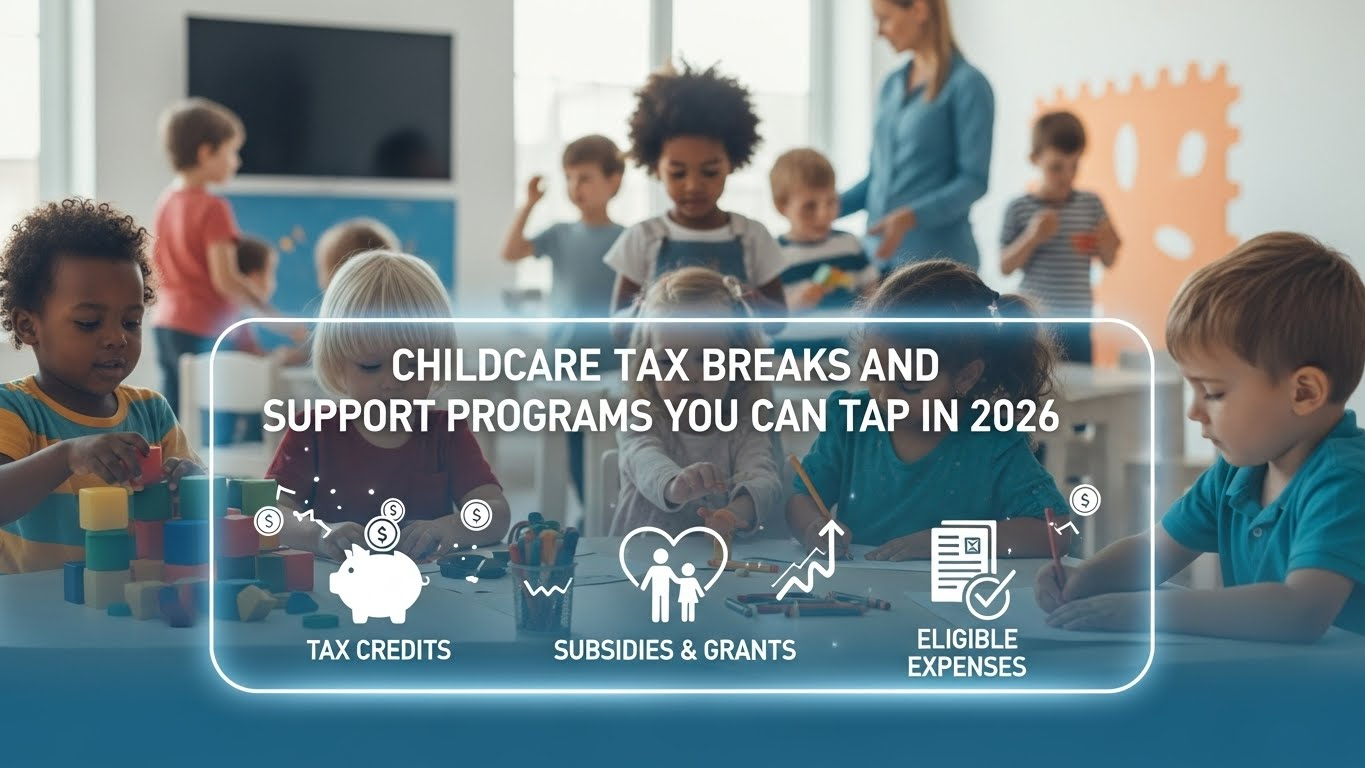
In 2026, childcare tax breaks and support programs offer expanded financial relief for families, employers, and community organizations. Following the 2026 tax reconciliation bill and related federal legislation, several key credits, including the Child and Dependent Care Tax Credit (CDCTC) and enhanced Employer-Provided Childcare Credit (IRC §45F), deliver more substantial tax savings and support options. This guide draws on official federal sources (IRS, Treasury guidance, enacted law text) and outlines eligibility, benefits, compliance, and application steps for parents, nonprofits, small businesses, startups, and local governments.
Why 2026 Matters for Childcare Relief
Policy Context
The 2026 tax legislation permanently updated long-outdated federal tax incentives that help reduce the cost of childcare. These changes reflect the first major overhaul in decades of key credits that help families and employers offset childcare costs.(First Five Years Fund)
Purpose of Federal Childcare Tax Incentives
- To reduce out-of-pocket childcare costs for working families
- To incentivize employers to support childcare solutions
- To improve workforce participation and economic mobility
Key Federal Childcare Tax Breaks in 2026
1. Child and Dependent Care Tax Credit (CDCTC)
What It Is
A federal tax credit that helps families reclaim a portion of qualifying childcare expenses when filing income tax returns.
Benefits in 2026
- Working parents can claim up to 50% of eligible childcare expenses (up from 35% historically).(Mercer)
- Maximum eligible expenses: $3,000 for one dependent; $6,000 for two or more.
- Credit phases downward as income rises, with specific thresholds set in law.(Mercer)
Who Qualifies
- Taxpayers with qualifying dependents under age 13 or a dependent spouse/incapacitated dependent.
- Must have earned income (work or job seeking).
- Must file IRS Form 2441 with your tax return.
Common Issues
- If you use a Dependent Care Flexible Spending Account (DCFSA), that reduces the expenses eligible for the tax credit.(Mercer)
2. Employer-Provided Childcare Credit
What It Is
A business tax credit that encourages employers to provide childcare facilities or resources that benefit their workforce.(Internal Revenue Service)
Enhanced 2026 Benefits (per 2026 legislation)
- General credit: 40% of qualified childcare expenditures, up to $500,000 per year.
- Small business boost: 50% credit up to $600,000 for certain small employers.
- Expanded qualified expenses now include third-party childcare provider contracts, easing compliance.(Wikipedia)
Who Is Eligible
- Employers (including nonprofits) that incur childcare facility or referral costs for employees.
How to Claim
- File IRS Form 8882, Credit for Employer-Provided Childcare Facilities and Services.
- Maintain proper contracts, invoices, and licensing documentation for eligible expenses.
3. Dependent Care Flexible Spending Accounts (DCFSA)
How It Works
- Employees can contribute pre-tax income to cover childcare expenses.
- Annual contribution limit raised to $7,500 for 2026 (from $5,000).(Mercer)
Benefit
- Lowers taxable income while funding eligible care costs.
State & Local Childcare Credits
Pennsylvania Employer Child Care Contribution Credit
- Businesses can claim up to 30% of contributions to childcare support efforts, capped per employee.(Pennsylvania Government)
Note: State tax credits vary widely, stakeholders should consult state revenue departments for specifics.
Eligibility Summary
| Program | Eligible Recipients | Benefit | Key Eligibility Requirements |
| CDCTC | Working families & individuals | Up to 50% of care expenses | Earned income, dependents under 13 |
| Employer Childcare Credit | Businesses/nonprofits | Up to $500k/$600k credit | Qualified expenditures, Form 8882 |
| DCFSA | Employees | Pre-tax contributions up to $7,500 | Employer must offer plan |
How to Apply: Step-by-Step Guides
Families (CDCTC)
- Gather receipts for qualified childcare expenses (licensed care, summer camps if qualifying).
- Complete IRS Form 2441 with your tax return.
- File by the annual tax deadline (e.g., April 15, 2027 for 2026 tax year).
Employers
- Identify and document qualified childcare expenditures (construction, contracts, referrals).
- File IRS Form 8882 with your business tax return.
- Maintain compliance records and be ready for IRS audit verification.
Frequently Asked Questions (FAQ)
Who is eligible for childcare tax breaks?
Working families with dependents, employers providing childcare, and employees using DCFSA accounts.
How much can I save?
Families: up to 50% of expenses ($3,000–$6,000). Employers: up to $500k–$600k.
When do these rules apply?
For tax years starting January 1, 2026 onward.
What documents do I need?
Families: receipts, provider tax ID, Form 2441. Employers: Form 8882, invoices, contracts, licenses.
Why are claims rejected?
Common reasons: missing documents, ineligible expenses, or not meeting income/eligibility rules.
Sources:
- IRS Employer-Provided Childcare Credit (IRC §45F) – Official IRS guidance on eligibility & claiming. IRS Employer‑Provided Childcare Credit Guidance
- IRS CDCTC & Form 2441 Instructions – IRS forms and instructions for families claiming the credit. (Search IRS.gov for Form 2441 “Child and Dependent Care Expenses”)




Small Business Grants Oklahoma 2026: $81M Up for Grabs

Final Call for LIHEAP 2026: Many States Ending Applications This April

How Startups Can Get SBIR/STTR Funding in 2026

What Single Moms Need to Know About 2026 State Child Tax Credits

25 Small Business Grants You Can Apply for in 2025

Top Veterans Financial Assistance Programs 2025

How to Get Free Help Paying Your Electric Bill

LIHEAP 2025 Application Guide for Energy Assistance
-
 Small Business Grants5 months ago
25 Small Business Grants You Can Apply for in 2025
-
 Veterans Assistance5 months ago
Top Veterans Financial Assistance Programs 2025
-
 Utility & Bills Help5 months ago
How to Get Free Help Paying Your Electric Bill
-
 Utility & Bills Help5 months ago
LIHEAP 2025 Application Guide for Energy Assistance
-

 Small Business Grants5 months ago
Women-Owned Business Grants & Funding Sources
-

 Housing Assistance5 months ago
Apply for Section 8 Housing Vouchers (Updated 2025)
-

 Government Grants5 months ago
How to Apply for Government Grants Online
-

 Government Grants5 months ago
25 Federal Grants That Give Free Money in 2025
-

 Food & EBT / SNAP Benefits5 months ago
Fast Food Places That Accept EBT Cards (Full List)
-

 Disability Benefits5 months ago
How Much Disability Pay Can You Get in 2025?