
Uncategorized
What Single Moms Need to Know About 2026 State Child Tax Credits
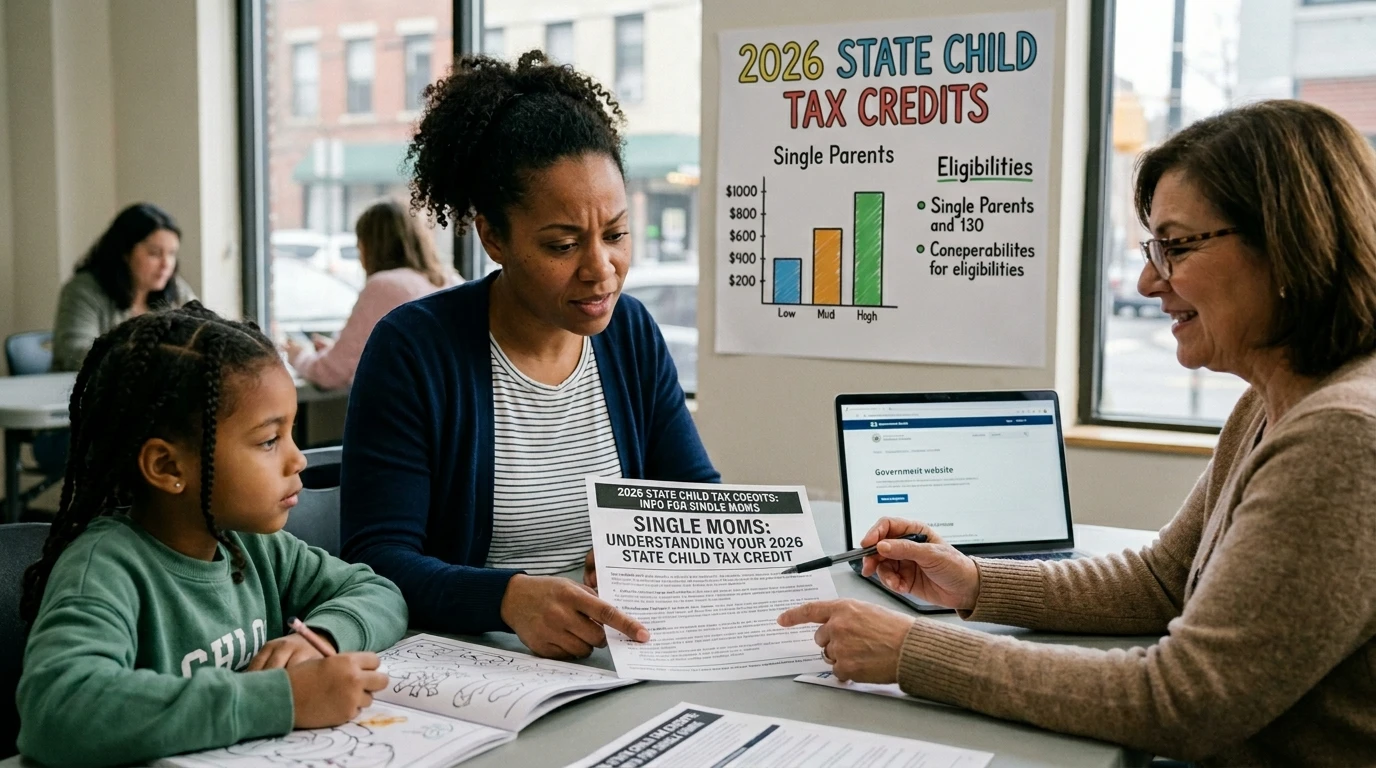
Single mothers across the United States continue to rely on child tax credits as a critical financial support mechanism to offset the rising cost of living, childcare, education, and basic household needs. In 2026, several states have expanded or maintained their state-level child tax credit programs, complementing the federal Child Tax Credit framework administered by the Internal Revenue Service (IRS).
This newsroom-style guide explains how 2026 State Child Tax Credits for single moms work, who qualifies, how to apply, and which states currently offer active programs based on verified and updated state revenue and tax authority guidance.
Understanding the 2026 State Child Tax Credits
State Child Tax Credits are tax relief programs designed to reduce the tax burden on families with dependent children. Unlike federal credits, these programs vary significantly by state in terms of:
- Refundable vs. non-refundable structure
- Income eligibility thresholds
- Credit amount per child
- Age requirements for dependents
- Filing requirements (state tax return or direct application)
For single mothers, these credits often function as a direct income supplement, especially for low- and moderate-income households.
Key Objective of State Child Tax Credits (2026 Update)
State governments use child tax credits to:
- Reduce child poverty rates
- Support working single-parent households
- Offset inflation-driven childcare expenses
- Encourage workforce participation
- Provide targeted relief to low-income families
Most 2026 updates reflect continued policy alignment with federal child tax support reforms introduced in prior fiscal years.
States Offering Child Tax Credits in 2026
As of 2026, the following U.S. states are recognized for maintaining state-level child tax credits or equivalent child-dependent tax relief programs based on official tax authority frameworks:
States with Active Child Tax Credit Programs
- California – Young Child Tax Credit (YCTC)
- Colorado – State Child Tax Credit (refundable structure for eligible families)
- Connecticut – Child Tax Credit for qualifying dependents
- Maine – Child Tax Credit for eligible households
- Maryland – State Child Tax Credit tied to income eligibility
- Massachusetts – Child and Family Tax Credit (expanded household-based relief)
- Minnesota – One of the most expanded refundable Child Tax Credit systems
- New Jersey – Child Tax Credit for qualifying dependents (income-based)
- New Mexico – Fully refundable Child Tax Credit structure
- New York – Empire State Child Credit program
- Vermont – Child Tax Credit for eligible resident taxpayers
Important Editorial Note (2026 Compliance)
Some states periodically revise credit structures annually during budget cycles. Applicants should always verify current eligibility through their state Department of Revenue or Taxation website before filing.
Eligibility Criteria for Single Mothers (2026)
While eligibility varies by state, most programs follow a similar baseline structure.
General Eligibility Requirements:
- Must be a resident of the state offering the credit
- Must have at least one qualifying dependent child under age 17 (or state-defined limit)
- Must file a state income tax return
- Must meet income thresholds (varies widely by state)
- Child must live with the applicant for more than half the year
Additional Priority Considerations:
- Low-income or working single-parent households
- Families receiving SNAP, TANF, or Medicaid (in some states)
- Households with multiple dependents
How Much Can Single Moms Receive in 2026?
Credit amounts differ significantly by state. Below is a general breakdown:
| State | Credit Type | Estimated Benefit Structure |
| California | Young Child Tax Credit | Up to several hundred dollars per child |
| Colorado | Refundable Child Tax Credit | Income-based sliding scale |
| Minnesota | Expanded Child Tax Credit | Higher refundable per-child value |
| New York | Empire State Child Credit | Tiered per-child credit based on income |
| Massachusetts | Child and Family Credit | Flat per-child and dependent support |
| New Mexico | Refundable Credit | Higher refund potential for low-income families |
Note: Exact payment amounts are determined by annual filing status, income level, and number of dependents.
How to Apply for State Child Tax Credits
Step-by-Step Application Process:
- File your state income tax return
Most credits are automatically calculated during filing. - Report dependent children accurately
Ensure Social Security numbers and residency documentation are correct. - Attach required schedules/forms
Some states require dedicated child tax credit forms. - Submit proof of income (if required)
Particularly for refundable credit programs. - Track refund status via state tax portal
Required Documents
- Valid Social Security Number (SSN) for parent and child
- Proof of residency (utility bill, lease agreement)
- Income documentation (W-2, 1099, or self-employment records)
- Birth certificate or custody documentation for dependents
- Prior year tax return (if applicable)
Common Reasons for Rejection
State tax agencies frequently reject claims due to:
- Incorrect dependent information
- Income exceeding eligibility limits
- Filing errors or missing forms
- Child not meeting residency requirements
- Duplicate claims between guardians
Why 2026 Matters
The 2026 fiscal cycle reflects continued expansion of state-level tax relief systems in response to:
- Rising inflation and childcare costs
- Federal-state coordination in poverty reduction
- Labor force participation policies for single parents
- Ongoing legislative adjustments in family tax law
Many states are now shifting toward refundable credits, meaning eligible families may receive cash refunds even if they owe no state taxes.
Sources:
Applicants should refer to their respective state revenue agencies:
- California Franchise Tax Board (FTB)
- Colorado Department of Revenue
- Connecticut Department of Revenue Services
- Minnesota Department of Revenue
- New York State Department of Taxation and Finance
- New Jersey Division of Taxation
- Massachusetts Department of Revenue
- New Mexico Taxation and Revenue Department
FAQs: 2026 State Child Tax Credits for Single Moms
Who qualifies for state child tax credits in 2026?
Single mothers or guardians with qualifying dependent children who meet state residency and income requirements are generally eligible.
How do single moms apply for child tax credits?
They apply through their annual state income tax return, where the credit is automatically calculated or claimed using designated tax forms.
Are state child tax credits refundable?
Yes, in many states such as Minnesota, New Mexico, and Colorado, credits are fully or partially refundable.
How much money can a single mom get per child?
Amounts vary by state, typically ranging from a few hundred dollars to over $1,000 per child depending on income level and state policy.
What documents are required for application?
Applicants typically need SSNs, proof of residency, income documents, and dependent verification records.
What are the most common reasons claims get denied?
Incorrect filing, missing documentation, income ineligibility, or duplicate dependent claims.
Which states offer child tax credits in 2026?
States include California, Colorado, Connecticut, Maine, Maryland, Massachusetts, Minnesota, New Jersey, New Mexico, New York, and Vermont.

Final Call for LIHEAP 2026: Many States Ending Applications This April

How Startups Can Get SBIR/STTR Funding in 2026

What Single Moms Need to Know About 2026 State Child Tax Credits

Major 2026 SNAP Changes: What CalFresh Recipients Need to Know

25 Small Business Grants You Can Apply for in 2025

Top Veterans Financial Assistance Programs 2025

How to Get Free Help Paying Your Electric Bill

LIHEAP 2025 Application Guide for Energy Assistance
-
 Small Business Grants11 months ago
25 Small Business Grants You Can Apply for in 2025
-
 Veterans Assistance11 months ago
Top Veterans Financial Assistance Programs 2025
-
 Utility & Bills Help11 months ago
How to Get Free Help Paying Your Electric Bill
-
 Utility & Bills Help11 months ago
LIHEAP 2025 Application Guide for Energy Assistance
-

 Food & EBT / SNAP Benefits11 months ago
Fast Food Places That Accept EBT Cards (Full List)
-

 Housing Assistance11 months ago
Apply for Section 8 Housing Vouchers (Updated 2025)
-

 Small Business Grants10 months ago
Women-Owned Business Grants & Funding Sources
-

 Government Grants11 months ago
How to Apply for Government Grants Online
-

 Government Grants11 months ago
25 Federal Grants That Give Free Money in 2025
-

 Disability Benefits11 months ago
How Much Disability Pay Can You Get in 2025?