
Veterans Assistance
Veteran Benefits in State Law vs. Federal Law: What Missouri’s Bill Tells Us
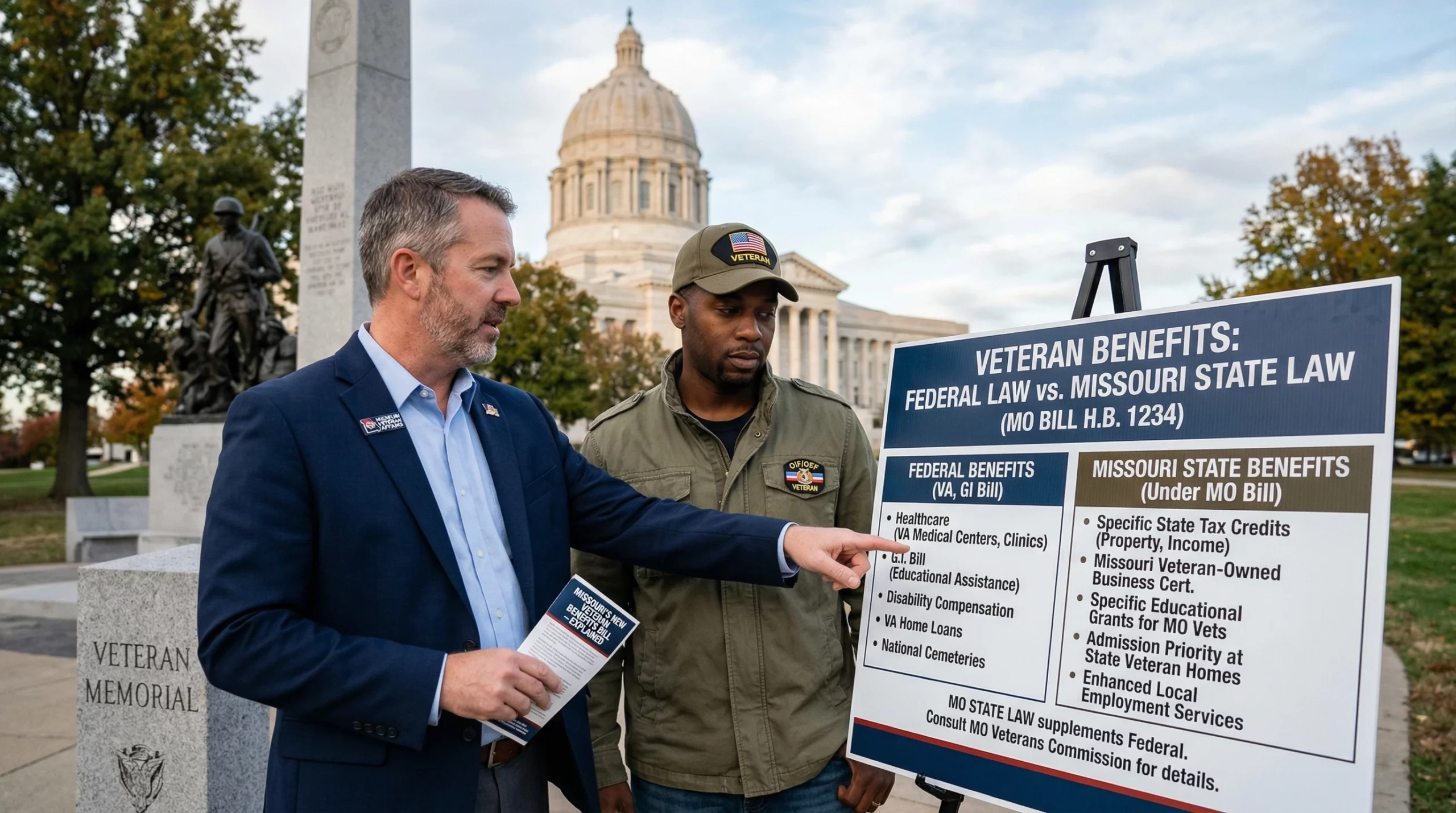
Understanding Veteran Benefits in State Law vs. Federal Law is essential for applicants, NGOs, startups, and local governments navigating compliance and funding access in 2026–2026. While federal programs administered by the U.S. Department of Veterans Affairs (VA) establish nationwide entitlements, states like Missouri have expanded and, in some cases, restructured supplemental benefits through state legislation and appropriations.
This guide explains how Missouri’s recent legislative actions and budget updates affect veterans compared to federal entitlements, including healthcare access, property tax relief, education grants, and small-business programs.
Federal Veteran Benefits Framework
Federal law governs baseline entitlements under statutes such as the GI Bill, VA disability compensation, and home loan guarantees.
Key Federal Agencies
- U.S. Department of Veterans Affairs
- Veterans Benefits Administration
- U.S. Department of Defense
Core Federal Benefits (FY 2026)
| Benefit Category | Program | Governing Authority | Evergreen? |
| Disability Compensation | VA Disability Rating System | Title 38 U.S. Code | Yes |
| Education | Post-9/11 GI Bill | Title 38 U.S. Code | Yes |
| Housing | VA Home Loan Guaranty | VA Loan Program | Yes |
| Healthcare | VA Medical Benefits Package | VA Health Administration | Yes |
| Small Business | SDVOSB Certification | SBA & VA | Subject to regulatory updates |
Evergreen Principle: Federal eligibility rules remain consistent nationally but are subject to annual cost-of-living adjustments (COLA) and appropriations by Congress.
Missouri’s Veteran Benefits Under State Law (2026–2026 Updates)
Missouri supplements federal benefits through statutes administered by the Missouri Veterans Commission and appropriated via the Missouri General Assembly.
1. Missouri Veterans Homes & Healthcare Support
Missouri operates state veterans homes in partnership with federal VA per diem funding.
2026 Update:
- Increased state appropriations for operational costs due to healthcare staffing shortages.
- Enhanced Medicaid coordination for long-term care veterans.
⚠ Time-Sensitive: Budget allocations are subject to annual review in the Missouri FY 2026 state budget.
2. Property Tax Credit for Disabled Veterans
Missouri law provides property tax relief for:
- 100% service-connected disabled veterans
- Former POWs
Key Difference from Federal Law:
Federal law does not directly waive local property taxes — this authority lies exclusively with states.
| Feature | Federal | Missouri |
| Property Tax Relief | Not provided | Available |
| Income Limits | N/A | Applies in some counties |
| Disability Rating Required | 100% (for certain VA benefits) | 100% service-connected |
Time-Sensitive: Annual application deadlines vary by county assessor (typically spring–summer).
3. Missouri Returning Heroes Education Program
Administered through the Missouri Department of Higher Education and Workforce Development.
What It Does
Covers tuition gaps after GI Bill payments at public institutions.
Eligibility
- Missouri resident
- Honorably discharged
- Served in combat zones post-9/11
Policy Insight:
Unlike the federal GI Bill (which follows the veteran nationwide), Missouri’s program requires residency and enrollment in approved in-state institutions.
Time-Sensitive: Subject to annual appropriations; funding caps may apply each academic year.
4. Missouri Veteran Small Business Support (2026 Expansion)
Missouri aligns with federal SDVOSB standards but has expanded procurement incentives at the state level.
Administered in coordination with:
- Missouri Office of Administration
- U.S. Small Business Administration
2026 Developments:
- Enhanced bid preference scoring for service-disabled veteran-owned businesses (SDVOBs).
- State contract goal participation benchmarks under review.
Key Legal Difference:
Federal SDVOSB certification is governed by SBA regulations. Missouri may require additional state vendor registration.
Comparative Overview: Federal vs. Missouri Law
| Policy Area | Federal Authority | Missouri Authority | Practical Impact |
| Disability Pay | VA | None | Uniform nationwide |
| Education | GI Bill | Returning Heroes | Stacked benefits possible |
| Property Tax | None | Yes | Localized relief |
| Veterans Homes | VA Per Diem | State-operated | Joint funding |
| Procurement | SBA | State OA | Dual compliance required |
What Missouri’s Bill Signals in 2026
Missouri’s recent legislative adjustments reflect three policy trends:
- State-Level Gap Filling: Addressing costs not fully covered by federal entitlements.
- Procurement Incentives: Expanding veteran participation in public contracts.
- Long-Term Care Funding: Increasing reliance on state-federal blended financing.
For NGOs and local governments, this means closer coordination between federal eligibility documentation (DD-214, VA disability rating letters) and state compliance filings.
Application Checklist
Regardless of program type, veterans typically need:
- DD-214 (Certificate of Release or Discharge)
- VA Disability Rating Letter (if applicable)
- Missouri Residency Proof
- Property ownership records (for tax credit)
- Enrollment verification (education programs)
- Business registration (for procurement benefits)
Frequently Asked Questions
Who is eligible for Missouri state veteran benefits?
Missouri residents who are honorably discharged veterans. Certain programs require a 100% VA disability rating, combat service history, or Missouri property ownership.
How much funding is available under Missouri veteran programs in 2026?
Funding levels vary by program and are determined annually by the Missouri state budget. Education assistance and veterans home funding are appropriations-based and subject to fiscal year caps.
Can Missouri benefits be combined with federal VA benefits?
Yes. Most Missouri programs are supplemental and designed to stack on top of federal entitlements such as the Post-9/11 GI Bill or VA disability compensation.
How do I apply for Missouri property tax relief as a disabled veteran?
Applications are filed with the local county assessor’s office. Required documents include a VA disability rating letter confirming 100% service-connected status and proof of Missouri residency.
Sources
- U.S. Department of Veterans Affairs – VA.gov
- Missouri Veterans Commission – mvc.dps.mo.gov
- Missouri Department of Higher Education and Workforce Development – dhewd.mo.gov
- U.S. Small Business Administration – sba.gov




Final Call for LIHEAP 2026: Many States Ending Applications This April

How Startups Can Get SBIR/STTR Funding in 2026

What Single Moms Need to Know About 2026 State Child Tax Credits

Major 2026 SNAP Changes: What CalFresh Recipients Need to Know

25 Small Business Grants You Can Apply for in 2025

Top Veterans Financial Assistance Programs 2025

How to Get Free Help Paying Your Electric Bill

LIHEAP 2025 Application Guide for Energy Assistance
-
 Small Business Grants11 months ago
25 Small Business Grants You Can Apply for in 2025
-
 Veterans Assistance11 months ago
Top Veterans Financial Assistance Programs 2025
-
 Utility & Bills Help11 months ago
How to Get Free Help Paying Your Electric Bill
-
 Utility & Bills Help11 months ago
LIHEAP 2025 Application Guide for Energy Assistance
-

 Food & EBT / SNAP Benefits11 months ago
Fast Food Places That Accept EBT Cards (Full List)
-

 Housing Assistance11 months ago
Apply for Section 8 Housing Vouchers (Updated 2025)
-

 Small Business Grants10 months ago
Women-Owned Business Grants & Funding Sources
-

 Government Grants11 months ago
How to Apply for Government Grants Online
-

 Government Grants11 months ago
25 Federal Grants That Give Free Money in 2025
-

 Disability Benefits11 months ago
How Much Disability Pay Can You Get in 2025?