
Emergency Cash Assistance
Churches & Charities Offering Emergency Money Now
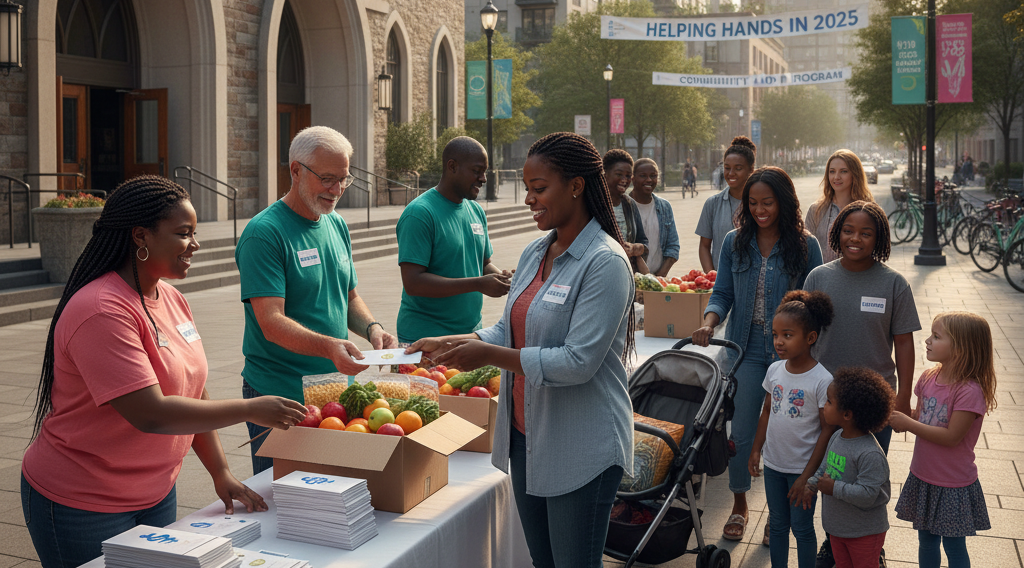
When a rent notice arrives, the power is about to be cut off, or you are wondering how you will make it to the next paycheck, help is available now through faith‑based charities and church‑linked programs working alongside government resources. In 2026 many of these organisations are stepping in to deliver urgent support to individuals and families in crisis.
What’s happening now: rapid financial relief from trusted charities
In a climate of rising costs, the gap between income and basic expenses is growing. Churches and non‑profits are responding quickly with emergency relief: short‑term financial assistance for rent, utilities, vehicle repair, and more. Unlike long‑term aid, this is immediate help when you are at the brink.
For instance, the Catholic Charities USA network is actively assisting families and individuals facing housing or utility instability. (catholiccharitiesusa.org) Likewise, The Salvation Army offers national-scale “rent, mortgage and utility assistance” programs to help people stay in their homes and keep basic services on. (salvationarmyalm.org)
The federal resource site USA.gov explicitly instructs anyone needing emergency rent help to contact their local 2‑1‑1 or state emergency rental assistance system. (usa.gov)
Who qualifies? Who actually gets help?
People facing imminent eviction or shut-off
If you have received a notice of eviction, a pending utility cutoff, or you are behind on rent or mortgage payments, many church-linked programs focus exactly there. For example, the Arlington-VA chapter of Catholic Charities offers help when there is a “late rent or utility cutoff notice”. (ccda.net)
Low-income individuals or families in temporary crisis
These are not always people who have been long-term dependent on aid. They may be working but facing a sudden job loss, illness, or unexpected expense. The Salvation Army’s scope includes those with sudden instability: “Maybe you lost your job. Maybe you are a senior living on a fixed income.” (salvationarmyalm.org)
All faiths and none: open to anyone in need
Though many of these services are provided by religious organisations, the help is often offered regardless of religion or background. The Salvation Army’s message: “regardless of religion, race, gender.” (salvationarmyalm.org)
Local availability matters
These services are delivered locally. Each church-based chapter may have unique eligibility rules, including geographic boundaries, income limits, and service capacities. For example, a local Catholic Charities chapter may serve only those residing within a particular diocese. (ccda.net)
What kind of assistance is offered?
Short-term emergency financial aid often includes:
- Rent assistance: one-time payment or support to avoid eviction.
- Utility bill payment help: electricity, gas, water so service remains on.
- Mortgage assistance in some cases.
- Vehicle repair in limited cases so you maintain needed transportation. (ccda.net)
- Support for food, clothing, and other immediate needs linked to the financial crisis.
These are not long-term welfare programs. They aim to stabilize a household in immediate crisis.
Why turning to churches and charities now makes sense

- Speed and accessibility: Charities often act faster than large government programs.
- Local presence: You can often walk into a parish or church-based help centre and talk face-to-face.
- Trusted networks: Faith-based agencies have long-standing infrastructure for emergency services such as food banks and housing help. Example: Catholic Charities’ housing network has 38,000 units. (catholiccharitiesusa.org)
- Combined with government referral: These charities work alongside government systems such as local housing offices and 2‑1‑1 referral lines. For example, USA.gov advises calling 2‑1‑1 to access emergency rental help. (usa.gov)
How to act now: step-by-step
- Identify your crisis: Is it a rent notice, utility cutoff, or sudden job loss?
- Call 2‑1‑1 in the U.S. or your local social service agency. USA.gov directs you here first for rental or utility help. (usa.gov)
- Locate a local faith-based agency:
- Visit Catholic Charities’ “Get Help” page. (catholiccharitiesusa.org)
- Visit The Salvation Army’s “Rent, Mortgage & Utility Assistance” page. (salvationarmyalm.org)
- Visit Catholic Charities’ “Get Help” page. (catholiccharitiesusa.org)
- Gather documents: Proof of crisis, identification, income info. Each location has its own process.
- Apply quickly: Time matters in emergency situations. Programs often assist on a first-come basis and funds may be limited.
- Follow up and ask about other help: If immediate assistance is not available, ask for referrals to local car repair aid, food pantries, or long-term financial counselling. Example: Catholic Charities of Central Texas offers online applications for rent and utility help plus financial literacy. (ccctx.org)
Important context and caution
- This is not a guaranteed payment: Services depend on funding and availability; they are often one-time or limited assistance.
- Not all programs cover every state or county: Check local area boundaries and eligibility rules.
- Beware of expired programs: Always verify that the assistance is active and funded.
- This site provides information only: We do not give grants or provide services ourselves.
- Combine resources: Use both charitable and government-referral sources for broader access.
Why you should keep reading and act now
If you are facing financial emergency where bills are stacking up, a service cut-off is imminent, or you are standing at the edge of eviction, taking action today could make the difference between staying stable and falling into deeper crisis. Churches and charities are often your fastest route to immediate relief. The earlier you reach out, the higher your chances of receiving assistance. Hope and help are available now.
FAQs
What types of emergency financial assistance do churches and charities provide?
Churches and faith-based charities offer one-time emergency aid such as rent payments, utility bill support, mortgage assistance, vehicle repair, and sometimes help with food or clothing. The programs are designed to stabilize individuals or families in immediate financial crisis.
Who is eligible to receive help from these programs?
Eligibility varies by location, but generally, programs target low-income individuals or families facing sudden financial hardship, such as eviction, utility shut-off, or unexpected medical bills. Many programs are open to people of all faiths.
How do I apply for emergency assistance?
- Identify your immediate financial crisis (rent, utilities, etc.).
- Contact a local faith-based charity or call 2-1-1 for government referrals.
- Gather necessary documents like proof of crisis, ID, and income verification.
- Apply online or in person at the local agency.
Are these programs guaranteed to cover my full expenses?
No. Assistance is typically one-time or limited, depending on available funding and local program capacity. It is meant to stabilize you temporarily, not provide long-term financial security.
Can I combine charity help with government aid?
Yes. Many churches and charities work alongside government programs. For example, you can get emergency rent support through a faith-based organization while also applying for state or local rental assistance programs via official government portals like USA.gov.
Sources:
- Get emergency rent assistance (USA.gov) — https://www.usa.gov/emergency-pay-rent (usa.gov)
- Find help paying my bills (211.org) — https://www.211.org/get-help/i-need-help-paying-my-bills (211.org)
- Disaster Relief Resources for Charities (IRS) — https://www.irs.gov/charities-non-profits/charitable-organizations/disaster-relief-resources-for-charities-and-contributors (irs.gov)


Small Business Grants Oklahoma 2026: $81M Up for Grabs

Final Call for LIHEAP 2026: Many States Ending Applications This April

How Startups Can Get SBIR/STTR Funding in 2026

What Single Moms Need to Know About 2026 State Child Tax Credits

25 Small Business Grants You Can Apply for in 2025

Top Veterans Financial Assistance Programs 2025

How to Get Free Help Paying Your Electric Bill

LIHEAP 2025 Application Guide for Energy Assistance
-
 Small Business Grants5 months ago
25 Small Business Grants You Can Apply for in 2025
-
 Veterans Assistance5 months ago
Top Veterans Financial Assistance Programs 2025
-
 Utility & Bills Help5 months ago
How to Get Free Help Paying Your Electric Bill
-
 Utility & Bills Help5 months ago
LIHEAP 2025 Application Guide for Energy Assistance
-

 Small Business Grants5 months ago
Women-Owned Business Grants & Funding Sources
-

 Housing Assistance5 months ago
Apply for Section 8 Housing Vouchers (Updated 2025)
-

 Government Grants5 months ago
How to Apply for Government Grants Online
-

 Government Grants5 months ago
25 Federal Grants That Give Free Money in 2025
-

 Food & EBT / SNAP Benefits5 months ago
Fast Food Places That Accept EBT Cards (Full List)
-

 Disability Benefits5 months ago
How Much Disability Pay Can You Get in 2025?