
Utility & Bills Help
Emergency Utility Aid Demand Surges Across the U.S. in May 2026
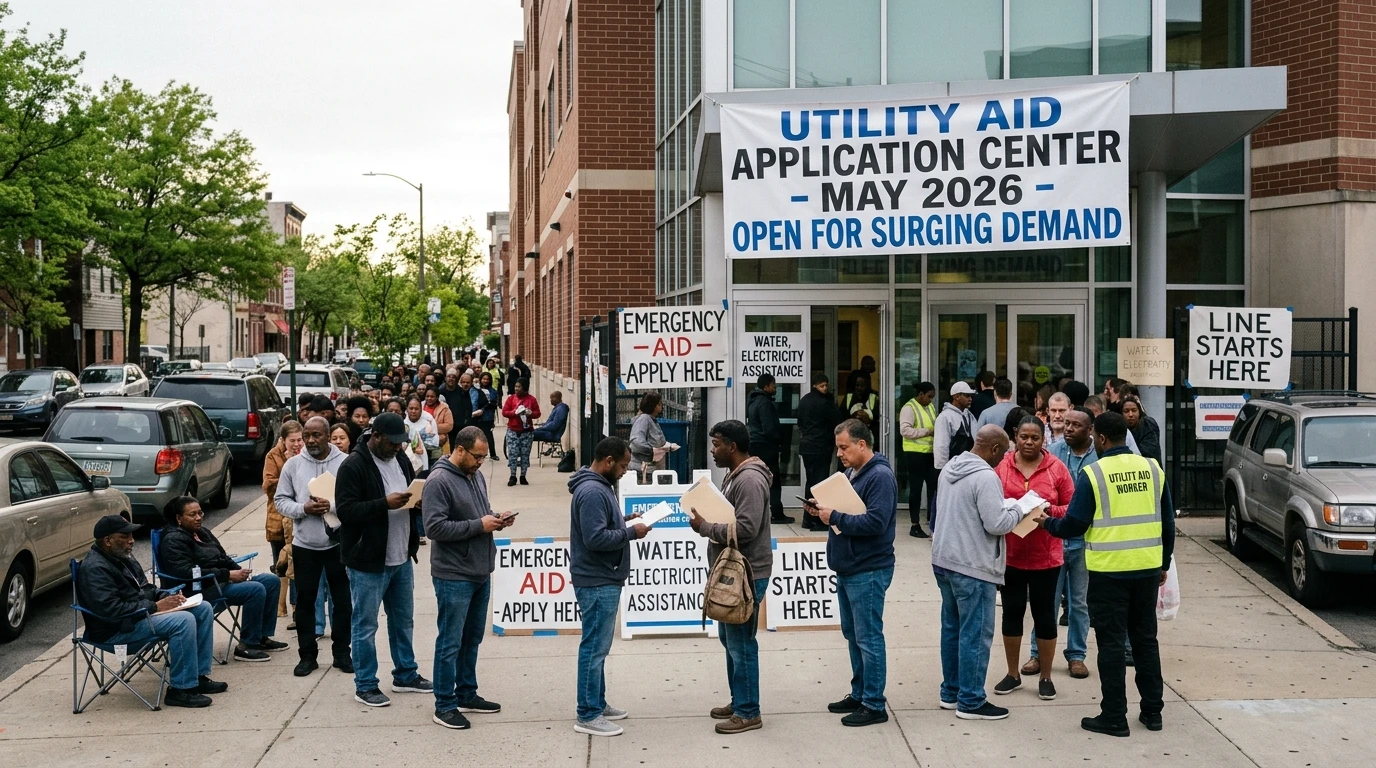
Emergency utility assistance demand across the United States increased sharply in May 2026 as households faced rising electricity costs, utility shutoff risks, and delayed federal energy assistance funding. The primary federal program responding to this surge is the Low Income Home Energy Assistance Program (LIHEAP), administered by the U.S. Department of Health and Human Services through state agencies. Multiple states extended application deadlines and released emergency aid measures during the 2025–2026 funding cycle.
Introduction
Emergency utility assistance requests increased nationwide during May 2026 due to higher electricity prices, inflation-related household stress, and elevated cooling demand ahead of summer. State agencies, utility regulators, nonprofit partners, and local governments reported a growing number of applications for emergency energy aid programs.
The largest federal assistance mechanism remains the Low Income Home Energy Assistance Program, commonly known as LIHEAP. The program provides grants to eligible low-income households to help cover heating and cooling costs, utility arrears, and shutoff prevention.
Federal officials released the remaining Fiscal Year 2026 LIHEAP allocations in April 2026 after funding delays earlier in the season. (publicpower.org)
What Is the Low Income Home Energy Assistance Program (LIHEAP)?
The Low Income Home Energy Assistance Program is a federally funded assistance program that helps low-income households pay home energy bills, avoid utility shutoffs, and restore disconnected utility service. The program is managed by the Administration for Children and Families and administered through state governments, tribal organizations, and local agencies.
LIHEAP funding supports:
- Heating assistance
- Cooling assistance
- Crisis utility payments
- Emergency reconnection services
- Energy-related weatherization support
According to federal funding releases, more than $4 billion in LIHEAP funding was allocated for Fiscal Year 2026. (publicpower.org)
Why Emergency Utility Aid Demand Increased in May 2026
Several factors contributed to the increase in emergency utility aid applications across the United States:
Rising Utility Costs
Electricity and natural gas costs continued to increase in multiple states during early 2026. Residents in regions served by the PJM Interconnection faced concerns about higher summer energy pricing and grid strain. (Utility Dive)
Delayed Federal Funding Releases
The final 10% of Fiscal Year 2026 LIHEAP funding was delayed and released in April 2026, creating administrative backlogs for state agencies. (publicpower.org)
Increased Household Energy Debt
Reports cited millions of households behind on utility bills nationwide. Utility disconnections remained a major concern entering summer 2026. (wyomingpublicmedia.org)
Expanded Seasonal Demand
Several states extended LIHEAP application periods into May 2026 because of continued demand. Pennsylvania extended its 2025–2026 season through May 8, 2026. (Pennsylvania Government)
Who Is Eligible for Emergency Utility Assistance?
Eligibility Criteria Table
| Eligibility Requirement | Typical Standard |
| Household income | Usually below 150% of the Federal Poverty Guidelines or 60% of the state median income |
| Residency | Must live in the state where applying |
| Utility responsibility | Applicant must pay heating or cooling costs |
| Citizenship status | Varies by state program rules |
| Emergency condition | Shutoff notice, disconnected utility, or energy crisis |
Most states prioritize:
- Seniors
- Disabled individuals
- Families with children
- Veterans
- Medically vulnerable residents
Eligibility standards vary by state agency and tribal authority. (liheapch.acf.gov)
Benefits and Funding Details
LIHEAP assistance amounts differ by state, household size, income level, and fuel type.
Typical 2025–2026 Benefit Ranges
| Assistance Type | Estimated Amount |
| Standard cash grant | $200–$1,000 |
| Crisis assistance | Up to $1,500 in some states |
| Emergency reconnection | Based on utility arrears |
| Cooling assistance | Seasonal and state-dependent |
Pennsylvania reported average LIHEAP cash grants of approximately $282 during the 2025–2026 season. (Pennsylvania Government)
Some states also coordinate utility hardship protections with public utility commissions and nonprofit agencies.
How to Apply for Emergency Utility Aid
Step-by-Step Application Process
- Locate your state LIHEAP agency or local Community Action Agency.
- Complete the LIHEAP application online, by mail, or in person.
- Submit required income and identity documents.
- Provide a current utility bill or shutoff notice.
- Attend verification interviews if requested.
- Await approval and utility payment processing.
Most states allow online applications through state human services portals.
Applicants facing immediate disconnection may qualify for expedited crisis processing within 18–48 hours, depending on state policy. (liheapch.acf.gov)
Required Documents for LIHEAP Applications
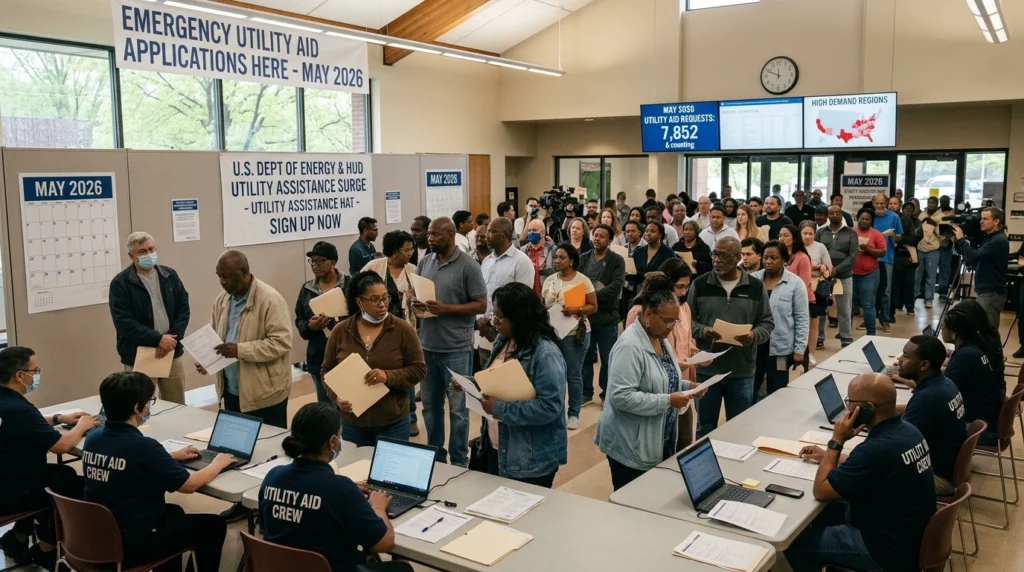
Applicants generally must provide:
- Government-issued photo identification
- Social Security numbers for household members
- Proof of income
- Recent utility bills
- Lease agreement or proof of residency
- Shutoff notice (for crisis assistance)
- Medical documentation (if medically necessary, utility support is requested)
Missing documentation remains one of the most common causes of delayed approval.
Deadlines and Timelines
Important 2025–2026 Timing Notes
| Program Activity | Timeline |
| FY2026 LIHEAP funding release | November 2025 and April 2026 |
| Peak application demand | January–May 2026 |
| Emergency crisis processing | Typically 18–48 hours |
| State deadlines | Vary by jurisdiction |
Several states extended deadlines into May 2026 due to demand and delayed federal allocations. (Pennsylvania Government)
Applicants should verify local deadlines directly through state energy assistance offices.
Common Reasons Applications Get Rejected
Common Rejection Factors
- Incomplete income verification
- Missing utility account information
- Exceeding income thresholds
- Duplicate applications
- Failure to respond to agency requests
- Applying after program deadlines
Community reports during 2026 also indicated confusion about utility credits and related benefits coordination. (Reddit)
Applicants are encouraged to maintain copies of all submissions and respond quickly to agency notices.
Government Authority and Policy Notes
The Administration for Children and Families administers LIHEAP funding under federal appropriations law. States operate programs within federal regulatory guidelines but retain flexibility over eligibility calculations and emergency processing.
Congress approved additional Fiscal Year 2026 LIHEAP funding despite prior federal budget elimination proposals. (publicpower.org)
Energy affordability concerns also intensified in regional electricity markets, driven by infrastructure capacity constraints and rising cooling demand.
(Utility Dive)
State and Local Relevance
State-level implementation varies significantly.
Examples include:
- Pennsylvania is extending LIHEAP application deadlines into May 2026
- New Jersey is issuing emergency responses to rising utility prices
- Community Action Agencies expanding crisis assistance referrals
- Utility hardship programs operating alongside federal aid
Local nonprofit organizations, faith-based agencies, and 211 referral systems also play major roles in emergency utility stabilization efforts. (Reddit)
FAQs
What is LIHEAP?
LIHEAP is the federal Low Income Home Energy Assistance Program that helps eligible households pay heating and cooling bills. It is funded by Congress and administered through state agencies.
Who is eligible for emergency utility assistance?
Eligibility usually depends on household income, residency, and responsibility for utility costs. Seniors, disabled residents, and families with children often receive priority processing.
How do I apply for LIHEAP in 2026?
Applicants can apply online, by mail, or through local agencies. Most states require proof of income, identity documents, and utility bills.
What documents are required for emergency utility aid?
Most programs require identification, proof of income, utility statements, residency records, and shutoff notices for crisis cases.
Why do LIHEAP applications get rejected?
Applications are commonly denied because of incomplete documentation, missed deadlines, or income levels exceeding state limits.
Sources:


How to Apply for Disability Benefits in 2026: Step-by-Step Guide

Apply for Emergency HEAP in New York – Jan 2, 2026 Begins

VA Benefits in 2026: Essential COLA, Top Compensation & Critical Policy Shifts

How HUD’s 2026 Strategy Is Breaking Down Barriers to Affordable Housing

25 Small Business Grants You Can Apply for in 2026

Top Veterans Financial Assistance Programs 2026

How to Get Free Help Paying Your Electric Bill

LIHEAP 2026 Application Guide for Energy Assistance
-
 Small Business Grants5 months ago
25 Small Business Grants You Can Apply for in 2026
-
 Veterans Assistance5 months ago
Top Veterans Financial Assistance Programs 2026
-
 Utility & Bills Help5 months ago
How to Get Free Help Paying Your Electric Bill
-
 Utility & Bills Help5 months ago
LIHEAP 2026 Application Guide for Energy Assistance
-

 Government Grants5 months ago
25 Federal Grants That Give Free Money in 2026
-

 Government Grants5 months ago
How to Apply for Government Grants Online
-

 Disability Benefits5 months ago
How Much Disability Pay Can You Get in 2026?
-

 Small Business Grants5 months ago
Women-Owned Business Grants & Funding Sources
-

 Food & EBT / SNAP Benefits5 months ago
Fast Food Places That Accept EBT Cards (Full List)
-

 Food & EBT / SNAP Benefits7 months ago
5 Key SNAP Policy Changes Coming in 2026 You Should Know