
Education & Student Grants
FAFSA 2026–27: Key Changes, Deadlines & Why Filing Early Boosts Your Aid
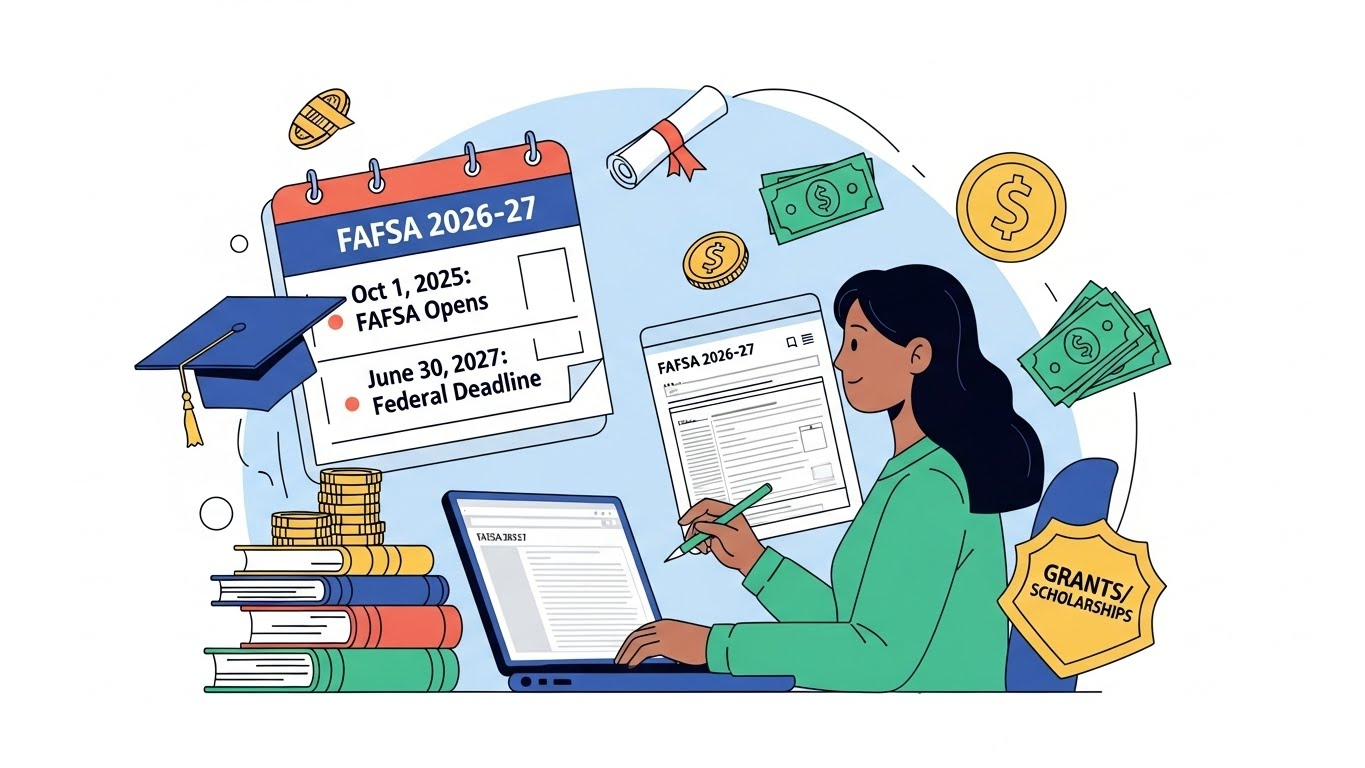
The Free Application for Federal Student Aid (FAFSA for the 2026–27 award year) is the single most important gateway to federal student aid in the United States. Administered by the U.S. Department of Education (ED) through Federal Student Aid (FSA), FAFSA determines eligibility for Pell Grants, federal student loans, work-study, and, critically, many state and institutional aid programs. Filing early remains one of the most reliable ways to maximize aid eligibility.
What Is FAFSA and Why It Exists
The FAFSA is authorized under the Higher Education Act of 1965, created to ensure that financial need does not block access to postsecondary education.
Purpose of FAFSA
- Assess a student’s financial need
- Allocate federal grants, loans, and work-study
- Enable states and colleges to award need-based aid
- Standardize eligibility using a federal formula
FAFSA is not a loan application; it is an eligibility determination tool used across public and private higher education systems.
What’s New in FAFSA 2026–27
1. Student Aid Index (SAI) Continues
The Student Aid Index (SAI) permanently replaces the Expected Family Contribution (EFC).
- SAI can be zero or negative, expanding Pell Grant access
- More accurate reflection of financial hardship
- Used uniformly across federal aid programs
2. Fewer Questions, Streamlined Design
- Most applicants answer fewer than 40 questions
- Logic-based flow removes irrelevant sections
- Clearer definitions for dependency and household size
3. Mandatory IRS Direct Data Exchange
Income information is now retrieved directly from the Internal Revenue Service (IRS).
- Manual tax entry is largely eliminated
- Reduces errors and verification delays
- Increases processing accuracy and compliance
Note: Consent to IRS data exchange is required to receive federal aid.
4. Pell Grant Eligibility Stability
- Expanded eligibility for students from low-income households
- Automatic maximum Pell for certain income thresholds
- Adjusted treatment of family size and assets
FAFSA 2026–27 Key Dates & Deadlines
| Milestone | Official Timeline |
| FAFSA Opens | December 1, 2026 |
| Priority Filing Window | December 2026 – Early 2026 |
| Federal FAFSA Deadline | June 30, 2027 |
| State & College Deadlines | Vary (often earlier) |
Important: Many states and colleges award aid on a first-come, first-served basis.
Why Filing FAFSA Early Matters

Filing early does not change your SAI, but it can significantly affect how much aid you receive.
Early Filing Advantages
- Access to limited state grants
- Higher likelihood of institutional scholarships
- Faster financial aid offers
- More time to correct errors before deadlines
Late filers often qualify for federal aid only, missing out on thousands in additional assistance.
Who Should File FAFSA 2026–27
FAFSA is not limited to low-income families.
You should file if you are:
- A high school senior planning college
- A current college student continuing enrollment
- An independent student or adult learner
- A graduate or professional student
- A student seeking scholarships or tuition waivers
Even families who believe they “won’t qualify” often discover eligibility for unsubsidized loans, work-study, or state aid.
Eligibility Overview (Federal Aid)
| Requirement | General Rule |
| Citizenship Status | U.S. citizen or eligible noncitizen |
| Enrollment | Degree- or certificate-seeking |
| Academic Standing | Satisfactory academic progress |
| Tax Information | Prior-prior year income (2024 taxes) |
Documents Needed to File FAFSA
- Social Security Number (SSN)
- Federal tax information (via IRS exchange)
- Records of untaxed income (if applicable)
- Asset information (non-primary residence, investments)
- FSA ID for student (and parent, if dependent)
Common FAFSA Errors to Avoid
- Missing state or school priority deadlines
- Incorrect dependency status
- Not listing all eligible colleges
- Failing to sign electronically with FSA ID
- Skipping FAFSA renewal for returning students
Frequently Asked Questions
1. Is FAFSA required every year?
Yes. FAFSA must be filed annually for continued aid eligibility.
2. Does filing early increase Pell Grant amounts?
Pell amounts are formula-based, but early filing increases access to supplemental state and institutional aid.
3. Can FAFSA be corrected after submission?
Yes. Corrections are allowed, but delays can affect state and institutional aid eligibility.
4. Who is considered an independent student?
Independent students are those who meet criteria such as being 24 or older, married, a veteran, or having dependents, which affects parental information requirements.
5. What happens if I miss a state or college FAFSA deadline?
Missing deadlines may result in ineligibility for state grants, scholarships, or limited institutional aid, even if federal aid is still available.
Sources:
Federal Student Aid Programs
- Free Application for Federal Student Aid (FAFSA)
https://studentaid.gov - Federal Student Aid (FSA), U.S. Department of Education
https://studentaid.gov/about - Pell Grant Program Overview
https://studentaid.gov/understand-aid/types/grants/pell


Small Business Grants Oklahoma 2026: $81M Up for Grabs

Final Call for LIHEAP 2026: Many States Ending Applications This April

How Startups Can Get SBIR/STTR Funding in 2026

What Single Moms Need to Know About 2026 State Child Tax Credits

25 Small Business Grants You Can Apply for in 2025

Top Veterans Financial Assistance Programs 2025

How to Get Free Help Paying Your Electric Bill

LIHEAP 2025 Application Guide for Energy Assistance
-
 Small Business Grants5 months ago
25 Small Business Grants You Can Apply for in 2025
-
 Veterans Assistance5 months ago
Top Veterans Financial Assistance Programs 2025
-
 Utility & Bills Help5 months ago
How to Get Free Help Paying Your Electric Bill
-
 Utility & Bills Help5 months ago
LIHEAP 2025 Application Guide for Energy Assistance
-

 Small Business Grants5 months ago
Women-Owned Business Grants & Funding Sources
-

 Housing Assistance5 months ago
Apply for Section 8 Housing Vouchers (Updated 2025)
-

 Government Grants5 months ago
How to Apply for Government Grants Online
-

 Government Grants5 months ago
25 Federal Grants That Give Free Money in 2025
-

 Food & EBT / SNAP Benefits5 months ago
Fast Food Places That Accept EBT Cards (Full List)
-

 Disability Benefits5 months ago
How Much Disability Pay Can You Get in 2025?