
Veterans Assistance
Michigan Emergency Grants for Disabled Veterans – How to Apply
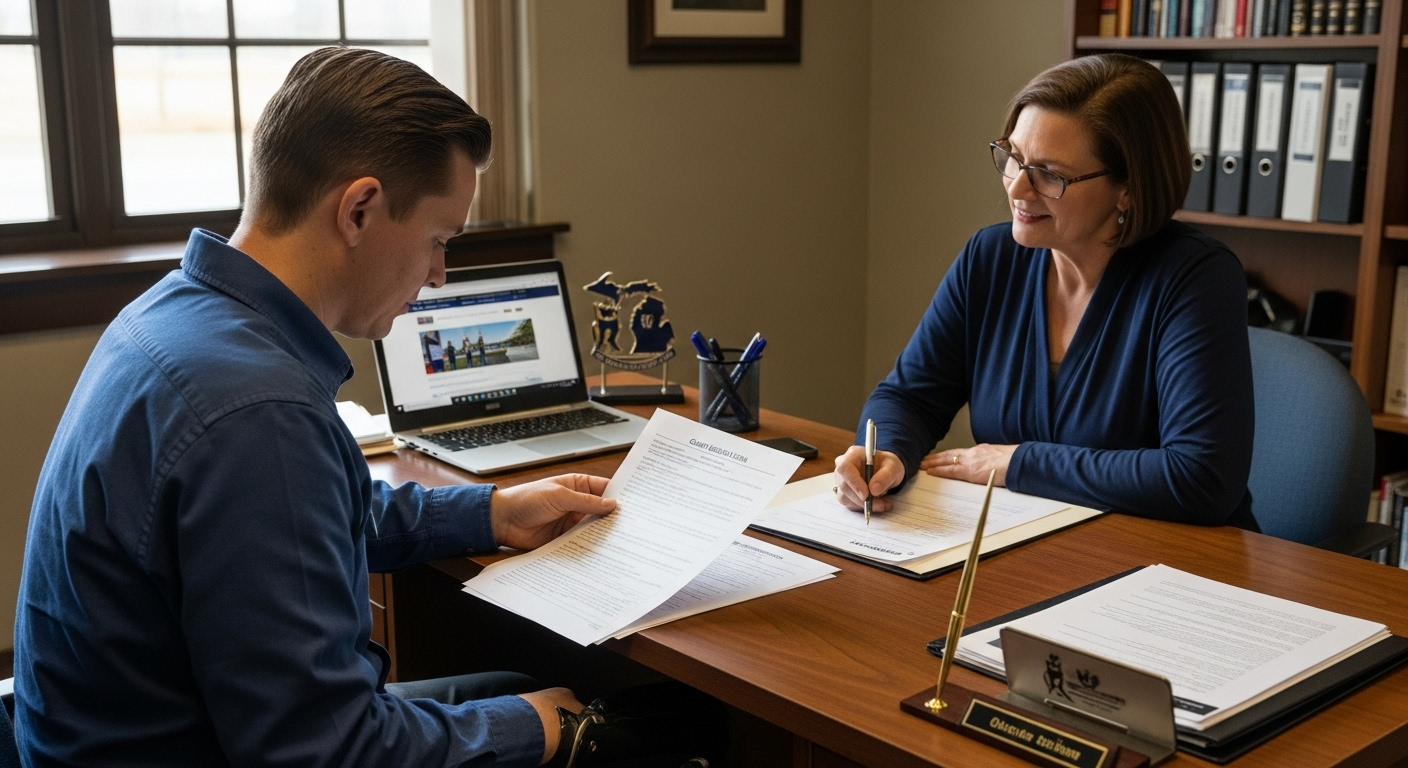
Michigan’s Michigan Veterans Trust Fund (MVTF) continues to provide emergency financial assistance to veterans, including those with disabilities, who face sudden, short-term financial hardships. This support is distributed via the Michigan Veterans Affairs Agency (MVAA) and is intended to cover critical needs like utility bills, medical costs, vehicle repairs, or home maintenance. (michigan.gov)
If you’re a disabled veteran in Michigan facing an unforeseen financial crisis, this grant could be a lifeline — but it requires knowing where to apply, what qualifies, and how to present your case.
What Is the Michigan Veterans Trust Fund (MVTF)?
The Michigan Veterans Trust Fund was established in 1946 (under Public Act 9) to support veterans experiencing unexpected financial emergencies.
- The grant program is discretionary, meaning funds are awarded when need is verified and future expenses can be managed.
- Beginning in December 2021, MVTF expanded its scope via the “65+ Peacetime Program”, making peacetime veterans (aged 65+) eligible for emergency help if they meet the service and discharge requirements.
- A board of trustees (appointed by Michigan’s governor) oversees grant policy decisions and the review process.
- Financial counseling is offered in partnership with GreenPath Financial Wellness, providing one-on-one budgeting support and other tools. (michigan.gov)
Eligibility Criteria for Disabled Veterans
To apply for an MVTF emergency grant, veterans (or their dependents) must typically meet the following:
- Service requirement
- At least 180 days of active duty in a wartime period, or
- 180 days of active duty with an award of an Expeditionary Medal, or
- At least one day of wartime service with separation due to a service-connected disability.
- At least 180 days of active duty in a wartime period, or
- Discharge requirement
- Honorable discharge, or general discharge under honorable conditions.
- Honorable discharge, or general discharge under honorable conditions.
- Residency
- Must be a Michigan resident.
- Must be a Michigan resident.
- Future financial viability
- Ability to show that, after receiving the grant, they can manage ongoing expenses.
- Ability to show that, after receiving the grant, they can manage ongoing expenses.
- Peacetime, 65+ program eligibility (if applicable)
- Veterans aged 65 or older, with at least 180 days of service, discharged under honorable conditions, may apply under the expanded program. (michigan.gov)
- Veterans aged 65 or older, with at least 180 days of service, discharged under honorable conditions, may apply under the expanded program. (michigan.gov)
How to Apply: Step‑by‑Step Guide
- Connect with your MVTF county committee
- Applications are handled via local county committees, not directly through a central office.
- The county veteran services officer can direct you to the right MVTF committee in your area.
- Applications are handled via local county committees, not directly through a central office.
- Schedule a meeting
- Once in touch with your committee, set up an appointment to submit all documentation. The first contact typically results in a follow-up within 48 hours, during which MVAA may request more information.
- Once in touch with your committee, set up an appointment to submit all documentation. The first contact typically results in a follow-up within 48 hours, during which MVAA may request more information.
- Application review & decision
- Your application is reviewed by the county committee and then forwarded to the state’s MVTF board, which considers the request in its monthly meeting. (michigan.gov)
- If approved, the grant is disbursed and coordinated through your local committee.
- Your application is reviewed by the county committee and then forwarded to the state’s MVTF board, which considers the request in its monthly meeting. (michigan.gov)
- Appeals
- If your application is denied, appeals go to the MVTF Board of Trustees, which meets monthly.
- If your application is denied, appeals go to the MVTF Board of Trustees, which meets monthly.
Key Documentation Required
To maximize your chances of approval, you will typically need:
- DD-214 or separation report, clearly showing dates of service and type of discharge.
- Proof of Michigan residence (state ID, driver’s license, voter registration, etc.
- Account statements for bills you want the grant to pay (utilities, medical, rent, etc.)
- VA disability documentation, if applicable.
- Proof of income, employment, or other support sources.
- Family documentation, such as marriage certificate, dependents’ birth certificates, or in some cases a death certificate. (michigan.gov)
Additional Support & Financial Counseling

Receiving a grant is only one piece of the puzzle. To help veterans achieve long-term financial stability, MVTF offers:
- Free financial counseling via GreenPath, including budget planning and debt management. (michigan.gov)
- Housing assistance referrals, if utility or rental support is needed.
- Collaboration with county veteran services offices to make sure your application is as strong as possible.
Why This Matters — The Impact of the Program
- These emergency grants are not loans. They do not need repayment, meaning they can be a real lifeline when sudden crises hit.
- For disabled veterans, who often face medical expenses or reduced earning ability, such grants are critical to preventing deeper financial spirals.
- The 2026 expansion and continued investment reflect Michigan’s ongoing commitment to its veteran community.
- By linking with local county committees, the program ensures grassroots, personalized support rather than a one-size-fits-all solution.
Your Path to Emergency Support Starts Here
If you are a disabled veteran in Michigan facing a financial crisis, the Michigan Veterans Trust Fund Emergency Grant may be one of your strongest options. While it’s a state-funded program and not a federal benefit, many find it uniquely suited for urgent, unexpected needs. The process may feel bureaucratic, but gathering the required documentation—and connecting with your county MVTF committee—can significantly increase your chances.
Taking that first step often makes all the difference. Call 1‑800‑MICH‑VET, fill out the Resource Assistance Form, and begin the application process. Even if you’re unsure whether you fully qualify, speaking with a county veteran service officer can clarify next steps and point you to other resources. Assistance is available — and you don’t have to face this alone.
Sources:
- Michigan Veterans Trust Fund – Emergency Assistance (MVAA)
- Michigan Veterans Trust Fund – Eligibility & Application Details
- 65+ Peacetime Program (MVTF) — Updated Guide (2026)
- MVAA Emergency Assistance FAQ
- GreenPath Financial Counseling (Partner of MVTF)
- Michigan Veterans Affairs Agency (MVAA) – Official Website




Final Call for LIHEAP 2026: Many States Ending Applications This April

How Startups Can Get SBIR/STTR Funding in 2026

What Single Moms Need to Know About 2026 State Child Tax Credits

Major 2026 SNAP Changes: What CalFresh Recipients Need to Know

25 Small Business Grants You Can Apply for in 2025

Top Veterans Financial Assistance Programs 2025

How to Get Free Help Paying Your Electric Bill

LIHEAP 2025 Application Guide for Energy Assistance
-
 Small Business Grants11 months ago
25 Small Business Grants You Can Apply for in 2025
-
 Veterans Assistance11 months ago
Top Veterans Financial Assistance Programs 2025
-
 Utility & Bills Help11 months ago
How to Get Free Help Paying Your Electric Bill
-
 Utility & Bills Help11 months ago
LIHEAP 2025 Application Guide for Energy Assistance
-

 Food & EBT / SNAP Benefits11 months ago
Fast Food Places That Accept EBT Cards (Full List)
-

 Housing Assistance11 months ago
Apply for Section 8 Housing Vouchers (Updated 2025)
-

 Small Business Grants10 months ago
Women-Owned Business Grants & Funding Sources
-

 Government Grants11 months ago
How to Apply for Government Grants Online
-

 Government Grants11 months ago
25 Federal Grants That Give Free Money in 2025
-

 Disability Benefits11 months ago
How Much Disability Pay Can You Get in 2025?