
Education & Student Grants
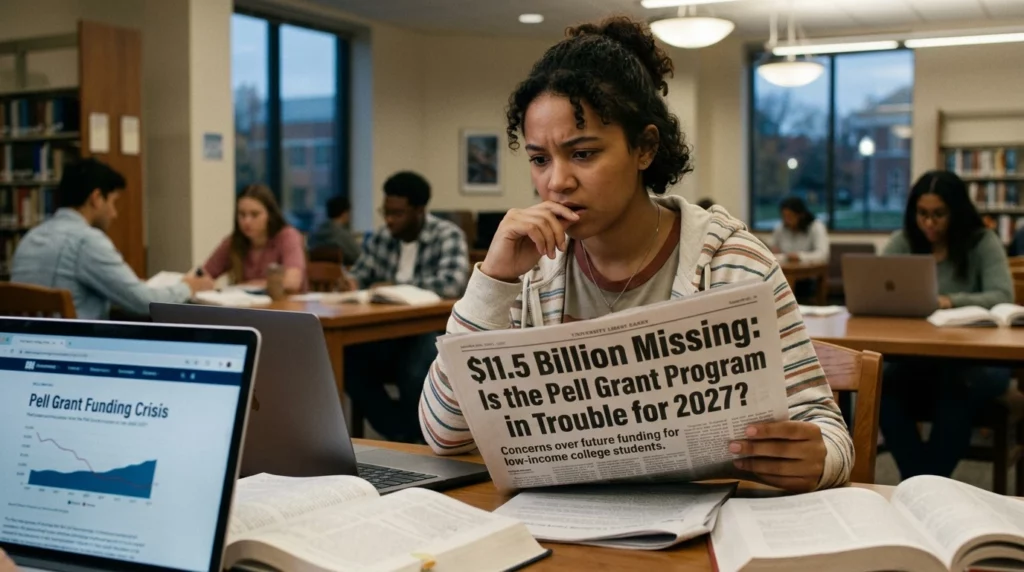
$11.5 Billion Missing: Is the Pell Grant Program in Trouble for 2027?

A growing funding gap of $11.5 billion in the federal Pell Grant Program has raised serious concerns among policymakers, education advocates, and millions of applicants. Managed by the U.S. Department of Education, the Pell Grant is a cornerstone financial aid program supporting low-income students across the United States.
As of the 2026–2026 federal budget projections, this shortfall is not hypothetical; it is tied to increased enrollment, expanded eligibility, and rising award amounts. The central question now is: Will Pell Grants be reduced, restructured, or delayed by 2027?
This report breaks down verified updates, policy context, eligibility rules, and what applicants should expect.
What Is the Pell Grant Program?
The Federal Pell Grant Program provides need-based financial aid to undergraduate students who have not earned a bachelor’s degree. Unlike loans, Pell Grants do not require repayment.
Key Features:
- Administered through the U.S. Department of Education
- Based on the Expected Family Contribution (EFC), now replaced by the Student Aid Index (SAI) under FAFSA Simplification
- Awarded through colleges and universities
- Annual adjustments based on federal budget allocations
Why Is There an $11.5 Billion Shortfall?
According to recent federal budget analyses and Congressional reports:
Primary Causes:
- Increased Enrollment Post-Pandemic
- More students are returning to higher education
- Expanded Eligibility Rules
- FAFSA simplification expanded access to more low-income applicants
- Higher Maximum Award Levels
- The maximum Pell Grant increased to approximately $7,395 (FY 2026)
- Inflationary Pressures
- Rising tuition and cost-of-living adjustments
- Underfunded Congressional Appropriations
- Budget allocations have not kept pace with demand
Policy Context:
The shortfall was highlighted in federal appropriations discussions involving the U.S. Congress and budget proposals from the Office of Management and Budget.
Is the Pell Grant Program at Risk for 2027?
Not immediately, but reforms are likely.
What Officials Are Saying:
- The program is not expected to disappear
- However, Congress must act to close the funding gap before FY 2027
- Options under consideration include:
- Adjusting eligibility thresholds
- Reducing maximum award increases
- Supplemental funding through emergency appropriations
Risk Level:
| Factor | Risk Level |
| Program Continuity | Low |
| Award Reductions | Moderate |
| Eligibility Tightening | Moderate |
| Payment Delays | Low–Moderate |
How Much Funding Is Available?
FY 2026–2026 Snapshot:
- Maximum award: $7,395
- Total recipients: ~6.5 million students
- Estimated program cost: $30+ billion annually
- Current funding gap: $11.5 billion (projected)
Update Required Each Fiscal Year: Funding levels and award caps are revised annually by Congress.
Who Is Eligible for Pell Grants?
Eligibility is determined through the FAFSA (Free Application for Federal Student Aid).
Basic Criteria:
- U.S. citizen or eligible non-citizen
- Demonstrated financial need (via SAI)
- Enrollment in an eligible degree or certificate program
- Not in default on federal student loans
Priority Groups:
- Students from low-income households
- First-generation college students
- Part-time and returning adult learners
How to Apply for a Pell Grant (Step-by-Step)
Application Process:
- Complete FAFSA at studentaid.gov
- Receive Student Aid Index (SAI)
- College calculates Pell eligibility
- Accept the award through the institution
Required Documents:
- Social Security Number (SSN)
- Tax returns (student/parents)
- Income records
- School enrollment verification
What Changes Could Happen by 2027?
Potential Policy Adjustments:
- Lower income thresholds for eligibility
- Caps on lifetime Pell usage
- Reduced automatic eligibility provisions
- Increased institutional accountability
These changes would require legislative approval by the U.S. Congress.
Impact on Students, NGOs, and Institutions
Students:
- Possible reduced grant amounts
- Increased reliance on student loans
NGOs & Advocacy Groups:
- Greater demand for scholarship support programs
- Increased need for financial aid counseling
Colleges & Universities:
- Budget adjustments for financial aid offices
- Enrollment strategy shifts
Common Reasons for Pell Grant Rejection
- Incomplete FAFSA application
- Income above the eligibility threshold
- Failure to maintain academic progress
- Incorrect or unverifiable documentation
What This Means for Your Future: Navigating the Pell Grant Uncertainty Toward 2027
The Pell Grant funding gap is a serious but manageable policy issue. With millions of students depending on this aid, federal action is inevitable before 2027.
For applicants and stakeholders, the priority should be:
- Staying updated with official announcements
- Completing FAFSA early
- Exploring supplemental funding sources
The Pell Grant Program remains one of the most critical tools for educational equity, but its sustainability now depends on timely legislative decisions and budget alignment.
Frequently Asked Questions
Is the Pell Grant Program ending in 2027?
No. The program is not ending, but funding adjustments may occur due to the projected $11.5 billion shortfall.
Who is eligible for Pell Grants in 2026?
Students with demonstrated financial need, enrolled in eligible programs, and meeting FAFSA requirements qualify.
How much Pell Grant can I receive?
For 2026–2026, the maximum award is approximately $7,395, subject to annual updates.
How do I apply for a Pell Grant?
Submit the FAFSA form online via studentaid.gov and follow your institution’s financial aid process.
Sources
- Federal Student Aid Portal: https://studentaid.gov
- U.S. Department of Education Updates
- Congressional Budget Reports: https://www.cbo.gov
- FAFSA Simplification Act Details







How to Apply for Disability Benefits in 2026: Step-by-Step Guide

Apply for Emergency HEAP in New York – Jan 2, 2026 Begins

VA Benefits in 2026: Essential COLA, Top Compensation & Critical Policy Shifts

How HUD’s 2026 Strategy Is Breaking Down Barriers to Affordable Housing

25 Small Business Grants You Can Apply for in 2026

Top Veterans Financial Assistance Programs 2026

How to Get Free Help Paying Your Electric Bill

LIHEAP 2026 Application Guide for Energy Assistance
-
 Small Business Grants6 months ago
25 Small Business Grants You Can Apply for in 2026
-
 Veterans Assistance6 months ago
Top Veterans Financial Assistance Programs 2026
-
 Utility & Bills Help6 months ago
How to Get Free Help Paying Your Electric Bill
-
 Utility & Bills Help6 months ago
LIHEAP 2026 Application Guide for Energy Assistance
-

 Small Business Grants6 months ago
Women-Owned Business Grants & Funding Sources
-

 Government Grants6 months ago
How to Apply for Government Grants Online
-

 Government Grants6 months ago
25 Federal Grants That Give Free Money in 2026
-

 Food & EBT / SNAP Benefits6 months ago
Fast Food Places That Accept EBT Cards (Full List)
-

 Disability Benefits6 months ago
How Much Disability Pay Can You Get in 2026?
-

 Food & EBT / SNAP Benefits7 months ago
5 Key SNAP Policy Changes Coming in 2026 You Should Know