Education & Student Grants
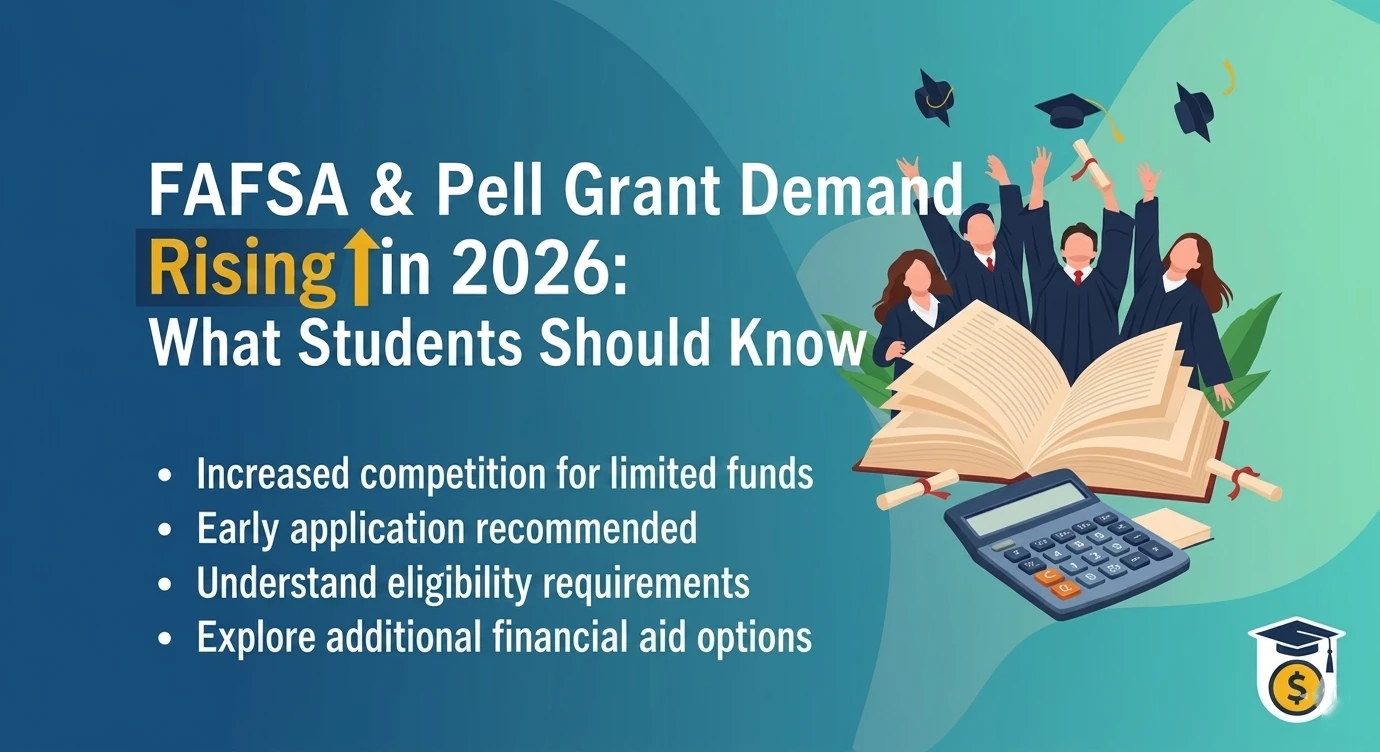
FAFSA & Pell Grant Demand Rising in 2026: What Students Should Know
Introduction
The demand for federal student aid through the Free Application for Federal Student Aid (FAFSA) has surged in 2026, reflecting rising college costs, expanded eligibility rules, and policy updates from the U.S. Department of Education. For millions of students, the Pell Grant program remains a critical source of need-based financial support that does not require repayment.
This guide provides a verified, policy-backed overview of FAFSA and Pell Grant trends in 2026, including eligibility, funding limits, application steps, and common pitfalls, designed for students, NGOs, and education stakeholders.
Why FAFSA Demand Is Rising in 2026
Policy and Economic Drivers
Several factors have contributed to increased FAFSA submissions:
- Simplified FAFSA Form (Post-2024 rollout): Reduced questions and automated IRS data integration
- Expanded Pell Grant eligibility: More students qualify due to revised income thresholds
- Rising tuition costs: Public and private college fees continue to increase nationwide
- Awareness campaigns: Federal and state-level outreach programs targeting underrepresented communities
Impact on Applicants
- Increased competition for campus-based aid
- Faster depletion of state-level grants
- Greater importance of early submission
What Is the Pell Grant?
The Federal Pell Grant is a need-based financial aid program funded by the U.S. federal government.
Key Features
- Non-repayable grant (unlike student loans)
- Awarded based on financial need
- Available primarily to undergraduate students
- Can be used at accredited institutions
Pell Grant Funding Limits
Time-Sensitive: Subject to annual federal budget updates
| Category | Amount (USD) |
| Maximum Pell Grant | $7,395 |
| Minimum Award | ~$750 |
| Lifetime Eligibility Limit | 600% (approx. 6 years) |
Note: Actual award depends on:
- Expected Family Contribution (EFC) / Student Aid Index (SAI)
- Enrollment status (full-time vs part-time)
- Cost of attendance
FAFSA 2026: Key Deadlines and Timeline
Time-Sensitive Section – Verify annually
| Stage | Timeline |
| FAFSA Opens | October 1, 2026 |
| Federal Deadline | June 30, 2026 |
| State Deadlines | Vary (often early 2026) |
| College Deadlines | Vary by institution |
Editorial Note: Many states operate on a first-come, first-served basis, making early submission critical.
Eligibility Criteria
Who Qualifies for FAFSA?
To apply for FAFSA, students must:
- Be a U.S. citizen or eligible noncitizen
- Have a valid Social Security Number (SSN)
- Be enrolled or accepted in an eligible degree program
- Maintain satisfactory academic progress
Pell Grant Eligibility Requirements
Students may qualify if they:
- Demonstrate exceptional financial need
- Have a low Student Aid Index (SAI)
- Are enrolled in an undergraduate program
- Have not exceeded lifetime eligibility limits
Required Documents for FAFSA Application
Essential Documents Checklist
- Social Security Number (SSN)
- Federal income tax returns (student and parents)
- W-2 forms and income records
- Bank statements and asset records
- FSA ID (login credentials)
Step-by-Step: How to Apply for FAFSA in 2026
Application Process
- Create FSA ID
Register on the official federal student aid portal. - Complete FAFSA Form
Provide personal, financial, and academic details. - Use the IRS Data Retrieval Tool
Automatically import tax information for accuracy. - Select Colleges
List institutions to receive your FAFSA data. - Review and Submit
Ensure all fields are accurate before submission. - Track Application Status
Monitor updates via your FAFSA dashboard.
Common Reasons for FAFSA or Pell Grant Rejection
Understanding common errors can improve approval chances:
- Incorrect or mismatched Social Security details
- Failure to sign the FAFSA form
- Incomplete financial information
- Missing deadlines
- Exceeding income eligibility thresholds
Key Policy Updates for 2026
Student Aid Index (SAI) Replaces EFC
The shift from Expected Family Contribution (EFC) to Student Aid Index (SAI) continues to impact aid calculations:
- Allows negative values for higher-need students
- Improves targeting of Pell Grant awards
- Simplifies financial assessment
Expanded Pell Grant Access
- Broader eligibility for low- and middle-income families
- Increased support for part-time and nontraditional students
Strategic Tips for Applicants
- Apply early: Increases chances of receiving full aid packages
- Double-check documentation: Avoid processing delays
- Monitor state grants: Often have earlier deadlines
- Update FAFSA annually: Required for continued eligibility
Secure Your FAFSA & Pell Benefits in 2026
As FAFSA demand rises in 2026, understanding the application process and Pell Grant eligibility is more important than ever. With simplified forms, expanded eligibility, and increasing financial pressure on students, early and accurate submission is critical. Stakeholders, including NGOs and educational institutions, should prioritize awareness and assistance programs to ensure equitable access to federal aid.
This evolving landscape underscores the importance of staying informed, compliant, and proactive throughout each financial aid cycle.
FAQs
Who is eligible for the Pell Grant in 2026?
Students with demonstrated financial need, enrolled in undergraduate programs, and meeting federal aid requirements are eligible. Eligibility is determined using the Student Aid Index (SAI).
How much funding is available through the Pell Grant?
For the 2026–2026 academic year, the maximum Pell Grant award is approximately $7,395, depending on financial need and enrollment status.
How do I apply for FAFSA in 2026?
Students must complete the FAFSA form online via the official federal student aid portal, submit required financial documents, and list their preferred colleges.
What documents are required for FAFSA?
Applicants need Social Security numbers, tax returns, W-2 forms, bank statements, and an FSA ID.
What are common reasons for FAFSA rejection?
Common issues include incomplete forms, incorrect financial data, missed deadlines, and failure to meet eligibility criteria.
Sources
- Federal Student Aid Portal (FAFSA): https://studentaid.gov
- Pell Grant Information: https://studentaid.gov/understand-aid/types/grants/pell
- FAFSA Deadlines by State: https://studentaid.gov/apply-for-aid/fafsa/fafsa-deadlines







Top States Providing Financial Relief and Emergency Cash Assistance in 2026

Section 811 Housing Assistance 2026: What Disabled Adults Need to Know

Top U.S. Government AI Grants You Should Watch in 2026

VA Closing Cost Assistance for Veterans in 2026: What’s Really Changed This Year?

Fast Food Places That Accept EBT Cards (Full List)

25 Small Business Grants You Can Apply for in 2026

Affordable Housing and Rental Assistance Programs for Texas Single Moms

Most Commonly Approved Government Grant Applications
-
 Food & EBT / SNAP Benefits5 months ago
Fast Food Places That Accept EBT Cards (Full List)
-
 Small Business Grants5 months ago
25 Small Business Grants You Can Apply for in 2026
-
 Single Mothers Benefits3 months ago
Affordable Housing and Rental Assistance Programs for Texas Single Moms
-
 Government Grants5 months ago
Most Commonly Approved Government Grant Applications
-

 Veterans Assistance3 months ago
Top Veterans Financial Assistance Programs 2026
-

 Utility & Bills Help5 months ago
LIHEAP 2026 Application Guide for Energy Assistance
-

 Utility & Bills Help4 months ago
How to Get Free Help Paying Your Electric Bill
-

 Single Mothers Benefits4 months ago
Trump Tax Plan Stay-at-Home Mom Tax Credit Explained: What the Law Actually Says (2026)
-

 Food & EBT / SNAP Benefits4 months ago
5 Key SNAP Policy Changes Coming in 2026 You Should Know
-

 Government Grants5 months ago
How to Apply for Government Grants Online