
Emergency Cash Assistance
Florida TCA: Helping Families in Financial Crisis
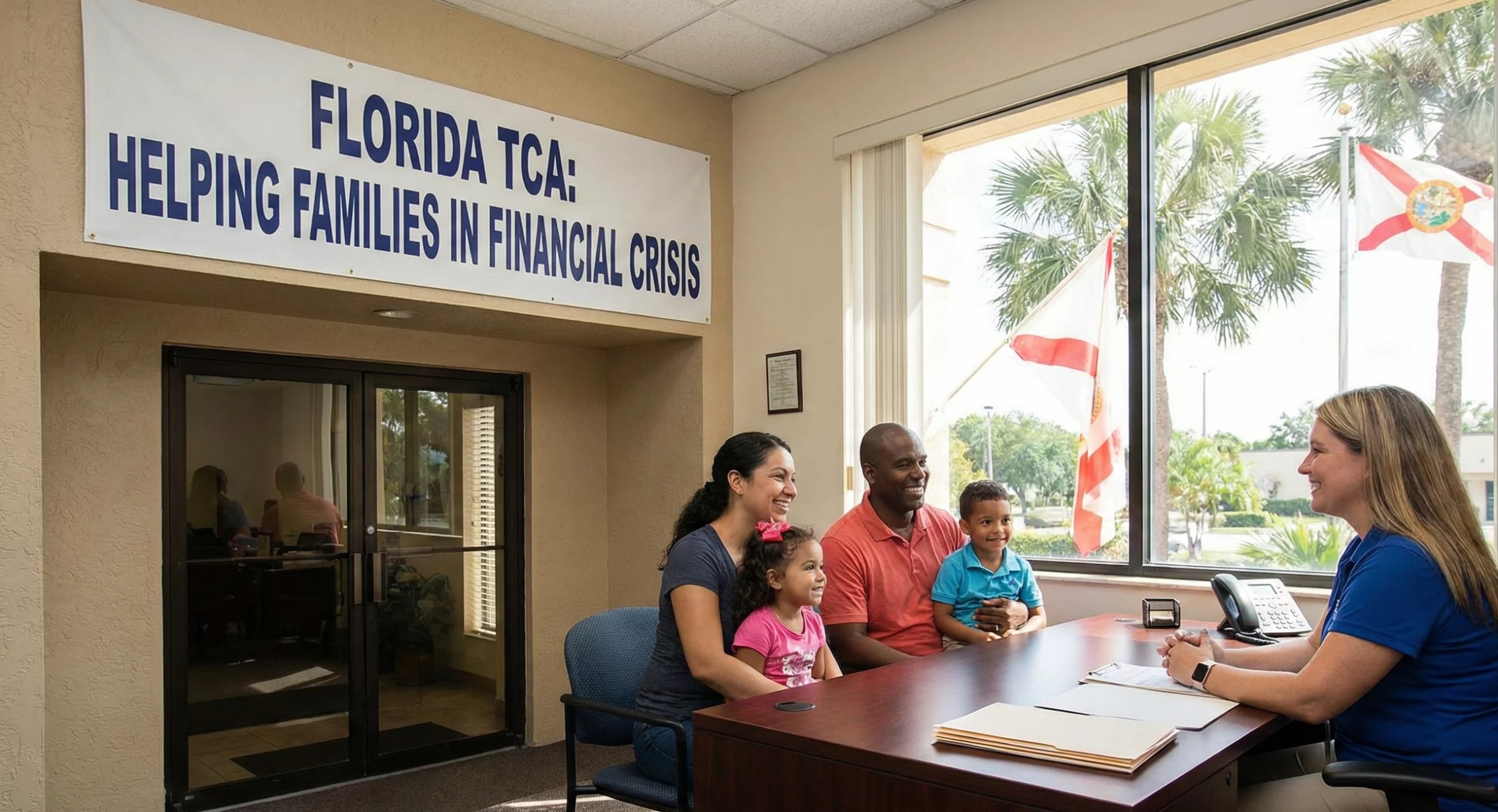
What’s happening now: TCA delivers critical financial aid to Florida families
In an era of rising living costs and economic uncertainty, Florida’s Temporary Cash Assistance (TCA) continues to provide a lifeline to low‑income families struggling to afford basic needs. Administered by the Florida Department of Children and Families (DCF) with support from the federal block grant under Temporary Assistance for Needy Families (TANF), TCA remains active and relevant, offering monthly cash support to eligible families with children or expectant mothers. (flsenate.gov)
For many Floridians facing job loss, housing costs, or a temporary financial crisis, TCA isn’t just a program, it can be a lifeline to keep children in stable homes, avoid evictions, and meet basic needs like food, clothing, and shelter.
Who qualifies and what’s required (eligibility criteria)
TCA is aimed at families with low income and limited assets. Eligibility requirements include: (myflfamilies.com)
- At least one child under 18 living at home, or under 19 if the child is a full‑time secondary student. (myflfamilies.com)
- Pregnant women, in certain conditions: if no other eligible children are in the home, a pregnant woman may qualify in her ninth month, or earlier if a physician restricts work. (myflfamilies.com)
- Proof of Florida residency, U.S. citizenship or qualified non‑citizen status, and Social Security number (or proof of application) for those requesting benefits. (myflfamilies.com)
- Household assets under a modest threshold, limited “countable” resources. (myflfamilies.com)
- Income below the payment standard for the size of the “assistance group”, after applying allowable deductions and disregards. (flrules.elaws.us)
- Cooperation with child‑support enforcement if the child was born out of wedlock, or if support is otherwise applicable. (flsenate.gov)
Additionally, especially for families with school‑age children, there are responsibilities tied to education. The TCA benefit can be reduced if a dependent child becomes habitually truant or drops out. Parents or caretakers must also attend a school conference each semester. (flrules.elaws.us)
What families receive: amount, duration and other conditions

Monthly benefit amount and calculation
TCA benefit amounts vary depending on the size of the family, shelter costs (rent/mortgage), and household income after deductions. (flrules.elaws.us)
If a family’s net available income, after deductions, is below the standard payment level, TCA fills the gap to meet the shelter‑adjusted standard. (flrules.elaws.us)
According to recent payment‑schedule data, for children with no countable income, monthly cash benefits may range roughly around US$ 242 for children aged 0–5, US$ 249 for ages 6–12, and US$ 298 for ages 13–17. (en.econostrum.info)
A minimum grant threshold applies. Households eligible for under about US$ 10 are considered as recipients for eligibility purposes (e.g., Medicaid, other support), but do not receive direct TCA payment. (flrules.elaws.us)
Duration and lifetime limits
By law, a family may receive TCA for no more than 48 months (lifetime cumulative total), unless they qualify for a hardship exemption. (flsenate.gov)
Hardship exemptions, for example due to inability to obtain employment, significant employment barriers, teen parents needing extra time to complete high school or training, may allow extended support for up to 20 % of the program’s average monthly caseload. (flsenate.gov)
After leaving TCA, eligible families may access transitional support services such as job‑search help, case management, and transitional child care to help shift toward self‑sufficiency. (flsenate.gov)
How to apply: simplified steps
Applying for TCA in Florida remains accessible through multiple channels:
- Via the official portal: ACCESS Florida, the online gateway for applying to TCA and related benefits. (myflfamilies.com)
- By phone: state‑wide contact center operated by DCF (as per the official fact sheet). (myflfamilies.com)
- Through local DCF offices or Community ACCESS partner centers. (myflfamilies.com)
For applicants indicating short-term financial crisis or unexpected hardship, there is an Up‑Front Diversion option, a screening by a local workforce board to assess whether a one-time or short-term payment can resolve the immediate need instead of full ongoing TCA. (flrules.elaws.us)
Why TCA matters: the real‑life impact
Many families in Florida face sudden financial shocks such as job loss, medical emergencies, or rising housing costs. For those with children, lack of stable income can force difficult choices such as food vs. rent or medicine vs. utilities.
TCA offers more than cash:
- It helps prevent evictions and homelessness by covering part of shelter costs.
- It ensures children stay in safe homes, giving them stability and access to school, health, and basic needs.
- It provides a bridge toward self‑sufficiency, especially when combined with job training, workforce development, and transitional support services.
By keeping families afloat even briefly, TCA helps avert deeper long‑term crises.
What’s new: reforms and clarifications
- The administrative code governing TCA was recently updated to clarify eligibility rules, forms including non‑English versions, and streamline processing. (flrules.elaws.us)
- Income and asset rules, including disregards, budgeting, treatment of self‑employment income, and child‑support income, remain strictly enforced. (flrules.elaws.us)
- For families needing immediate help due to sudden crisis or hardship, the Up‑Front Diversion screening process was introduced to provide faster, temporary relief when full TCA may not be needed. (flrules.elaws.us)
These changes demonstrate that TCA is not a static program. It is being adapted to better serve families in crisis while safeguarding program integrity.
Who should consider applying and why you shouldn’t wait
If you live in Florida and are facing any of the following
- Low or unstable income
- Children under 18 or under 19 if in school
- Risk of eviction or inability to pay rent/mortgage
- Pregnancy with no other children in household and work‑restriction
- Sudden emergency such as job loss, medical bills, or disaster
then applying for TCA or Up‑Front Diversion may provide immediate financial relief.
Because benefits depend on income and household situation, and because there is a 48‑month lifetime limit unless hardship is approved, it’s wise to apply as soon as possible if you qualify.
Sources:
- Florida Department of Children and Families — ACCESS Florida portal (for TCA and other benefits)
- Florida Statutes, Chapter 414 (Sections governing TCA eligibility, payment, and duration)
- Florida Administrative Code (Rules 65A‑4 Temporary Cash Assistance)
- TCA Fact Sheet (from Florida DCF / ACCESS)





Top States Providing Financial Relief and Emergency Cash Assistance in 2026

Section 811 Housing Assistance 2026: What Disabled Adults Need to Know

Top U.S. Government AI Grants You Should Watch in 2026

VA Closing Cost Assistance for Veterans in 2026: What’s Really Changed This Year?

Fast Food Places That Accept EBT Cards (Full List)

25 Small Business Grants You Can Apply for in 2026

Affordable Housing and Rental Assistance Programs for Texas Single Moms

Most Commonly Approved Government Grant Applications
-
 Food & EBT / SNAP Benefits6 months ago
Fast Food Places That Accept EBT Cards (Full List)
-
 Small Business Grants6 months ago
25 Small Business Grants You Can Apply for in 2026
-
 Single Mothers Benefits4 months ago
Affordable Housing and Rental Assistance Programs for Texas Single Moms
-
 Government Grants6 months ago
Most Commonly Approved Government Grant Applications
-

 Veterans Assistance4 months ago
Top Veterans Financial Assistance Programs 2026
-

 Single Mothers Benefits5 months ago
Trump Tax Plan Stay-at-Home Mom Tax Credit Explained: What the Law Actually Says (2026)
-

 Utility & Bills Help6 months ago
LIHEAP 2026 Application Guide for Energy Assistance
-

 Utility & Bills Help5 months ago
How to Get Free Help Paying Your Electric Bill
-

 Food & EBT / SNAP Benefits5 months ago
5 Key SNAP Policy Changes Coming in 2026 You Should Know
-

 Government Grants6 months ago
How to Apply for Government Grants Online