
Energy / Utility Assistance
State-by-State LIHEAP Updates for 2026: What Changed Across America?
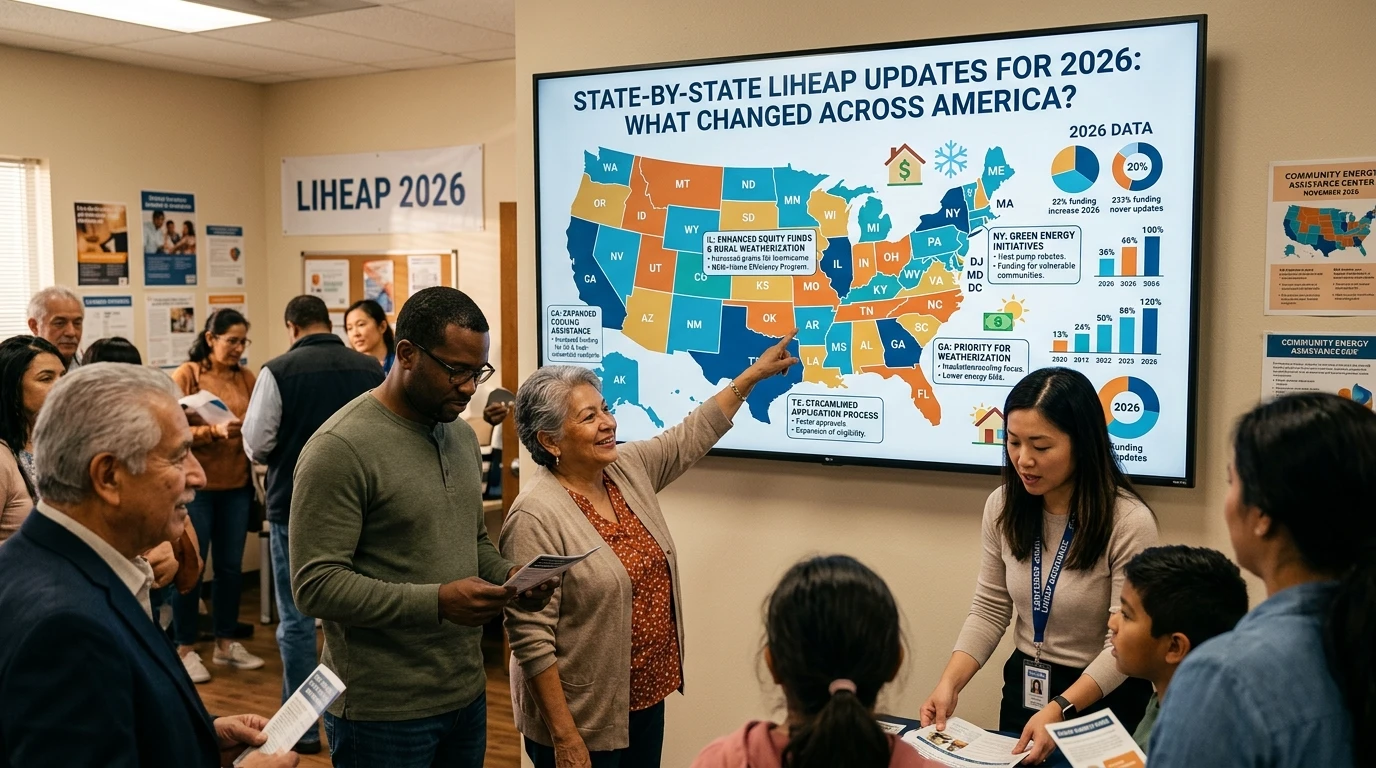
The Low Income Home Energy Assistance Program (LIHEAP) received $4.045 billion in federal funding for Fiscal Year 2026, a $20 million increase over FY2025. All 50 states, U.S. territories, and tribal organizations received their full allocations by April 2026. Eligibility is set at the higher of 150% of the Federal Poverty Guidelines or 60% of the State Median Income.
LIHEAP is the federal government’s primary program for helping low-income households manage home energy costs. Administered by the U.S. Department of Health and Human Services (HHS), Administration for Children and Families (ACF), and Office of Community Services (OCS), the program distributes block grants to all 50 states, which then run their own delivery systems within federal rules.
FY2026 was one of the most turbulent years in LIHEAP’s history. The program survived a White House proposal for complete elimination, lost its entire federal staff, endured months of funding delays, and now faces a renewed elimination proposal for FY2027. For applicants, understanding exactly what changed state by state has never been more important.
FY2026 LIHEAP Funding: What Changed
LIHEAP received approximately $4.05 billion as part of an appropriations package signed into law by President Trump on February 3, 2026, a $20 million increase over FY2025, and a notable reversal given the White House had earlier asked Congress to zero out the program entirely.
Funding was disbursed in two phases. On November 28, 2025, OCS released approximately $3.6 billion, which was 90% of the FY2026 regular block grant, along with $100 million from the Bipartisan Infrastructure Investment and Jobs Act (IIJA). On April 17, 2026, HHS released the remaining 10%, approximately $421.5 million, under the Consolidated Appropriations Act, 2026 (H.R. 7148).
Federal LIHEAP staff were fired on April 1, 2025 and have not been rehired. States are now running their programs with no federal training or guidance, creating the potential for future delays in funding disbursement.
How Much Does Each State Receive?
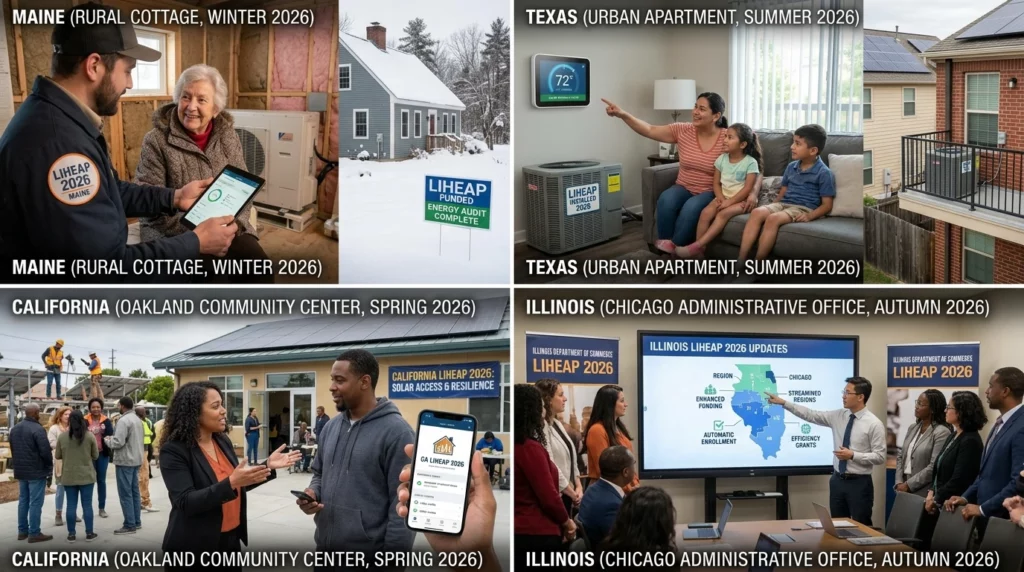
LIHEAP block grants are distributed using a formula that weighs climate severity, low-income population size, and residential energy costs. New York receives the largest allocation at over $400 million, followed by California and Pennsylvania. Smaller states like Vermont receive less in total dollars, though per-capita benefits may be higher relative to need.
| State | Est. FY2026 Allocation | Avg. Heating Benefit |
| New York | $400M+ | ~$850 |
| California | $255M+ | ~$500 |
| Pennsylvania | $230M+ | ~$700 |
| Ohio | $175M+ | ~$550 |
| Michigan | $170M+ | ~$500 |
| Illinois | $165M+ | ~$500 |
| Texas | $145M+ | ~$1,000 |
| Massachusetts | $140M+ | ~$1,100 |
| Minnesota | $130M+ | ~$550 |
| Maryland | $75M+ | ~$1,200 |
| Alaska | Lower total | ~$1,487 |
| Arkansas | Lower total | ~$118 |
Source: HHS/ACF published allocation tables and LIHEAP Clearinghouse data. Visit acf.gov for official figures.
LIHEAP Eligibility for 2026
| Criteria | Federal Rule |
| Income Maximum | 150% Federal Poverty Guidelines OR 60% State Median Income (whichever is higher) |
| Minimum Floor | No state may set eligibility below 110% FPG |
| Categorical Eligibility | SNAP, SSI, or TANF recipients may auto-qualify |
| Priority Groups | The elderly, disabled, and young children have the highest energy burden |
A two-person household in Texas earning $38,541 or less may qualify. In Ohio, the limit is approximately $37,012. In Florida, it is approximately $40,000. In California, the monthly income cap for a two-person household is approximately $4,145.
State-by-State Application Dates for 2025 to 2026
Application windows are the most critical piece of information for applicants. Most programs operate on a first-come, first-served basis and may close before their official end date if funds are exhausted.
| State | Application Window |
| Alabama | Oct 1, 2025 to Apr 30, 2026 |
| Alaska | Oct 1, 2025 to Apr 30, 2026 |
| Arizona | Year-round |
| Arkansas | Jan 1, 2026 to TBD |
| California | Oct 1, 2025 to Sep 30, 2026 |
| Colorado | Nov 1, 2025 to Apr 30, 2026 |
| Connecticut | Sep 1, 2025 to May 29, 2026 |
| Delaware | Oct 1, 2025 to Mar 31, 2026 |
| District of Columbia | Year-round |
| Florida | Oct 1, 2025 to Mar 31, 2026 |
| Georgia | Dec 1, 2025 to TBD |
| Hawaii | Jun 3, 2026 to Jun 28, 2026 |
| Idaho | Oct 1, 2025 to Mar 31, 2026 |
| Illinois | Oct 1, 2025 to Aug 15, 2026 |
| Indiana | Oct 1, 2025 to Apr 20, 2026 |
| Iowa | Oct 1, 2025 to Apr 30, 2026 |
| Kansas | Jan 20, 2026 to Mar 31, 2026 |
| Kentucky | Dates TBD |
| Louisiana | Nov 15, 2025 to Mar 15, 2026 |
| Maine | Aug 1, 2025 to May 29, 2026 |
| Maryland | Jul 1, 2025 to Jun 30, 2026 |
| Massachusetts | Oct 1, 2025 to Apr 30, 2026 |
| Michigan | Dates TBD |
| Minnesota | Sep 2, 2025 to May 31, 2026 |
| Mississippi | Oct 1, 2025 to Apr 30, 2026 |
| Missouri | Oct 1, 2025 to May 31, 2026 |
| Montana | Oct 1, 2025 to Apr 30, 2026 |
| Nebraska | Oct 1, 2025 to Mar 31, 2026 |
| Nevada | Jul 1, 2025 to Jun 30, 2026 |
| New Hampshire | Year-round |
| New Jersey | Oct 1, 2025 to Jun 30, 2026 |
| New Mexico | Year-round |
| New York | Dec 1, 2025 to Apr 7, 2026 |
| North Carolina | Dec 1, 2025 to Mar 31, 2026 |
| North Dakota | Year-round |
| Ohio | Oct 1, 2025 to May 31, 2026 |
| Oklahoma | Dec 17, 2025 to Feb 28, 2026 |
| Oregon | Year-round |
| Pennsylvania | Dates delayed |
| Rhode Island | Oct 1, 2025 to TBD |
| South Carolina | Oct 1, 2025 to Apr 30, 2026 |
| South Dakota | Year-round |
| Tennessee | Year-round |
| Texas | Year-round |
| Utah | Year-round |
| Vermont | Year-round |
| Virginia | Oct 14, 2025 to Nov 14, 2025 |
| Washington | Year-round |
| West Virginia | Dates TBD |
| Wisconsin | Oct 1, 2025 to May 15, 2026 |
| Wyoming | Dates delayed |
Key Watch States: Virginia ran only a 30-day window. Hawaii runs just 25 days in June. Oklahoma closed on February 28. Kansas closed March 31. Applicants in these states must be prepared to act immediately when FY2027 dates are announced.
Notable State-Level Changes for FY2026
Illinois: Expanded Eligibility Standard
Illinois expanded LIHEAP eligibility for FY2026 by shifting to a 60% State Median Income standard for households of 12 members or fewer. Applications run through August 15, 2026, on a first-come, first-served basis. Beginning January 1, 2026, income-eligible LIHEAP customers of ComEd will also receive a monthly discount on their electric bill through the new Low Income Discount Rates.
New Jersey: Supplemental Programs Alongside LIHEAP
New Jersey also administers several additional energy assistance programs, including the Universal Service Fund, which provides monthly bill credits, and Payment Assistance for Gas and Electric (PAGE), which provides grants to avoid disconnection or restore service.
Pennsylvania: Application Delays
Pennsylvania’s LIHEAP start dates were delayed for the 2025 to 2026 program year due to federal disbursement holdups. Applicants should check the COMPASS portal and trackmybenefits.pa.gov for current status.
Policy Warning: FY2027 Threat
The Trump administration’s FY2027 budget proposal again calls for the complete elimination of LIHEAP. Nearly six million low-income households rely on this program to heat and cool their homes. Congress blocked elimination for FY2026 and increased funding, with House Appropriations Committee Chair Tom Cole (R-OK) stating he is opposed to eliminating LIHEAP. No FY2027 funding is confirmed. Apply early this season.
Frequently Asked Questions
What is LIHEAP?
LIHEAP is the Low Income Home Energy Assistance Program, a federal block grant administered by HHS. It helps low-income households pay heating and cooling bills and is administered individually by each state, meaning rules and benefits vary.
Who qualifies for LIHEAP in 2026?
Households earning up to 150% of the Federal Poverty Guidelines or 60% of State Median Income, whichever is higher, are generally eligible. SNAP, SSI, and TANF recipients may auto-qualify in most states.
How do I apply for LIHEAP?
Apply through your state agency or local community action agency, not directly through HHS. Call the National Energy Assistance Referral hotline at 1-800-342-3009 or visit liheapch.acf.gov to find your local office.
Why do LIHEAP applications get rejected?
The most common reasons are income exceeding the state threshold, missing documents, duplicate applications within the same program year, or applying after funds are exhausted.
Does LIHEAP need to be repaid?
LIHEAP assistance does not need to be repaid. It is a grant, not a loan. Receiving LIHEAP does not affect your eligibility for other programs like SNAP, Medicaid, or Social Security.
Sources:
- LIHEAP Clearinghouse: liheapch.acf.gov
- State Profiles and Applications: liheapch.acf.gov/profiles/energyhelp.htm
- NEAR Hotline: 1-800-342-3009
- HHS Office of Community Services: acf.hhs.gov/ocs/programs/liheap
- Pennsylvania COMPASS Portal: compass.state.pa.us
- Michigan MI Bridges: michigan.gov/mibridges
- New Jersey DCAid: njdcaid.gov





Top States Providing Financial Relief and Emergency Cash Assistance in 2026

Section 811 Housing Assistance 2026: What Disabled Adults Need to Know

Top U.S. Government AI Grants You Should Watch in 2026

VA Closing Cost Assistance for Veterans in 2026: What’s Really Changed This Year?

Fast Food Places That Accept EBT Cards (Full List)

25 Small Business Grants You Can Apply for in 2026

Affordable Housing and Rental Assistance Programs for Texas Single Moms

Most Commonly Approved Government Grant Applications
-
 Food & EBT / SNAP Benefits5 months ago
Fast Food Places That Accept EBT Cards (Full List)
-
 Small Business Grants5 months ago
25 Small Business Grants You Can Apply for in 2026
-
 Single Mothers Benefits3 months ago
Affordable Housing and Rental Assistance Programs for Texas Single Moms
-
 Government Grants5 months ago
Most Commonly Approved Government Grant Applications
-

 Veterans Assistance3 months ago
Top Veterans Financial Assistance Programs 2026
-

 Utility & Bills Help5 months ago
LIHEAP 2026 Application Guide for Energy Assistance
-

 Utility & Bills Help4 months ago
How to Get Free Help Paying Your Electric Bill
-

 Single Mothers Benefits4 months ago
Trump Tax Plan Stay-at-Home Mom Tax Credit Explained: What the Law Actually Says (2026)
-

 Food & EBT / SNAP Benefits4 months ago
5 Key SNAP Policy Changes Coming in 2026 You Should Know
-

 Government Grants5 months ago
How to Apply for Government Grants Online