
Small Business Grants
What Texas Incentive Programs Reveal About the Future of U.S. Business
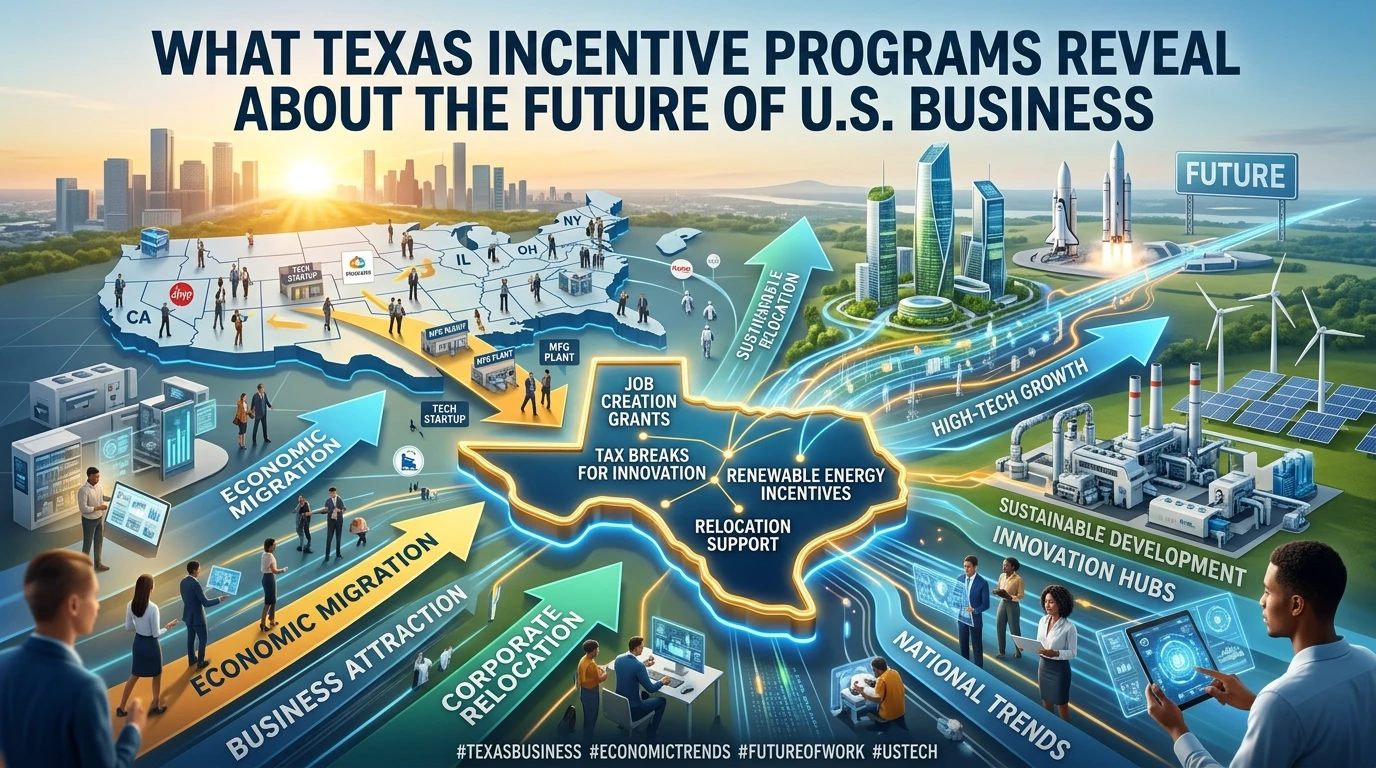
Texas incentive programs in 2026–2026 are emerging as a national benchmark for how U.S. states compete for investment, innovation, and workforce development. Administered by agencies such as the Texas Economic Development & Tourism Office and supported by legislative frameworks from the Texas Legislature, these programs reveal a strategic shift toward targeted, performance-based funding.
For applicants, ranging from startups and NGOs to multinational corporations, understanding these programs is not just about accessing funds. It provides insight into where the U.S. economy is heading, which sectors are prioritized, and how compliance and eligibility standards are evolving nationwide.
Key Texas Incentive Programs
Texas Enterprise Fund (TEF)
Purpose: Attract large-scale business relocations and expansions
Administered by: Office of the Governor
Key Features:
- Performance-based “deal-closing” grants
- Focus on job creation and capital investment
- Requires local government matching support
Eligibility Snapshot:
| Criteria | Requirement |
| Job Creation | Significant (varies by region) |
| Industry | Advanced manufacturing, technology, headquarters relocations |
| Location | Must demonstrate competition with other states |
Texas CHIPS Act Incentives (State-Level Support)
Aligned with federal programs under the U.S. Department of Commerce, Texas has expanded semiconductor incentives.
Focus Areas:
- Semiconductor manufacturing
- Supply chain resilience
- Research and development facilities
Policy Insight:
Texas is positioning itself as a domestic hub for semiconductor production, aligning with national economic security priorities.
Skills Development Fund (SDF)
Administered by: Texas Workforce Commission
Purpose: Workforce training grants for businesses and community colleges
Funding Details:
| Component | Details |
| Grant Type | Customized workforce training |
| Beneficiaries | New and existing employees |
| Partners | Public community colleges |
Evergreen Insight:
Workforce development remains a long-term priority, making this program stable beyond 2026.
Property Tax Abatement & Chapter 403 Programs
Following reforms to earlier Chapter 313 programs, Texas introduced updated tax-based incentives.
Key Elements:
- School district tax limitations
- Infrastructure investment incentives
- Enhanced transparency requirements
Regulatory Update (2026–2026):
- Increased reporting obligations
- Public disclosure requirements
- Stronger return-on-investment justification
What These Programs Signal About the Future of U.S. Business
Performance-Based Incentives Are the New Standard
Texas programs emphasize results-driven funding:
- Payments tied to job creation
- Capital investment thresholds
- Clawback provisions if commitments are not met
Other states are increasingly adopting this model.
Strategic Industry Targeting Is Increasing
Priority sectors include:
- Clean energy
- Semiconductors
- Artificial intelligence
- Logistics and supply chains
This reflects stronger alignment between state and federal economic strategies.
Workforce Development Is Central
Programs like the Skills Development Fund show:
- Employer-driven training models
- Public-private collaboration
- Direct linkage between funding and workforce outcomes
Workforce readiness is now a core eligibility requirement.
Compliance and Transparency Are Expanding
Applicants must meet stricter:
- Reporting standards
- Environmental regulations
- Financial disclosure requirements
Examples include:
- Periodic performance reporting
- Job verification audits
- Wage compliance thresholds
Eligibility Criteria Across Texas Incentive Programs
Core Requirements
- Registered U.S. business entity
- Clearly defined project proposal
- Demonstrated economic impact
- Compliance with all applicable laws
Typical Applicants
- Startups and small businesses
- Large corporations
- Nonprofits
- Educational institutions
Application Process (Step-by-Step)
Step 1: Pre-Application Consultation
Engage with regional economic development offices
Step 2: Submit Proposal
Include business plan, financials, and job projections
Step 3: Review Process
Evaluation based on economic and strategic impact
Step 4: Agreement
Performance-based contract execution
Step 5: Monitoring
Ongoing compliance and reporting
Required Documents Checklist
| Document | Purpose |
| Business Registration | Legal verification |
| Financial Statements | Financial health assessment |
| Project Plan | Scope and timeline |
| Workforce Plan | Job creation strategy |
| Tax Records | Compliance verification |
Common Reasons for Application Rejection
- Insufficient economic impact
- Misalignment with priority industries
- Weak financial position
- Incomplete documentation
- Lack of required local support
FAQs
Who is eligible for Texas incentive programs?
Businesses, nonprofits, and institutions that demonstrate economic impact, job creation, and regulatory compliance are typically eligible.
How much funding is available?
Funding varies by program. Large-scale initiatives like the Texas Enterprise Fund may offer substantial grants, while workforce programs provide smaller, targeted funding.
How can I apply?
Applicants must consult with state agencies, submit a detailed proposal, undergo evaluation, and enter into a performance-based agreement.
What documents are required?
Business registration, financial statements, project plans, workforce strategies, and tax compliance records are commonly required.
What are common reasons for rejection?
Applications are rejected due to weak proposals, lack of alignment with state priorities, incomplete documentation, or failure to meet compliance requirements.
Sources

Top States Providing Financial Relief and Emergency Cash Assistance in 2026

Section 811 Housing Assistance 2026: What Disabled Adults Need to Know

Top U.S. Government AI Grants You Should Watch in 2026

VA Closing Cost Assistance for Veterans in 2026: What’s Really Changed This Year?

Fast Food Places That Accept EBT Cards (Full List)

25 Small Business Grants You Can Apply for in 2026

Affordable Housing and Rental Assistance Programs for Texas Single Moms

Most Commonly Approved Government Grant Applications
-
 Food & EBT / SNAP Benefits5 months ago
Fast Food Places That Accept EBT Cards (Full List)
-
 Small Business Grants5 months ago
25 Small Business Grants You Can Apply for in 2026
-
 Single Mothers Benefits3 months ago
Affordable Housing and Rental Assistance Programs for Texas Single Moms
-
 Government Grants5 months ago
Most Commonly Approved Government Grant Applications
-

 Veterans Assistance3 months ago
Top Veterans Financial Assistance Programs 2026
-

 Utility & Bills Help5 months ago
LIHEAP 2026 Application Guide for Energy Assistance
-

 Utility & Bills Help4 months ago
How to Get Free Help Paying Your Electric Bill
-

 Single Mothers Benefits4 months ago
Trump Tax Plan Stay-at-Home Mom Tax Credit Explained: What the Law Actually Says (2026)
-

 Food & EBT / SNAP Benefits3 months ago
5 Key SNAP Policy Changes Coming in 2026 You Should Know
-

 Government Grants5 months ago
How to Apply for Government Grants Online