
Emergency Cash Assistance
Emergency Cash Assistance Programs in the U.S.: Federal and State Guide 2026
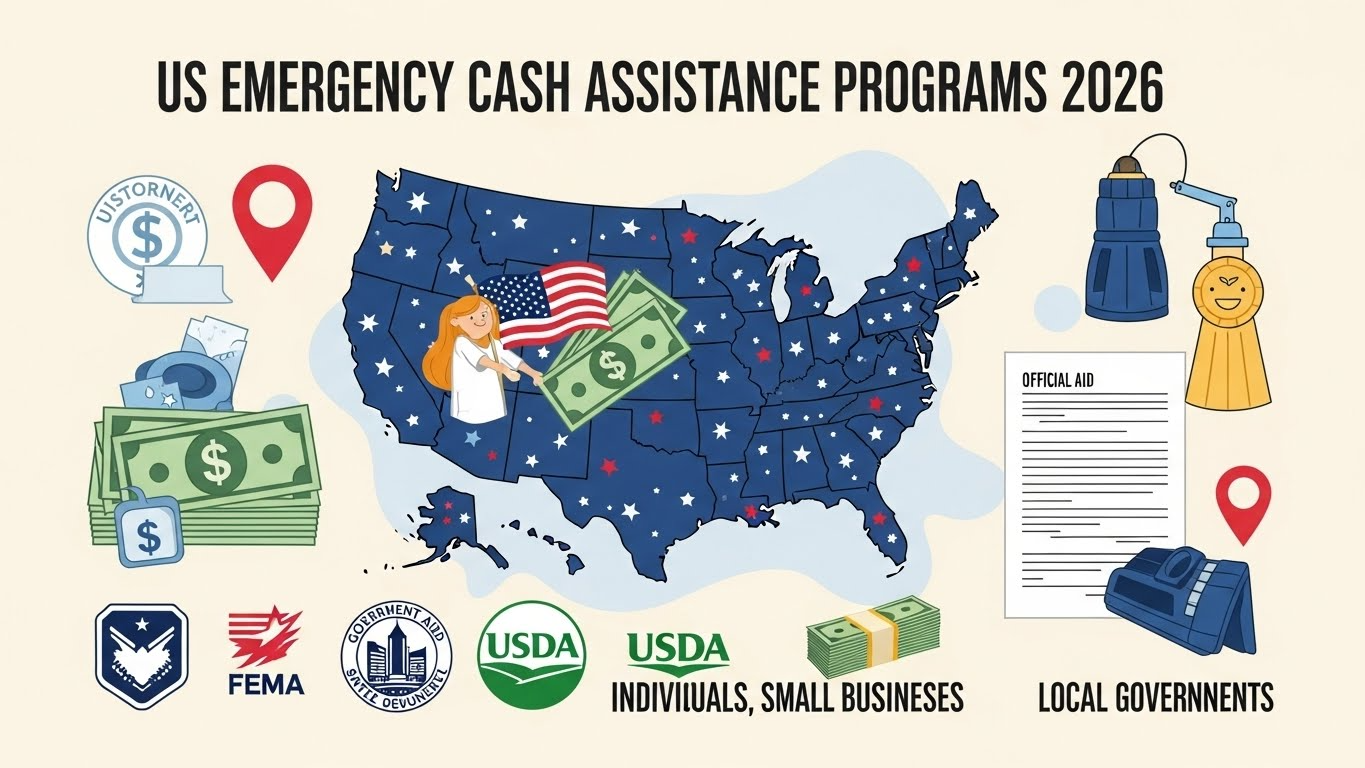
Emergency cash assistance programs provide urgent financial support to U.S. residents, small businesses, NGOs, and local governments during economic crises, disasters, or unexpected hardships. As of 2026, federal and state agencies have updated funding streams, eligibility criteria, and application procedures. This guide consolidates verified information from official government sources, including the U.S. Department of Health & Human Services (HHS), FEMA, USDA, and state-level agencies. Whether you are seeking aid as an individual, student, or organization, this resource outlines eligibility, benefits, deadlines, and step-by-step application instructions, distinguishing evergreen guidance from time-sensitive program updates.
Federal Emergency Cash Assistance Programs
| Program | Administering Agency | Eligibility | Funding Amount | Key Deadlines / Notes | Official Link |
| Disaster Assistance Program | FEMA | Individuals, households, small businesses affected by federally declared disasters | Varies by disaster, typically $500–$36,000 per household | Ongoing; apply within 60 days of disaster declaration | FEMA Assistance |
| Temporary Assistance for Needy Families (TANF) | HHS / State Agencies | Low-income families with children | Cash grants based on household income and state formula | Varies by state; 2026 eligibility updates released Jan 2026 | TANF Info |
| Emergency Rental Assistance (ERA) Program | HHS / Treasury | Renters impacted by financial hardship | Up to 12 months of rent + utilities | 2026 funding window may close mid-year; monitor state updates | ERA Program |
| Supplemental Nutrition Assistance Program (SNAP) Emergency Allotments | USDA | Low-income individuals / families | Additional monthly benefit during emergencies | Announced per state; 2026 notices released Jan 2026 | SNAP Info |
State-Level Emergency Cash Assistance Programs
Each state administers supplemental cash or relief programs alongside federal aid. Below is a hyperlocal example framework:
| State | Program Name | Eligibility | Funding Amount | Application Link |
| California | CalWORKs Emergency Cash Assistance | Low-income families, disaster-impacted households | Varies; $200–$1,000 | CalWORKs |
| Texas | Texas Disaster Cash Relief | Residents impacted by federally declared disasters | Up to $2,500 | Texas HHS |
| New York | NY Emergency Assistance Program | Individuals & families facing homelessness or eviction | Varies; case-by-case | NY HRA |
How to Apply for Emergency Cash Assistance
- Identify the Correct Program: Federal vs. state; disaster-specific or general financial hardship.
- Check Eligibility: Review income limits, residency requirements, and household criteria.
- Gather Required Documents:
- Proof of identity (driver’s license, passport, state ID)
- Proof of income or unemployment
- Disaster verification (if applicable)
- Lease/mortgage statements (for rental assistance)
- Submit Application: Online portals preferred; paper submissions accepted for some programs.
- Track Application: Use agency reference numbers; adhere to deadlines.
- Receive Funds: Direct deposit or mailed check; timing varies by program.
FAQs
Who is eligible for emergency cash assistance in 2026?
Eligibility varies by program but generally includes U.S. residents or citizens, low-income households, disaster-affected individuals, students in financial distress, small businesses, and local government entities.
How much funding can I receive?
Federal programs range from $500–$36,000 per household depending on disaster or hardship. State-level programs vary; check individual state portals for exact amounts.
How do I apply?
Applications are submitted via official federal or state websites. Key steps include verifying eligibility, preparing documents, and submitting within program deadlines.
What documents are required?
Applicants typically need proof of identity, proof of income, proof of residency, disaster verification (if applicable), and any program-specific forms.
Why are applications rejected?
Common reasons include missing documentation, missed deadlines, income above eligibility thresholds, or claims that do not meet program-specific disaster or hardship criteria.
Sources:




Top States Providing Financial Relief and Emergency Cash Assistance in 2026

Section 811 Housing Assistance 2026: What Disabled Adults Need to Know

Top U.S. Government AI Grants You Should Watch in 2026

VA Closing Cost Assistance for Veterans in 2026: What’s Really Changed This Year?

Fast Food Places That Accept EBT Cards (Full List)

25 Small Business Grants You Can Apply for in 2026

Affordable Housing and Rental Assistance Programs for Texas Single Moms

Most Commonly Approved Government Grant Applications
-
 Food & EBT / SNAP Benefits5 months ago
Fast Food Places That Accept EBT Cards (Full List)
-
 Small Business Grants5 months ago
25 Small Business Grants You Can Apply for in 2026
-
 Single Mothers Benefits3 months ago
Affordable Housing and Rental Assistance Programs for Texas Single Moms
-
 Government Grants5 months ago
Most Commonly Approved Government Grant Applications
-

 Veterans Assistance3 months ago
Top Veterans Financial Assistance Programs 2026
-

 Utility & Bills Help5 months ago
LIHEAP 2026 Application Guide for Energy Assistance
-

 Utility & Bills Help4 months ago
How to Get Free Help Paying Your Electric Bill
-

 Single Mothers Benefits4 months ago
Trump Tax Plan Stay-at-Home Mom Tax Credit Explained: What the Law Actually Says (2026)
-

 Food & EBT / SNAP Benefits3 months ago
5 Key SNAP Policy Changes Coming in 2026 You Should Know
-

 Government Grants5 months ago
How to Apply for Government Grants Online