Utility & Bills Help
Massachusetts Waives $180 Million in Charges to Slash February & March Winter Utility Bills
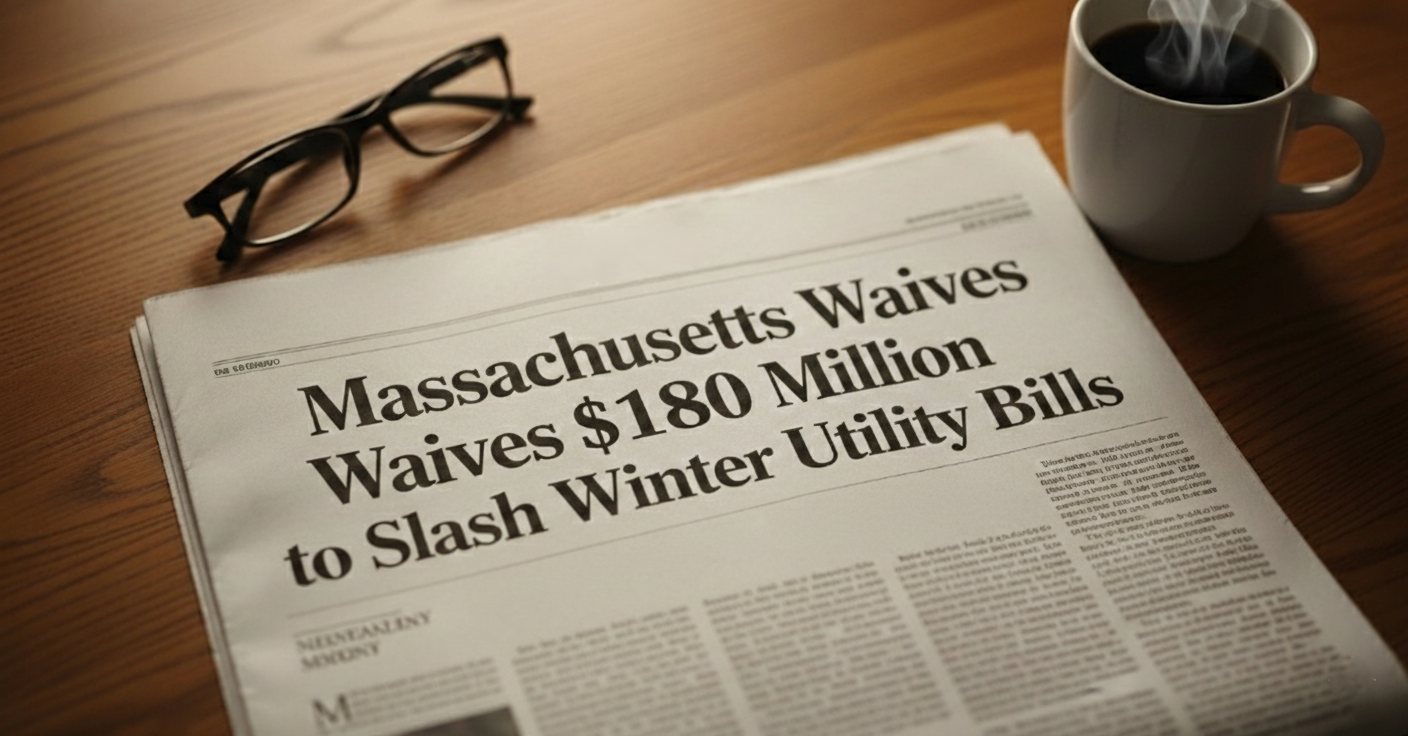
The Commonwealth of Massachusetts has announced a sweeping winter energy affordability measure, waiving $180 million in charges to reduce residential utility bills for February and March 2026. The move, ordered under the Healey-Driscoll Administration, is designed to provide immediate relief during the coldest and most expensive months of the year while preventing utilities from shifting costs back to consumers through interest or financing fees.
The action follows weeks of public concern over sharply rising electricity and natural gas bills and marks one of the most significant statewide utility interventions in recent years.
What the Winter Utility Relief Program Does
Under the state-directed plan:
- Electricity bills for residential customers are reduced by approximately 25 percent in February and March 2026.
- Natural gas bills are reduced by approximately 10 percent during the same period.
- $180 million in state funds are applied directly to offset electric supply costs.
- Major utilities agreed to waive all interest and carrying charges associated with deferred recovery of winter discounts.
The relief applies automatically and does not require customers to apply, enroll, or submit documentation.
Why Massachusetts Took This Action
Massachusetts consistently ranks among the states with the highest residential energy costs, driven by supply constraints, regional infrastructure limitations, and winter heating demand. During the 2026–2026 winter season, prolonged cold weather and elevated energy prices placed significant financial pressure on households across income levels.
Initial utility proposals included spreading winter discounts into future billing periods with interest, a practice that drew swift opposition from state leaders and consumer advocates. In response, the governor directed the Department of Public Utilities (DPU) to require utilities to eliminate interest charges entirely, ensuring that short-term relief would not result in long-term cost penalties for ratepayers.
This policy aligns with the Commonwealth’s broader Energy Affordability, Independence, and Innovation framework, which prioritizes cost containment, transparency, and consumer protection in utility regulation.
How the $180 Million Is Used
The state’s $180 million contribution covers a substantial portion of the electric bill reductions. The remaining balance of winter discounts is temporarily deferred by utilities and recovered during lower-demand months later in 2026.
Key safeguards include:
- No interest or financing fees on deferred amounts
- Regulatory oversight by the Department of Public Utilities
- Spreading recovery over multiple months to limit bill spikes
Liberty Gas, unlike other utilities, is not deferring charges and will not collect interest on waived amounts.
Who Is Eligible
Eligible Customers
All residential utility customers in Massachusetts served by participating utilities are eligible, including customers of:
- National Grid
- Eversource
- Unitil
- Berkshire Gas
- Liberty Gas
Not Covered
- Commercial and industrial accounts
- Municipal aggregation programs outside standard residential billing
Eligibility is based solely on residential account status, not income level.
Benefits for Households and Communities
This winter relief initiative provides immediate and measurable benefits:
- Lower monthly bills during peak heating season
- Protection from interest-based cost recovery
- Improved household budget stability
- Reduced risk of arrears, shutoffs, or payment plans
While low-income households already receiving assistance through programs such as LIHEAP benefit significantly, the program is structured to reach middle-income families who often do not qualify for traditional aid but face substantial winter energy burdens.
Program Timeline
Short-Term Policy Details (Season-Specific)
- Bill reductions apply only to February–March 2026
- Deferred cost recovery schedules may change based on Department of Public Utilities (DPU) rate filings
Oversight and Compliance
The Department of Public Utilities retains full regulatory authority over implementation, billing accuracy, and compliance. Utilities are required to clearly itemize credits and deferred charges on customer bills to maintain transparency.
Consumers are encouraged to review statements carefully and contact their utility or the DPU if discrepancies appear.
FAQs
Who qualifies for the winter utility bill reductions?
All Massachusetts residential customers of participating utilities automatically qualify. No application is required.
How much funding is available?
The Commonwealth allocated $180 million in state funds to support winter electricity bill reductions.
Do customers have to repay the discounts?
Only the portion deferred by utilities is recovered later in the year, and no interest may be charged.
When do the bill reductions apply?
The reductions apply to February and March 2026 billing cycles.
Is this a permanent program?
No. This is a time-limited winter relief measure, though similar actions may be considered in future fiscal years.
Sources:
- Massachusetts Department of Public Utilities – Winter Energy Cost Oversight
- Energy Affordability, Independence, and Innovation Act (Massachusetts)
- Low Income Home Energy Assistance Program (LIHEAP) – Massachusetts




Top States Providing Financial Relief and Emergency Cash Assistance in 2026

Section 811 Housing Assistance 2026: What Disabled Adults Need to Know

Top U.S. Government AI Grants You Should Watch in 2026

VA Closing Cost Assistance for Veterans in 2026: What’s Really Changed This Year?

Fast Food Places That Accept EBT Cards (Full List)

25 Small Business Grants You Can Apply for in 2026

Affordable Housing and Rental Assistance Programs for Texas Single Moms

Most Commonly Approved Government Grant Applications
-
 Food & EBT / SNAP Benefits5 months ago
Fast Food Places That Accept EBT Cards (Full List)
-
 Small Business Grants5 months ago
25 Small Business Grants You Can Apply for in 2026
-
 Single Mothers Benefits3 months ago
Affordable Housing and Rental Assistance Programs for Texas Single Moms
-
 Government Grants5 months ago
Most Commonly Approved Government Grant Applications
-

 Veterans Assistance3 months ago
Top Veterans Financial Assistance Programs 2026
-

 Utility & Bills Help5 months ago
LIHEAP 2026 Application Guide for Energy Assistance
-

 Utility & Bills Help4 months ago
How to Get Free Help Paying Your Electric Bill
-

 Single Mothers Benefits4 months ago
Trump Tax Plan Stay-at-Home Mom Tax Credit Explained: What the Law Actually Says (2026)
-

 Food & EBT / SNAP Benefits3 months ago
5 Key SNAP Policy Changes Coming in 2026 You Should Know
-

 Government Grants5 months ago
How to Apply for Government Grants Online